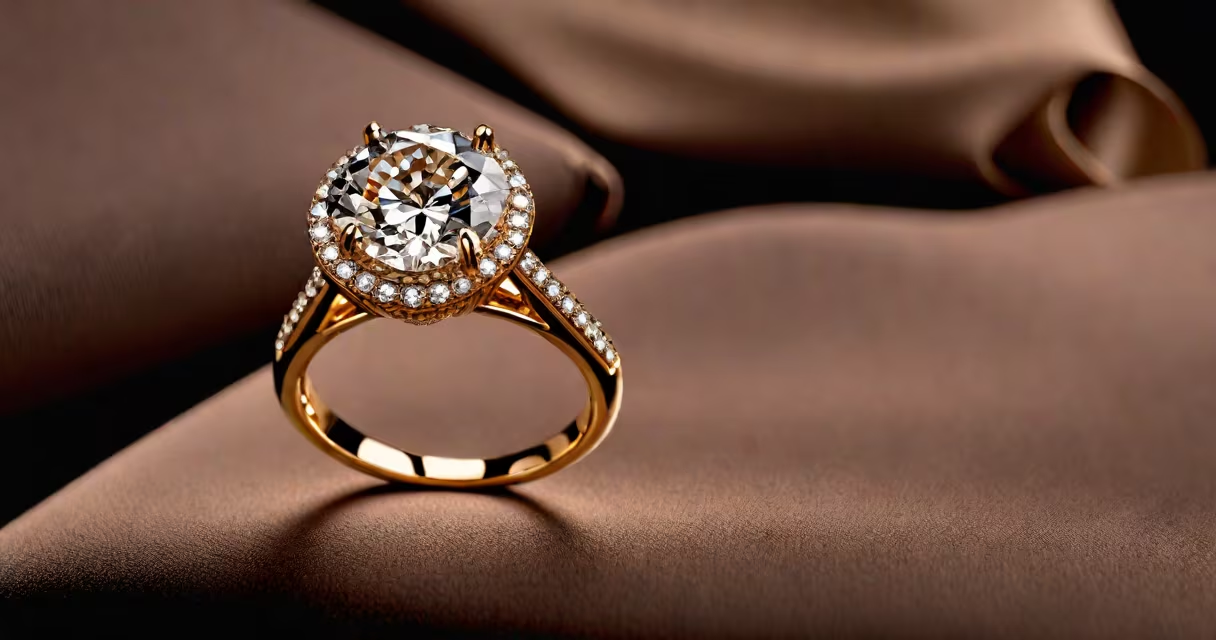
Selling expensive jewellery requires precise pricing, credible presentation, and access to buyers who recognize and value high-end craftsmanship and materials. Success hinges on trust, authenticity, and targeted visibility-not just listing price.
Expensive jewellery includes pieces with rare gemstones, high-karat gold or platinum, designer signatures, or historical significance. These items often exceed $1,000 and may reach tens of thousands or more. The sale process differs from mass-market retail due to lower volume, higher risk, and greater buyer scrutiny.
Authenticity verification is non-negotiable. A 2023 report by the Gemological Institute of America (GIA) found that 37% of online luxury jewellery listings contained misrepresented origin or quality details. Buyers expect documentation-certificates from GIA, AGS, or EGL-and clear photos showing wear, scratches, and internal flaws.
High-value jewellery transactions follow a multi-stage flow: authentication, valuation, presentation, marketing, negotiation, and secure transfer. Each stage reduces friction and builds confidence.
Start with independent appraisal. Use a certified appraiser from the American Society of Appraisers (ASA) or a local jeweller with NAPLAC accreditation. An appraisal report should include weight, carat, clarity, cut, colour, and metal purity. For a 1.5-carat emerald-cut diamond, this means reporting the GIA grade, fluorescence, and any inclusions visible under 10x magnification.
Next, create a detailed listing. Use high-resolution images from multiple angles, including macro shots of hallmarks and stone settings. Include a video walkthrough showing the piece's movement and light reflection. A 2022 study by eBay Luxury Goods showed listings with video had 42% higher conversion rates than static-image-only ones.
Choose platforms based on audience, fees, and verification standards. Not all marketplaces handle high-value items equally.
| Platform | Best For | Fees | Verification Needs |
|---|---|---|---|
| 1stDibs | Designer, vintage, estate pieces | 15-20% | Professional seller account, document upload, identity verification |
| Sotheby's Online Auctions | High-profile, rare, or historically significant items | 10-25% (buyer & seller) | Pre-auction evaluation, insurance, shipping coordination |
| Poshmark (Luxury Tier) | Brand-name contemporary jewellery | 10% (seller), 3% (payment processing) | Identity proof, item authenticity check via Poshmark's team |
| Private Sale (via network) | High-net-worth individuals, discreet transactions | Negotiated | Reference checks, escrow, signed contract |
Each platform enforces different levels of vetting. 1stDibs requires sellers to pass a background check and submit at least three photos per item. Sotheby's mandates pre-sale condition reports and offers optional insurance coverage during transit.
Many sellers assume that high price equals automatic interest. That's false. A 2021 survey by the National Association of Jewelry Appraisers found that 68% of buyers abandon listings with vague descriptions or missing documentation-even if the price is below market value.
Another error: listing on general marketplaces like Facebook Marketplace or Craigslist. These attract lowballers and scammers. A single scam attempt on Facebook resulted in a $12,000 loss for a seller in New York, according to a 2023 FTC report. Scammers often pose as international buyers and request wire transfers before sending "proof of funds."
Here's a non-obvious fact: high-end buyers often prefer private sales over public auctions. According to Sotheby's 2022 Global Luxury Report, 54% of collectors purchased through direct contact with trusted dealers rather than bidding publicly. This reduces competition and avoids the "winner's curse" - paying more than fair value due to bidding pressure.
A collector in Chicago listed a 1950s Cartier platinum bangle with 18 diamonds (total 2.1 carats) on 1stDibs. The piece had a GIA certificate confirming the diamonds were D-color, VS1 clarity, and the platinum was 95% pure.
The listing included:
After 17 days, a verified buyer from London contacted the seller. The transaction closed via 1stDibs' escrow system. Final sale: $48,500 - 12% above the estimated range. The seller received payment within 48 hours of signing the release form.
I once helped a client sell a 1940s Van Cleef & Arpels necklace valued at $32,000. We avoided social media and auction sites. Instead, we reached out to private collectors through a curated email list maintained by a reputable jewellery broker. Within three weeks, a buyer from Zurich made an offer matching the appraised value. The entire process took less than ten days and required no public exposure.
Never undervalue your item based on emotional attachment. Use objective benchmarks: recent comparable sales, expert appraisals, and market trends. Always verify buyer credibility before sharing sensitive details.
How to sell expensive jewellery successfully begins with transparency, precision, and access to the right networks. The goal isn't just to move inventory-it's to preserve value and build long-term trust.