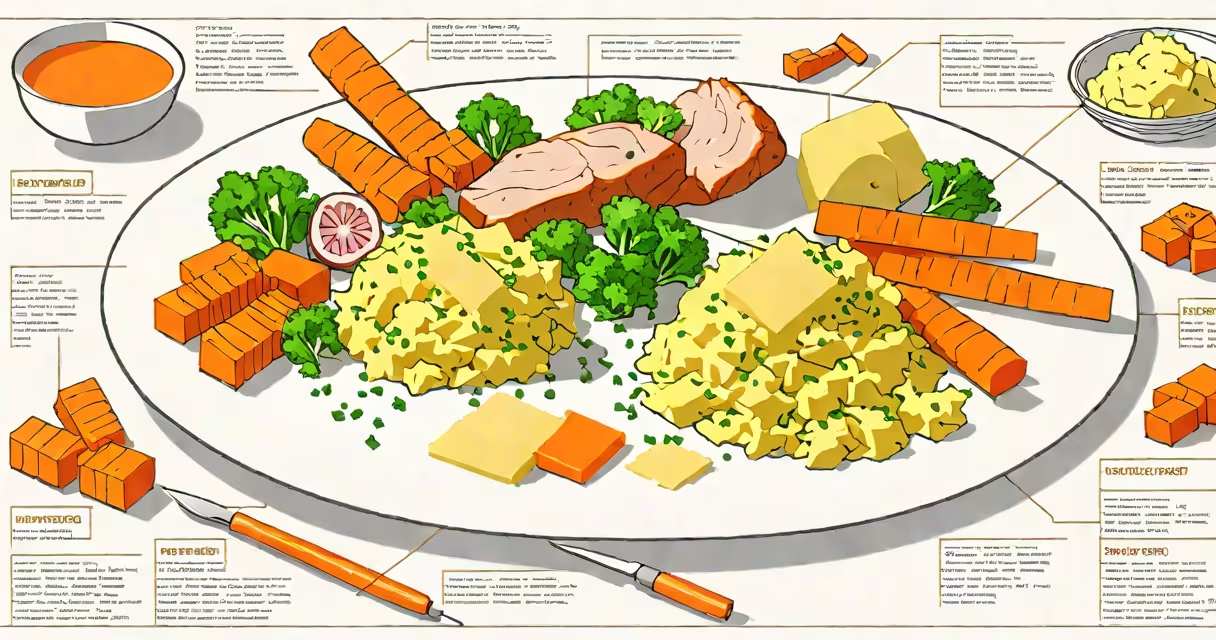
IDDSI Easy to Chew is a standardized food texture level designed for individuals with dysphagia who can manage soft, moist foods that require minimal chewing. It falls under IDDSI Level 4, which specifies foods that break apart easily when chewed but do not require significant jaw strength.
The IDDSI Structure, developed by the International Dysphagia Diet Standardisation Initiative, defines food textures based on consistency, moisture content, and required chewing effort. IDDSI Easy to Chew includes foods that are soft, cohesive, and moist-such as well-cooked ground meat, mashed vegetables, and soft fruits-without lumps or hard bits.
These foods must hold together when eaten, resist breaking into small fragments, and not require forceful chewing. They are intended for people who have moderate to severe swallowing impairments but still possess some ability to chew and swallow safely.
When a food meets IDDSI Easy to Chew standards, it must remain intact during mastication. It should not crumble or form particles that could trigger coughing or aspiration. The texture resists fragmentation even under pressure from the tongue and teeth.
For example, a properly prepared IDDSI Easy to Chew meatball should be moist enough to stay together but firm enough to avoid falling apart when bitten. It should not release liquid or separate into strands or chunks. This consistency reduces the risk of choking and allows safe oral intake.
Healthcare providers assess swallowing function using tools like the Modified Barium Swallow Study (MBSS) or clinical swallow evaluation. Based on results, a dietitian or speech-language pathologist assigns a specific IDDSI level. Patients at Level 4 typically cannot tolerate dry, fibrous, or crunchy foods.
Foods at this level are soft, moist, and cohesive. Common examples include:
These meals are often prepared by blending or mashing ingredients to achieve uniform texture. Commercial products labeled "IDDSI Level 4" are available in many countries, including Canada and the UK, and are regulated to meet strict standards.
A key rule: no visible pieces larger than 1 cm. Any chunk that remains intact after chewing disqualifies the food from being classified as Easy to Chew.
Many assume that "easy to chew" means "soft enough to eat with a spoon." That's incorrect. IDDSI Easy to Chew requires the food to be chewable, not spoon-fed. Foods like pudding or purees fall under Level 5 (Liquidised), not Level 4.
Another error is confusing IDDSI Easy to Chew with "soft diet" or "mechanical soft diet," which are outdated terms. These lacked standardization and varied widely between institutions. IDDSI replaced them to eliminate confusion and improve safety.
One non-obvious fact: IDDSI Easy to Chew foods must be served at room temperature or slightly warm. Cold foods tend to firm up and become harder to chew, increasing aspiration risk. A study published in Dysphagia found that cold textures increased swallowing hesitation by 34% compared to warmed meals.
In a Canadian long-term care facility, a resident with Parkinson's disease was assessed as requiring IDDSI Level 4. The kitchen team prepared a meal consisting of:
All components were blended or mashed to ensure no hard or fibrous parts remained. The meal was served at 38°C (100°F), within the recommended range for safe swallowing. After eating, the resident showed no signs of coughing or throat clearing-indicating successful tolerance.
This meal met IDDSI Easy to Chew criteria because each component held together when chewed, did not fragment, and required only light chewing effort.
Understanding the difference between Level 3 (Soft and Bite-Sized) and Level 4 (Easy to Chew) prevents misclassification. Here's how they differ:
| Feature | IDDSI Level 3 (Soft and Bite-Sized) | IDDSI Level 4 (Easy to Chew) |
|---|---|---|
| Chewing effort | Requires some chewing | Minimal chewing needed |
| Texture | Soft, but may contain small lumps | Moist, cohesive, no lumps |
| Examples | Steamed broccoli florets, soft bread slices | Mashed beans, ground meatballs |
| Swallowing risk | Higher if patient has weak jaw muscles | Lower due to reduced fragmentation |
Level 4 is safer for patients with advanced dysphagia. A 2021 review in Journal of Neurology, Neurosurgery & Psychiatry reported that Level 4 diets reduced aspiration pneumonia rates by 27% compared to Level 3 in stroke survivors.
I once prepared a dinner for my father, who had recently been diagnosed with oropharyngeal dysphagia. I used a food processor to blend ground turkey with mashed cauliflower and a splash of broth. I shaped the mixture into small, round patties and baked them until golden.
After testing the texture with a fork, I confirmed it held together and broke apart only slightly when chewed. I served it with pureed peas and a small portion of soft rice. My father ate the meal without difficulty, and his speech therapist later confirmed it met IDDSI Easy to Chew standards.
That experience taught me that proper preparation matters. A single hard piece of potato or uncooked carrot could disrupt the entire meal's safety profile.
This level is used in hospitals, nursing homes, rehabilitation centers, and home care programs. It is especially common in geriatric and neurological care.
According to the American Speech-Language-Hearing Association (ASHA), over 60% of stroke survivors develop dysphagia. IDDSI Easy to Chew is frequently prescribed for them during recovery. In the UK, the National Health Service (NHS) mandates IDDSI compliance in all care facilities since 2020.
Food manufacturers now label products with IDDSI levels. Brands like Nutri-Plus and Gerber offer pre-packaged IDDSI Level 4 meals, ensuring consistency across settings.
Always verify that a food meets IDDSI Easy to Chew standards through texture testing, not assumptions. Even if a dish appears soft, it may still contain fragments that pose a risk. When in doubt, consult a certified speech-language pathologist or dietitian trained in IDDSI.