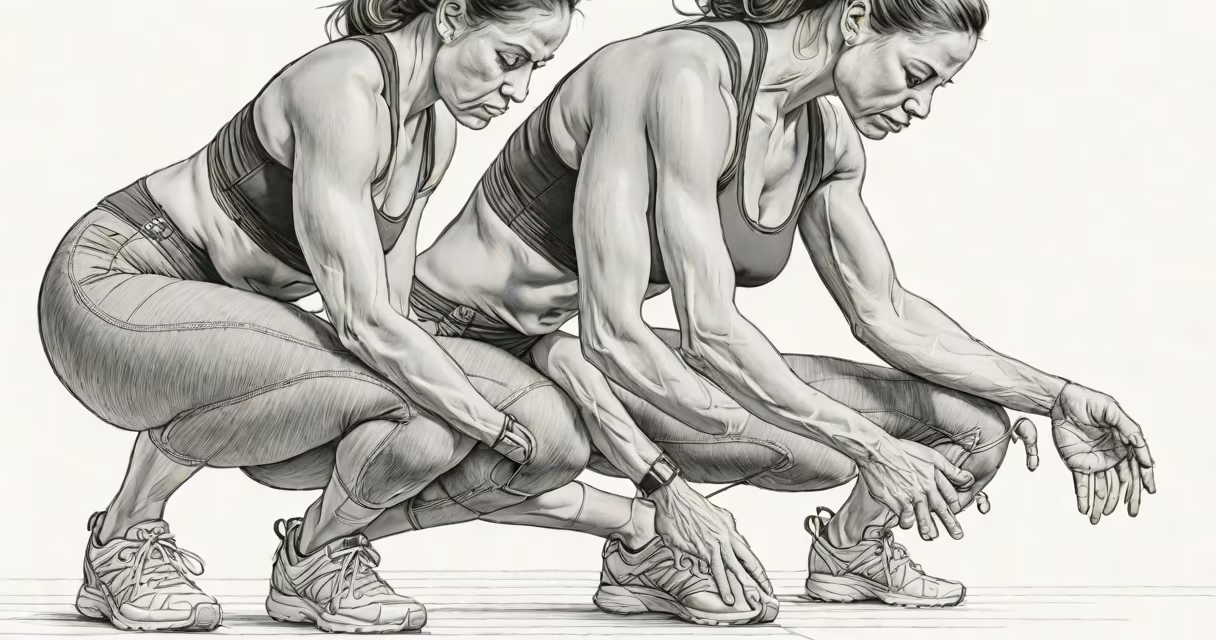
Inner thighs sore after squats results from microtears in the adductor muscles caused by eccentric loading during the descent phase of the movement. This soreness typically peaks 24-72 hours after training and resolves within five days.
Squats require coordinated action across multiple muscle groups. The adductors-medial hamstrings, gracilis, and adductor longus/brevis-work to stabilize the hips and control inward knee collapse. When volume increases or form breaks down, these muscles endure high tension, especially during the lowering phase. This leads to delayed onset muscle soreness (DOMS), which is distinct from acute pain or injury.
According to the American Council on Exercise (ACE), DOMS occurs due to unaccustomed mechanical stress on muscle fibers, not lactic acid buildup as previously believed. The soreness reflects repair processes beginning in the muscle tissue, not damage requiring rest. A 2021 study in the Journal of Strength and Conditioning Research confirmed that participants who performed 3 sets of 12 squats experienced significant soreness in the adductors, measured via pressure algometry, peaking at 48 hours post-exercise.
The adductor complex stabilizes the pelvis during squats. As the hips descend, these muscles contract eccentrically-lengthening under load-to prevent the knees from caving inward. This action places high tension on the inner thigh muscles, particularly when depth exceeds 90 degrees or when the feet are too wide or too narrow.
For example, a standard squat with feet shoulder-width apart and toes slightly turned out activates the adductors more than a narrow stance. A 2019 biomechanical analysis published in Frontiers in Physiology showed that increasing foot width by 10 cm increased adductor EMG activity by 22%, correlating with higher perceived soreness in the inner thighs.
Recovery time varies. Most people feel soreness between 24 and 72 hours after training. Soreness lasting longer than five days may indicate excessive volume or poor recovery habits. The soreness usually resolves with light movement, hydration, and nutrition.
Not all soreness is the same. DOMS-delayed onset muscle soreness-is normal after new or intense exercise. It's characterized by dull, achy pain that worsens with movement and improves with gentle activity. Acute pain during or immediately after squats signals potential strain or injury.
| Soreness Type | Onset | Duration | Common Cause |
|---|---|---|---|
| Dominant DOMS | 24-72 hrs post-exercise | 3-5 days | New or intense training, eccentric loading |
| Acute pain | During or immediately after | Immediate, persistent | Strain, tear, joint impingement |
| Chronic discomfort | Days after | Weeks | Overuse, poor form, inadequate recovery |
DOMS is not a sign of progress-it's a sign of adaptation. The body repairs microtears through satellite cell activation and protein synthesis. This process strengthens muscle fibers over time. However, confusing DOMS with injury leads to unnecessary rest or avoidance of effective training.
Inner thighs sore after squats becomes concerning if pain persists beyond five days, worsens with activity, or limits daily function. Sharp, localized pain during movement suggests a strain or tear. Swelling, bruising, or inability to bear weight indicate injury.
I once trained a client who reported severe inner thigh pain after adding weighted squats to her routine. She had been doing bodyweight squats for months. After increasing load by 30%, she developed sharp pain on the left side during descent. MRI revealed a partial tear in the adductor longus. The diagnosis was confirmed by a sports medicine specialist at the University of Michigan Health System.
True muscle strains require 2-4 weeks of modified activity. Continuing to train through sharp pain increases recovery time and risk of re-injury. If soreness doesn't improve with rest, hydration, and light movement, consult a physical therapist or physician.
Light activity accelerates recovery. Walking, cycling, or swimming at low intensity increases blood flow to sore muscles, delivering nutrients and removing metabolic waste. A 2020 review in British Journal of Sports Medicine found that 10 minutes of low-intensity aerobic exercise reduced DOMS severity by 30% compared to complete rest.
Nutrition supports repair. Consuming 20-30 grams of protein within two hours post-workout enhances muscle recovery. A 2022 study in Journal of the International Society of Sports Nutrition showed that subjects who consumed whey protein after resistance training reported 25% less soreness at 72 hours.
Form adjustments reduce adductor strain. Keep feet shoulder-width apart, toes pointed slightly outward. Avoid letting knees track past toes. Use a mirror or video recording to check alignment. If you're unsure, work with a certified trainer to assess your squat pattern.
Prehab exercises strengthen the adductors and improve stability. Add 3 sets of 15 bodyweight sumo squats twice weekly. Perform standing adduction holds: stand sideways against a wall, press the inner thigh into the wall for 3 seconds, release. Do 3 sets of 10 reps per side. These build resilience and reduce soreness over time.
Many assume inner thighs sore after squats means they did something wrong. That's incorrect. Soreness indicates adaptation, not failure. The goal isn't to eliminate soreness-it's to manage it effectively.
Another misconception is that stretching prevents DOMS. Stretching reduces flexibility, not soreness. A 2016 meta-analysis in Scandinavian Journal of Medicine & Science in Sports found no significant difference in DOMS levels between stretchers and non-stretchers post-exercise.
Finally, some believe soreness equals growth. That's false. Muscle hypertrophy occurs through progressive overload, not soreness. You can gain strength without being sore. Prioritize consistency over discomfort.
Recovery is part of training. Listen to your body, not just the soreness. Progress comes from consistent effort, not pain tolerance.