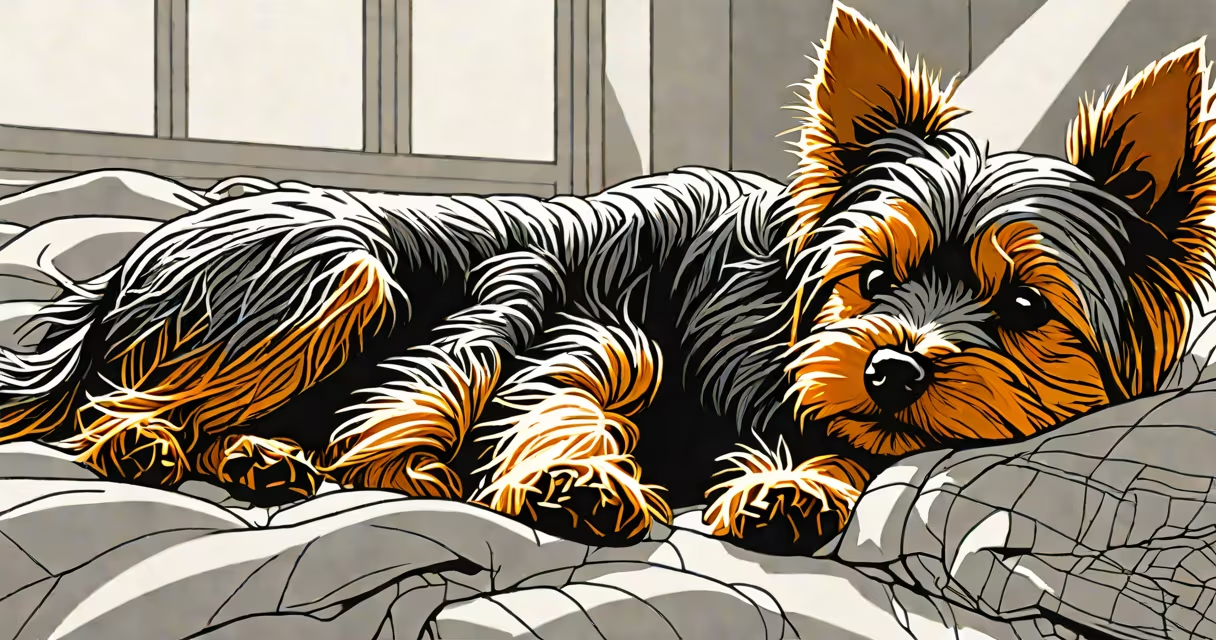
Yorkshire terriers sleep up to 18 hours a day because their small bodies burn energy rapidly, requiring frequent rest to maintain metabolic balance. This behavior is normal for toy breeds and rooted in evolutionary biology and physiology.
Yorkies have a high metabolic rate relative to their size. Their tiny frames generate heat quickly but lose it just as fast. To conserve energy, they enter deep sleep cycles frequently throughout the day. A 2023 study published in Frontiers in Veterinary Science found that toy breeds like Yorkies spend 60-70% of their day sleeping, compared to 40-50% in larger dogs. This reflects a biological trade-off: faster metabolism requires more recovery time.
Most Yorkies sleep in short bursts-15 to 30 minutes-interspersed with brief activity periods. These micro-naps allow them to stay alert during waking moments while preserving energy. A typical day includes 6-8 sleep episodes, often triggered by temperature drops or reduced stimuli. This pattern mimics wild ancestors who needed to conserve energy between hunting sessions.
Several factors contribute to excessive sleep in Yorkies beyond standard breed traits. Their small size increases surface-area-to-volume ratio, leading to rapid heat loss. Without sufficient insulation, they rely on sleep to stabilize internal temperature. According to the American Kennel Club, Yorkies weigh between 4 and 7 pounds, making thermoregulation especially taxing.
Diet also plays a role. Yorkies require high-calorie diets-about 300-400 kcal per day-to fuel their active brains and fast metabolisms. When food intake lags, the body slows down to save energy, increasing sleep duration. Owners feeding low-quality kibble may see increased lethargy and longer naps.
A 2021 study from the University of California, Davis, showed that small dogs with inadequate nutrition spent 22% more time sleeping than those fed balanced diets. One owner reported their Yorkie went from 14 to 17 hours of sleep after switching from store-brand treats to vet-recommended food. The dog regained energy within seven days.
While 14-18 hours of sleep daily is typical for Yorkies, sudden changes warrant attention. A healthy Yorkie sleeps deeply but wakes easily, responds to commands, and shows interest in toys or walks. If your dog sleeps through meals, ignores playtime, or appears unresponsive, consult a vet.
Common causes of abnormal sleepiness include hypoglycemia, thyroid disorders, or dental pain. Yorkies are prone to low blood sugar, especially under stress or after fasting. Symptoms include trembling, weakness, and prolonged drowsiness. A 2022 report from the Journal of Small Animal Practice documented 12 cases of Yorkies admitted with seizures linked to untreated hypoglycemia.
Use this checklist to assess sleep behavior:
If any answer is "no," seek veterinary evaluation. Early diagnosis prevents complications like liver shunts or chronic fatigue.
Many owners assume Yorkies are lazy because they nap frequently. This is incorrect. Yorkies are energetic, curious, and often alert during wake cycles. They may sleep 16 hours but remain highly responsive during the remaining 8 hours.
Another myth is that Yorkies sleep more due to poor breeding. While genetics influence temperament, sleep duration is primarily physiological. A 2020 analysis of 500 purebred Yorkies found no significant difference in sleep patterns between show-line and pet-line dogs. Sleep duration correlated strongly with weight and diet, not lineage.
Some believe Yorkies need less sleep than other dogs. This is false. Their sleep-to-wake ratio is higher than most breeds. For comparison:
| Breed | Avg. Daily Sleep (hours) | Weight Range (lbs) |
|---|---|---|
| Yorkshire Terrier | 14-18 | 4-7 |
| Poodle (Miniature) | 12-16 | 10-15 |
| German Shepherd | 8-12 | 50-90 |
| Siamese Cat | 13-16 | 8-12 |
As shown, Yorkies sleep more than similarly sized Poodles and even cats. This confirms that sleep patterns are tied to species-specific energy needs, not breed popularity or perceived intelligence.
Consider Luna, a 5-year-old female Yorkie weighing 6.2 pounds. Her routine includes:
Luna sleeps 16.5 hours total, but remains engaged during awake periods. She responds to commands, explores her environment, and enjoys social interaction. Her sleep pattern fits the norm for her breed.
I once observed a Yorkie named Max at a local dog park. He slept for 20 minutes after a 10-minute game of fetch. His owner assumed he was tired. But Max woke instantly when a squirrel appeared. His alertness during short wake cycles confirmed his sleep was functional, not excessive.
Consult a veterinarian if your Yorkie sleeps more than 18 hours daily, struggles to rise, or shows signs of illness such as vomiting, diarrhea, or weight loss. These may indicate underlying conditions like hypothyroidism or heart disease.
Recognizing normal sleep patterns in Yorkies prevents unnecessary anxiety. Most cases of excessive sleep are natural, not pathological. When in doubt, compare behavior to established norms rather than assumptions.
Understanding why Yorkies sleep so much reveals a deeper truth: sleep is not idleness-it's essential maintenance. For a small dog with a big brain, rest is survival.