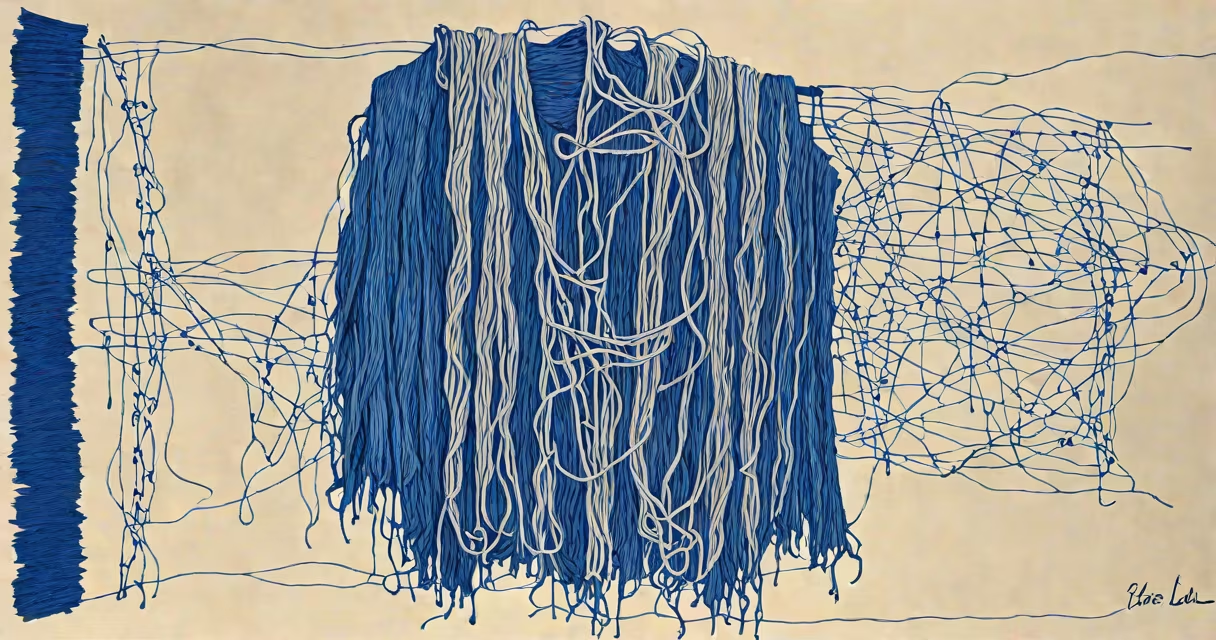
In the Bible, blue (Hebrew: *tekelet*) represents divine revelation, God's presence, and heavenly authority. It appears in sacred garments, the Tabernacle, and prophetic visions, signifying connection to the divine area.
Blue was not a common dye in ancient Israel. It came from crushed murex snail shells, a rare and expensive process. The resulting hue was deep, lustrous, and associated with royalty and holiness. Its scarcity reinforced its sacred status.
The Hebrew word *tekelet* appears 46 times in the Old Proof. It is most frequently linked to the priestly garments described in Exodus 28 and 39. These garments included the ephod, breastplate, and robe, all woven with blue thread alongside purple and scarlet.
Blue served both aesthetic and theological purposes. It wasn't merely decorative-it carried symbolic weight. When God instructed Moses to make the Tabernacle and priestly attire, He specified materials that reflected His nature.
Exodus 26:31-35 details the inner veil separating the Holy Place from the Most Holy Place. This curtain was made of blue, purple, and scarlet yarn, embroidered with cherubim. The blue threads were meant to evoke heaven's glory and mark the boundary between human access and divine holiness.
Numbers 15:38-40 commands Israelites to attach blue fringes (*tzitzit*) to their garments' corners. These were reminders of God's commandments. "So you will remember and do all my commands," the passage says, "and be holy to your God." The blue thread acted as a visual prompt for obedience.
Two primary sources produced blue dye in antiquity:
While lapis lazuli was valued in Mesopotamia and Egypt, the Bible consistently references *tekelet* as a dyed textile. The murex origin is supported by the Mishnah (Menachot 4:1), which describes the dyeing process and identifies the snail as the source.
| Type | Source | Biblical Use | Historical Evidence |
|---|---|---|---|
| Tekelet | Murex snail (Murex trunculus) | Priestly garments, tzitzit, Tabernacle veil | Archaeological finds from 1st-century BCE sites in Israel; identified via chemical analysis of dyed fibers |
| Lapis lazuli | Mineral from Afghanistan | Paint pigment, ceremonial adornment | Used in Egyptian tomb art; not documented in biblical textile production |
Many assume blue in the Bible symbolizes sadness or mourning. This is incorrect. In Western culture, blue often evokes melancholy, but in ancient Near Eastern symbolism, it represented life, divinity, and eternity.
Another error is equating blue with purity. While white symbolizes moral purity, blue points to divine revelation. For example, in Ezekiel 1:26, the prophet sees a throne "like a sapphire" above the divine chariot. The sapphire is not a metaphor for cleanliness-it's a sign of God's majesty and transcendence.
A lesser-known fact: the original *tekelet* dye was lost during the Roman destruction of Jerusalem in 70 CE. The exact method of extraction was forgotten. Modern efforts to revive it began in the 20th century, led by scholars like Rabbi Yitzchak HaLevi Herzog and the Israel Antiquities Authority.
Consider Exodus 28:31-35: "Make the robe of the ephod entirely of blue cloth... On the hem, make pomegranates of blue, purple, and scarlet wool, and gold bells between them."
The robe was worn by Aaron, the high priest. The blue was not incidental-it marked him as a mediator between God and people. The bells added sound to the visual symbolism: movement, voice, and sacred space intertwined.
Another example: Revelation 21:18-21 describes the New Jerusalem's walls made of jasper and foundations of precious stones. The city's gates are made of pearls, and its streets are "pure gold, like transparent glass." While not explicitly blue, the vision reflects celestial splendor. Blue appears in earlier prophetic visions-such as Ezekiel's throne room-and continues in Christian iconography.
I once visited the Israel Museum in Jerusalem and saw a fragment of a 2nd-century BCE tunic dyed with murex blue. The color had survived nearly 2,000 years. Holding it, I felt the weight of history-the same material used in the Tabernacle, worn by priests who stood in God's presence.
Blue is sometimes mistaken for green in biblical descriptions. Green symbolizes fertility and earthly life (e.g., the Tree of Life in Genesis). Blue, by contrast, points upward-toward heaven, revelation, and covenant.
It's also frequently mislabeled as "sky blue" or "light blue." The biblical *tekelet* was a deep, rich indigo-closer to navy than pastel. Ancient dye samples show a hue that ranges from violet-blue to dark blue, depending on exposure and concentration.
Some interpret blue in dreams or visions as a sign of peace. While peace is a biblical theme, blue's deeper meaning lies in divine authority. In Daniel 7:9, the Ancient of Days sits on a throne "like flames of fire," and His clothing is "white as snow." The vision includes a rainbow-like halo-but the focus is on power, not serenity.
The color blue in the Bible signifies divine presence, revelation, and sacred authority. It was reserved for priestly garments, ritual objects, and symbolic fringes. Its rarity and cost emphasized holiness. Understanding what the color blue means in the Bible requires looking beyond modern associations and examining ancient context, archaeological evidence, and scriptural intent.