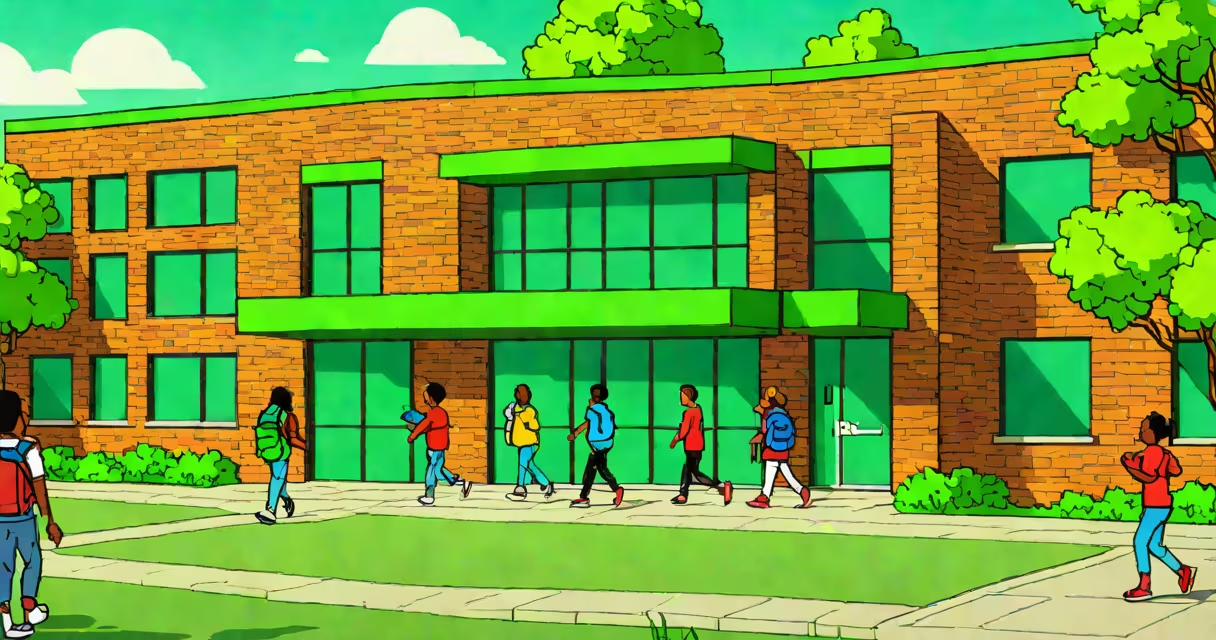
John Hanson Community School is a public elementary and middle school located in Upper Marlboro, Maryland, serving students in grades K-8. It operates under Prince George's County Public Schools (PGCPS) and follows a community school model that integrates academics, health services, and family support programs.
The school's structure reflects a shift from traditional schooling toward a complete approach. Instead of treating education as isolated from student well-being, John Hanson embeds social workers, mental health counselors, and nutritionists directly into the campus. This integration allows staff to respond quickly to barriers that affect learning-such as food insecurity, housing instability, or emotional distress-before they impact academic performance.
According to PGCPS's official website, the school was established in 2017 as part of a district-wide initiative to close achievement gaps and improve long-term outcomes for historically underserved communities. It replaced the former John Hanson Middle School, which had struggled with low test scores and high absenteeism. The new model prioritized student engagement, teacher collaboration, and parental involvement from day one.
At John Hanson Community School, the day begins with morning meetings where students and teachers discuss goals, challenges, and values. These sessions build classroom culture and reinforce emotional regulation skills. Teachers use data from formative assessments to adjust instruction weekly, ensuring no child falls behind.
Each student receives a personalized learning plan developed with input from parents, counselors, and subject teachers. For example, a fifth grader struggling with fractions might get targeted tutoring twice a week, access to online math tools, and a parent workshop on supporting homework at home. The school tracks progress through a digital dashboard shared with families monthly.
Community partnerships play a key role. Local organizations such as the Prince George's County Health Department provide free dental screenings and vision tests during school hours. The local library hosts weekly storytime sessions and homework help. A food pantry runs biweekly, distributing groceries to families identified as facing food insecurity.
John Hanson Community School offers a range of structured programs designed to meet diverse student needs. Below is a breakdown of core academic and support services:
| Program Type | Description | Eligibility |
|---|---|---|
| Advanced Academic Program (AAP) | Accelerated curriculum for gifted learners in math and language arts | Students scoring in top 10% on state assessments |
| Special Education Services | Individualized Education Plans (IEPs) and related therapies | Students with diagnosed disabilities |
| After-School Enrichment | STEM clubs, robotics, art, and music programs | All students; free enrollment |
| Family Resource Center | Parent workshops, childcare, job readiness training | Parents/guardians of enrolled students |
One non-obvious feature is the school's "Student Voice Council," composed of students from each grade level. They meet monthly with administrators to propose changes-like extending lunch periods or redesigning the playground. In 2022, their suggestion to install shaded benches led to a $12,000 grant from a local foundation.
Many assume community schools are only for low-income areas. That's incorrect. While John Hanson serves a predominantly low-income population-68% qualify for free or reduced lunch-its model is replicable anywhere. The success lies not in funding alone, but in intentional coordination between educators, families, and service providers.
Another misconception is that community schools lack academic rigor. Data from the Maryland State Department of Education shows that John Hanson outperformed the state average in reading proficiency for grades 3-5 between 2020 and 2023. Math growth was above district averages in grades 4 and 6.
In 2021, a sixth-grade student named Jamal transferred to John Hanson from a neighboring district school. He arrived with a reading level below grade level and frequent absences due to his mother's unstable work schedule. Within six weeks, the school's counselor connected his family with transportation assistance and a free tutoring program.
By March, Jamal's reading score improved by 27 percentile points. His teacher reported increased participation in class discussions. His mother attended two parent-teacher conferences and joined the Family Resource Center's financial literacy course. By year-end, Jamal earned a spot on the honor roll and volunteered to read aloud during school assembly.
This outcome wasn't accidental. It resulted from coordinated efforts across departments-academic, social, and administrative. The school's leadership uses a shared dashboard to monitor student progress in real time, enabling early interventions.
John Hanson Community School demonstrates that education is not just about teaching content-it's about creating conditions where every child can thrive. Its model aligns with research from the National Association of Community Health Centers, which found that schools integrating health and social services see up to a 30% reduction in chronic absenteeism.
For families, the school reduces stress by offering services in one location. Parents don't have to travel between clinics, schools, and social agencies. For educators, it provides tools to address root causes of poor performance rather than symptoms.
When asked about the school's impact, one teacher said, "I've taught in five schools. This is the first where I feel like I'm truly helping kids-not just teaching them."
John Hanson Community School exemplifies how public education can evolve to meet complex needs. It is not a temporary fix or a pilot project. It is a functioning system where academics, health, and family support operate as interdependent parts of a single mission.