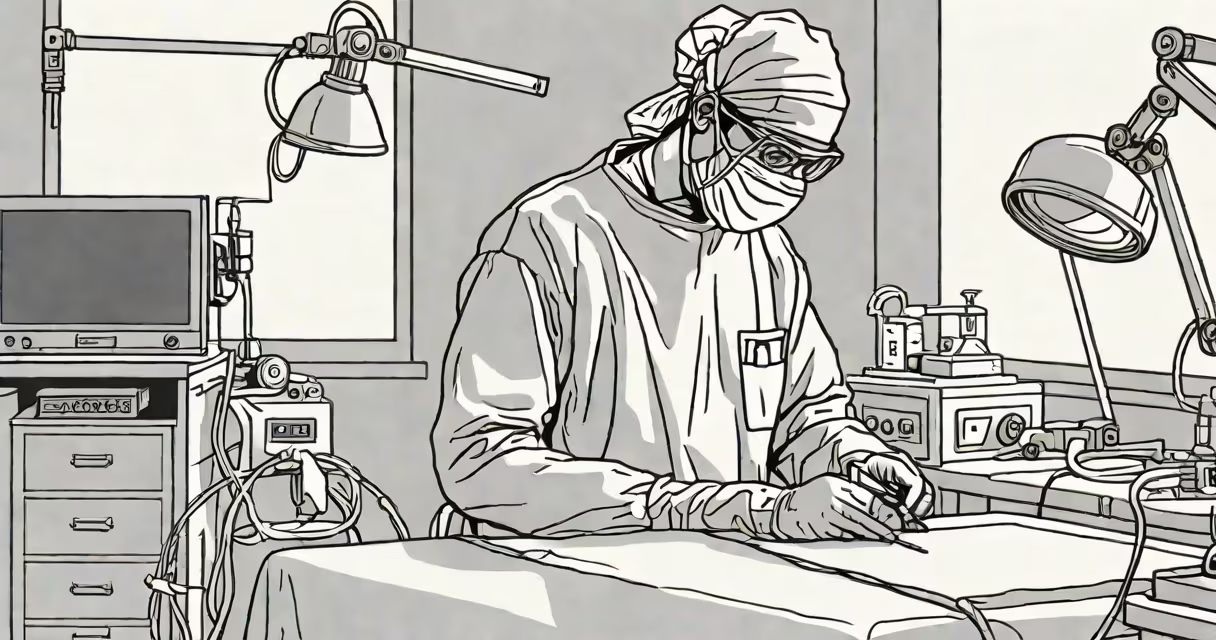
A cardiovascular surgeon is a medical doctor who specializes in surgical treatment of diseases affecting the heart and blood vessels. They perform operations such as coronary artery bypass grafting, valve repair or replacement, and congenital heart defect corrections. These procedures require advanced training and precision under high-stakes conditions.
Cardiovascular surgeons undergo extensive education and clinical training. After completing a bachelor's degree, they attend four years of medical school, followed by five to seven years of residency and fellowship training in cardiothoracic surgery. This totals 12 to 15 years of post-undergraduate education beyond college. Only physicians who complete this rigorous path may practice independently in this field.
The American Board of Thoracic Surgery (ABTS) certifies cardiovascular surgeons after they pass written and oral exams assessing both technical skill and clinical judgment. According to ABTS guidelines, candidates must have completed at least 250 hours of direct surgical experience in adult cardiac cases and 100 hours in pediatric cardiac cases to qualify for certification.
During a typical procedure, the surgeon makes an incision through the sternum (sternal splitting) to access the heart. The patient is placed on a cardiopulmonary bypass machine, which temporarily takes over the function of the heart and lungs. This allows the surgeon to stop the heart and operate on it safely while maintaining circulation.
For coronary artery bypass surgery, the surgeon harvests a healthy blood vessel-usually from the chest wall (internal mammary artery) or leg (saphenous vein)-and attaches it to the coronary arteries beyond blocked areas. This creates a new pathway for blood flow around the obstruction. A single bypass typically takes 3 to 4 hours, depending on complexity.
Valve surgeries involve either repairing damaged valves or replacing them with mechanical or biological prostheses. Mechanical valves last longer but require lifelong anticoagulant medication. Biological valves degrade over time and may need replacement after 10-15 years.
Cardiovascular surgeons treat many conditions, including:
Procedures vary by patient age, anatomy, and urgency. For example, a 65-year-old with severe triple-vessel CAD may undergo off-pump coronary artery bypass (OPCAB), where the heart remains beating during surgery. This reduces risks associated with stopping the heart and using a bypass machine.
| Procedure | Common Indication | Typical Duration | Recovery Time |
|---|---|---|---|
| Coronary Artery Bypass Graft (CABG) | Severe blockage in multiple coronary arteries | 3.5-5 hours | 6-8 weeks |
| Aortic Valve Replacement | Aortic stenosis with symptoms | 3-4 hours | 8-12 weeks |
| Heart Transplant | End-stage heart failure unresponsive to therapy | 6-8 hours | 3-6 months |
Minimally invasive techniques are increasingly used. For example, robotic-assisted mitral valve repair uses small incisions and a camera-guided system. While less traumatic, these methods still require specialized training and are not suitable for all patients.
Cardiovascular surgeons work primarily in tertiary care hospitals with dedicated cardiac surgery units. These facilities must meet standards set by the Society of Thoracic Surgeons (STS), which tracks outcomes like mortality rates and complication incidence.
According to STS data, the 30-day mortality rate for elective CABG in low-risk patients is below 1%. For emergency procedures, such as those following a massive heart attack, mortality rises to about 5%. These numbers reflect the high level of expertise required to manage unpredictable intraoperative events.
Patients referred to cardiovascular surgeons often have symptoms like angina (chest pain), shortness of breath during exertion, or sudden collapse. Diagnostic imaging-such as coronary angiography-confirms blockages before surgery is recommended. Guidelines from the American College of Cardiology state that surgery is indicated when blockages affect more than two major coronary arteries or when the left main coronary artery is narrowed.
Many people confuse cardiovascular surgeons with interventional cardiologists. The latter perform catheter-based procedures like angioplasty and stent placement. These are less invasive and done in a cardiac cath lab, not an operating room. While both treat heart disease, they use different tools and training paths.
Another misunderstanding is that all heart surgery requires open-heart technique. Some procedures, such as transcatheter aortic valve implantation (TAVI), are performed via catheters inserted through the femoral artery. However, TAVI is typically managed by interventional cardiologists, not cardiovascular surgeons-even though it treats similar conditions.
There's also a myth that heart surgery is always life-saving. In reality, some patients undergo surgery with limited benefit due to advanced age, comorbidities, or poor prognosis. The decision to operate involves multidisciplinary evaluation, including input from cardiologists, anesthesiologists, and palliative care specialists.
I once observed a case where a 78-year-old man with severe aortic stenosis was deemed too high-risk for traditional valve replacement. Instead, a TAVI procedure was performed by a team led by a cardiologist. The patient recovered quickly but later developed a stroke. This illustrates that even successful interventions carry risks-and that surgical decisions depend heavily on individual health status.
After medical school, aspiring cardiovascular surgeons enter a general surgery residency lasting five years. Following that, they complete a two- to three-year fellowship in cardiothoracic surgery. During this time, they perform hundreds of procedures under supervision.
Board certification through the American Board of Surgery and the American Board of Thoracic Surgery is mandatory for independent practice. To maintain certification, surgeons must complete continuing medical education credits annually and participate in performance reviews based on outcome data.
According to the Association of American Medical Colleges, only about 150 new cardiovascular surgery fellows are accepted each year in the U.S. This limited pipeline reflects the high bar for entry and the long training timeline.
If you're referred to a cardiovascular surgeon, ask about their volume of procedures. High-volume centers-those performing more than 200 CABGs per year-have better survival rates. The Society of Thoracic Surgeons maintains a public database of hospital outcomes, allowing patients to compare centers.
Understanding your condition and options is critical. A cardiovascular surgeon doesn't make decisions in isolation. They collaborate with a team that includes nurses, perfusionists, and physical therapists. Post-op recovery often begins within 24 hours, with early mobilization shown to reduce complications.
When considering surgery, focus on evidence-based criteria-not anecdotes. The decision to proceed should be based on objective measures like ejection fraction, symptom severity, and anatomical findings. A cardiovascular surgeon provides the surgical solution-but the entire care team ensures the best possible outcome.