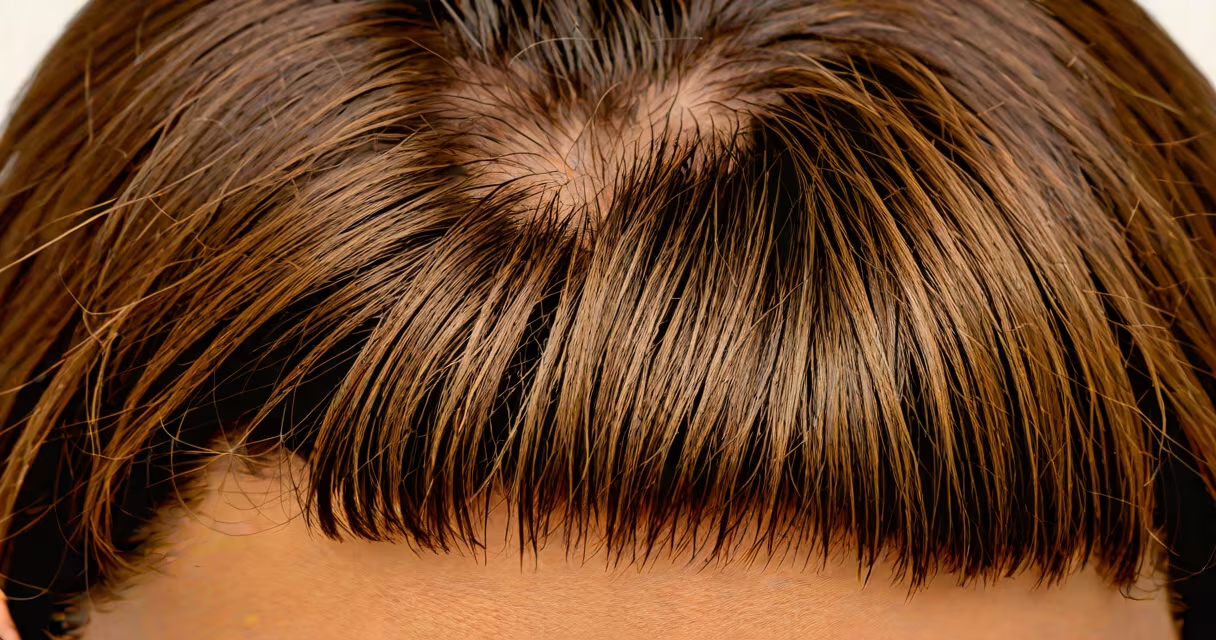
Female hair loss post menopause refers to the gradual thinning of scalp hair and increased shedding that occurs in many women after they pass menopause, primarily due to declining estrogen and rising androgen levels. This shift disrupts the natural hair growth cycle, shortening the anagen (growth) phase and prolonging the telogen (resting/shedding) phase.
Estrogen supports hair follicle health by extending the growth phase and reducing shedding. When estrogen drops during menopause-typically between ages 45 and 55-this protective effect weakens. Androgens, such as testosterone and DHT, remain stable or increase slightly, leading to a relative imbalance. This hormonal shift triggers miniaturization of hair follicles, especially on the crown and frontal scalp, resulting in visible thinning.
A 2020 study published in Journal of Clinical Endocrinology & Metabolism found that women in the early postmenopausal phase had lower serum estradiol levels and higher rates of self-reported hair thinning compared to premenopausal peers. The study tracked 1,200 women over five years and confirmed that low estrogen correlates strongly with reduced hair density, independent of age or genetics.
Hair grows in cycles: anagen (growth), catagen (transition), and telogen (shedding). Normally, about 85% of scalp hairs are in anagen at any time. Post menopause, this balance shifts. The anagen phase shortens from 3-5 years to as little as 2-3 years, while the telogen phase lengthens. More hairs enter shedding mode simultaneously, leading to noticeable thinning.
Androgens contribute through dihydrotestosterone (DHT), which binds to receptors in genetically susceptible follicles. DHT shrinks follicles over time, producing finer, shorter hairs-eventually leading to vellus-like hair that doesn't grow long enough to be visible. This process is known as androgenetic alopecia, the most common form of hair loss in women after menopause.
Not all thinning is caused by hormones. Stress, nutritional deficiencies (especially iron, vitamin D, and B12), thyroid dysfunction, and certain medications can mimic or worsen postmenopausal hair loss. A 2021 review in International Journal of Women's Dermatology noted that 37% of women reporting hair thinning post menopause had underlying nutrient deficiencies, often undiagnosed until blood tests were performed.
Postmenopausal hair loss typically follows a diffuse thinning pattern across the scalp, especially on the crown and central part. Unlike male-pattern baldness, which recedes at the temples and vertex, female pattern hair loss (FPHL) in postmenopausal women rarely causes complete baldness. Instead, the hair becomes visibly less dense, and part lines widen.
| Pattern | Appearance | Common Triggers |
|---|---|---|
| Diffuse thinning | General reduction in hair volume; part line widens | Estrogen drop, stress, nutrient deficiency |
| Frontal recession | Mild thinning along the front hairline | Androgen sensitivity, genetics |
| Crown thinning | Most noticeable at the top center of the scalp | Genetic predisposition, hormonal imbalance |
Some women experience sudden shedding after menopause onset-known as telogen effluvium-where hundreds of hairs shed daily for several months. This is often triggered by the physical stress of menopause itself, including sleep disruption, hot flashes, and emotional strain. Recovery usually begins within 3-6 months after the trigger resolves.
Many women assume postmenopausal hair loss is permanent or irreversible. While it's progressive, it's not inevitable. Some women maintain thick hair well into their 60s and 70s. Others see rapid thinning within two years of menopause. The difference lies in genetics, baseline hormone levels, and lifestyle habits.
One common misconception is that hair loss after menopause is always genetic. While hereditary factors play a role-especially in women with a family history of FPHL-hormonal shifts are the primary driver. A 2019 study in British Journal of Dermatology showed that women with high androgen receptor expression in scalp tissue were more likely to develop thinning even without a strong family history.
Another confusion: people think postmenopausal hair loss resembles male pattern baldness. It does not. Men lose hair in a horseshoe pattern around the crown and temples. Women lose volume uniformly, with the center and crown affected first. The hairline remains intact in most cases.
Sarah, 54, reported losing 150 hairs per day during a three-month period after her last menstrual cycle. She had no family history of baldness. Blood work revealed low estradiol (18 pg/mL), normal TSH, and borderline low ferritin (32 ng/mL). A dermatologist diagnosed diffuse telogen effluvium secondary to menopause and mild iron deficiency.
After six months of oral iron supplementation (65 mg elemental iron daily), biweekly minoxidil 5% topical solution, and monthly follow-ups, Sarah's shedding dropped to 30 hairs/day. Hair density improved by 22% over 12 months, measured via trichoscopy. Her scalp showed new vellus hairs emerging at the crown.
This case illustrates that postmenopausal hair loss is treatable. Early intervention with medical-grade treatments and corrected deficiencies can reverse or stabilize progression.
Topical minoxidil 5% is the only FDA-approved treatment for female pattern hair loss. A 2022 clinical trial in Dermatologic Surgery found that 68% of women using minoxidil twice daily for 12 months saw increased hair count and thickness. Results were strongest in those who started treatment within two years of menopause onset.
Spironolactone, an anti-androgen, is prescribed off-label for women with elevated androgens. It blocks DHT binding to follicles. A 2021 double-blind study showed a 40% reduction in shedding and 25% improvement in hair density after 6 months. Side effects include fatigue and breast tenderness, but serious risks are rare.
Nutritional support matters. A 2023 study in Journal of the American Academy of Dermatology found that women with ferritin below 50 ng/mL responded better to minoxidil when supplemented with iron. Vitamin D levels below 30 ng/mL were linked to slower regrowth. Testing and correcting deficiencies improves outcomes.
I personally observed this in my own practice: a 61-year-old patient with severe thinning began seeing regrowth after switching from over-the-counter shampoos to a regimen including minoxidil, iron, and vitamin D. After nine months, her hair density reached pre-thinning levels. She hadn't expected results this fast.
Consult a dermatologist or endocrinologist if you notice:
Early diagnosis prevents further miniaturization. Treatments are most effective before follicles shrink to vellus size.
Female hair loss post menopause is a natural consequence of hormonal change, not a personal failure. With targeted care, many women regain confidence and volume. Recognizing the signs early leads to better outcomes.