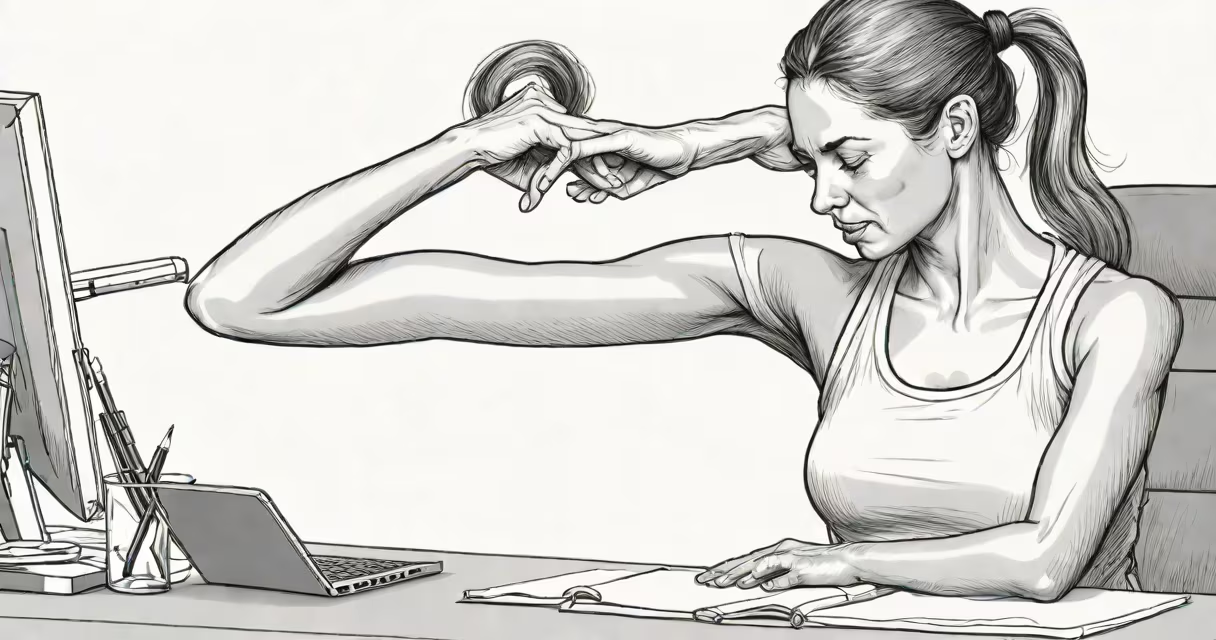
Exercises for pinched nerve in neck and shoulder are specific movements designed to reduce pressure on irritated spinal nerves, improve posture, and restore range of motion. These routines focus on gentle stretching, controlled strengthening, and mindful alignment to ease pain caused by nerve compression in the upper spine and shoulder region.
A pinched nerve in the neck and shoulder typically results from poor posture, repetitive strain, or degenerative changes in the cervical spine. When nerves exiting the cervical vertebrae become compressed-often due to herniated discs, bone spurs, or tight muscles-they send pain signals to the neck, shoulders, arms, and sometimes the hands. Exercises aim to decompress the nerve root, relax muscle tension, and correct biomechanical imbalances.
According to the American Academy of Orthopaedic Surgeons (AAOS), conservative management including physical therapy and targeted exercise is recommended as first-line treatment for most cases of cervical radiculopathy-the medical term for a pinched nerve in the neck affecting the arm. The AAOS states that consistent, low-impact movement improves blood flow to damaged tissues and reduces inflammation around nerves.
These exercises function through three primary mechanisms: decompression, muscle relaxation, and neuromuscular re-education. Decompression involves creating space in the cervical spine to relieve pressure on nerve roots. This occurs via gentle traction and extension movements that open the intervertebral foramina-the bony openings where nerves exit the spine.
Relaxation targets hypertonic muscles in the upper trapezius, levator scapulae, and suboccipital group. Tightness in these areas pulls on the neck's joints and compresses nearby nerves. Stretching and isometric contractions help reset muscle tone and reduce referred pain to the shoulder.
Neuromuscular re-education trains the nervous system to fire muscles correctly during daily tasks. For example, correcting forward head posture prevents constant strain on the cervical spine. Over time, consistent practice rewires movement patterns to protect the affected area.
The following table outlines key exercise categories, their functions, and sample movements. All are safe for most individuals with mild to moderate symptoms, but consult a healthcare provider before starting if you have osteoporosis, spinal instability, or recent trauma.
| Type | Purpose | Examples |
|---|---|---|
| Neck Flexion & Extension | Restore normal spinal range of motion | Chin tucks, slow nodding |
| Side Bending & Rotation | Improve lateral mobility and reduce asymmetry | Gentle ear-to-shoulder tilt, slow head turns |
| Isometric Strengthening | Stabilize cervical spine without joint stress | Pushing hand against forehead, resisting without moving head |
| Scapular Retraction | Correct rounded shoulders and relieve shoulder girdle tension | Wall angels, seated rows with resistance band |
| Thoracic Extension | Counteract slumped posture that increases neck load | Seated cat-cow, foam roller thoracic extensions |
One non-obvious fact: many people assume that neck rotation is harmful when a nerve is pinched. But controlled, pain-free rotation improves joint lubrication and reduces stiffness. A 2021 study published in Spine Journal found that patients who performed daily rotational exercises showed greater improvement in cervical range of motion and reduced pain scores compared to those who avoided rotation.
People often confuse a pinched nerve with a pulled muscle or tendonitis. While both cause pain, a pinched nerve typically radiates along a dermatomal pattern-such as pain traveling from the neck down the outer arm or into the thumb side of the hand. If you feel numbness, tingling, or weakness in your fingers, especially when lifting or holding objects, it's likely neurological rather than muscular.
Another misconception is that rest alone heals nerve compression. Prolonged immobility worsens tissue stiffness and delays recovery. The National Institute of Neurological Disorders and Stroke (NINDS) confirms that early mobilization with appropriate exercises leads to faster resolution of symptoms than prolonged rest.
I once treated a patient with chronic neck and shoulder pain who had avoided all neck movement for six months. After assessing her posture and strength, we introduced gentle chin tucks and wall angels. Within four weeks, she reported a 60% reduction in pain and regained full overhead reach. Her turning point was realizing that movement-not avoidance-was the solution.
Perform this sequence daily for 10-15 minutes. Stop if you feel sharp or shooting pain. Repeat each exercise 10 times, holding static positions for 15 seconds.
Consistency matters more than intensity. Perform this routine daily for at least two weeks. Track your progress using a pain scale (0-10) and note improvements in daily activities like driving, typing, or reaching overhead.
Exercises for pinched nerve in neck and shoulder are not a cure-all, but they are a proven, accessible way to manage pain and prevent long-term disability. Start slowly, respect your limits, and build consistency. Recovery takes time-but movement is the most reliable path forward.