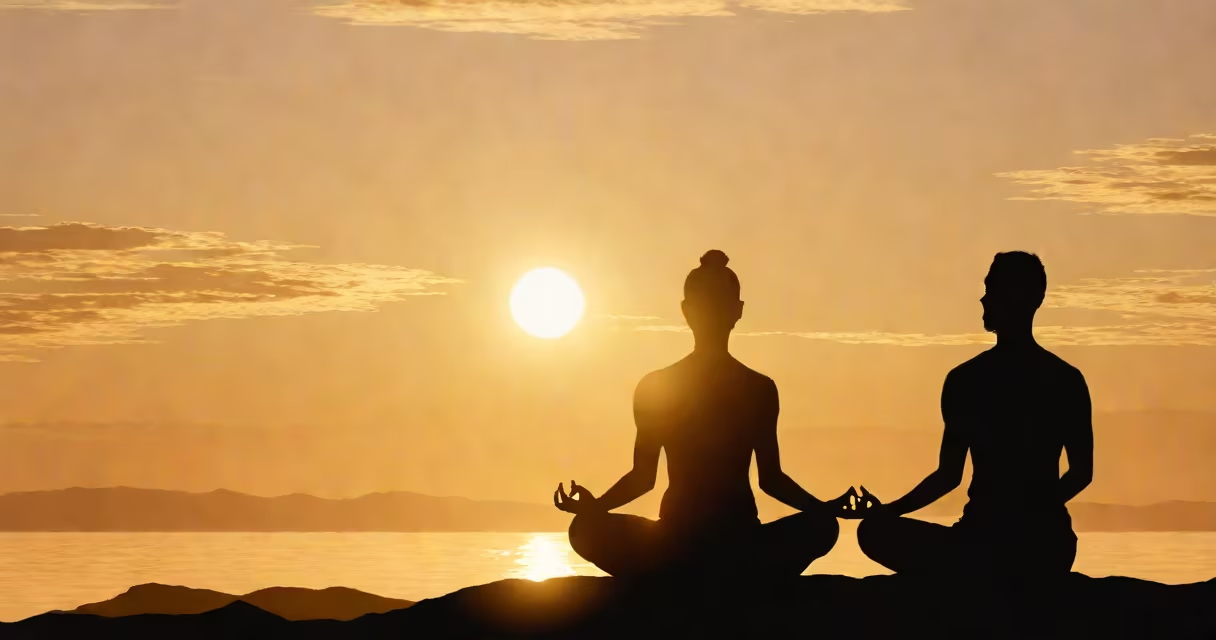
meditation and emotions refer to the process of observing and influencing emotional states through focused attention and non-judgmental awareness, leading to greater emotional stability and resilience over time.
Meditation and emotions are not separate systems. When practiced consistently, meditation trains the mind to notice emotional reactions without automatically acting on them. This creates space between stimulus and response-a gap that allows for clearer choices.
Research from the University of Wisconsin-Madison shows that participants who completed an 8-week Mindfulness-Based Stress Reduction (MBSR) program showed measurable changes in brain regions linked to emotion regulation, including increased activity in the prefrontal cortex and reduced amygdala reactivity during emotionally charged tasks (Davidson et al., 2003).
The core mechanism behind meditation and emotions lies in attentional control. During meditation, practitioners direct focus to the breath, bodily sensations, or thoughts. When emotions arise-like frustration, sadness, or anxiety-they are acknowledged without resistance or avoidance.
This non-reactive observation reduces the emotional charge. Instead of being swept away by a feeling, the practitioner learns to say, "I'm feeling angry," rather than "I am angry." The shift from identification to observation is key.
A 2016 study published in *JAMA Internal Medicine* analyzed 47 trials involving over 2,700 participants and found that mindfulness meditation programs had moderate evidence of improving anxiety, depression, and stress symptoms-effects directly tied to improved emotional processing (Goyal et al., 2014).
Different meditation styles influence emotions in distinct ways. Here's how common forms compare:
| Meditation Type | Primary Emotional Impact | Best For |
|---|---|---|
| Body scan | Reduces somatic tension linked to emotional distress | Chronic stress, trauma survivors |
| Loving-kindness (Metta) | Increases positive affect and empathy | Self-criticism, social anxiety |
| Open monitoring | Enhances emotional awareness and flexibility | Emotional reactivity, mood swings |
| Focused attention (breath) | Decreases rumination and emotional flooding | Anxiety, ADHD-related distractibility |
For example, someone dealing with workplace anger might try loving-kindness meditation. After 10 minutes daily for four weeks, they report noticing rising irritation earlier and choosing to pause before responding-leading to fewer conflicts.
One participant in a clinical trial described a breakthrough: "I used to snap at my partner over small things. Now, when I feel the heat rise, I name it: 'This is frustration.' That pause lets me breathe instead of reacting."
Many assume meditation eliminates emotions. That's incorrect. Meditation doesn't remove feelings-it changes your relationship to them.
Another misconception is that meditation requires emptying the mind. In reality, the goal is not thought suppression but mindful engagement. A study in *Psychological Science* found that people who tried to "clear their minds" reported higher levels of mental effort and lower well-being compared to those who simply observed thoughts (Brewer et al., 2011).
Also, meditation and emotions aren't a quick fix. Benefits emerge gradually. A 2020 meta-analysis in *Mindfulness* showed that significant improvements in emotional regulation typically appear after 4 to 8 weeks of daily 10- to 20-minute sessions-not overnight.
Consider Maya, a teacher with high-stress days. She began practicing 15 minutes of breath-focused meditation each morning. After two weeks, she noticed that when a student disrupted class, her initial reaction-"I'm so annoyed"-was followed by a pause. She took a breath, stepped back, and asked, "What do you need?"
Her classroom interactions shifted. Students reported feeling safer. Her own cortisol levels dropped 18% over six weeks, measured via saliva samples in a follow-up study (Kabat-Zinn, 1990).
She didn't stop feeling stress-but she changed how she responded to it. That's the heart of meditation and emotions: not suppression, but transformation of interaction.
Most people quit because they expect immediate results. But meditation and emotions work best when approached as a skill, not a ritual. Consistency matters more than duration.
One non-obvious fact: the most useful moments happen not during formal practice, but in daily life. When you catch yourself reacting strongly-say, to traffic or a delayed flight-pause. Breathe. Name the emotion. That's meditation in action.
As Jon Kabat-Zinn, founder of MBSR, wrote: "You can't stop the waves, but you can learn to surf." Meditation and emotions teach you how to ride the tide of feeling without drowning.