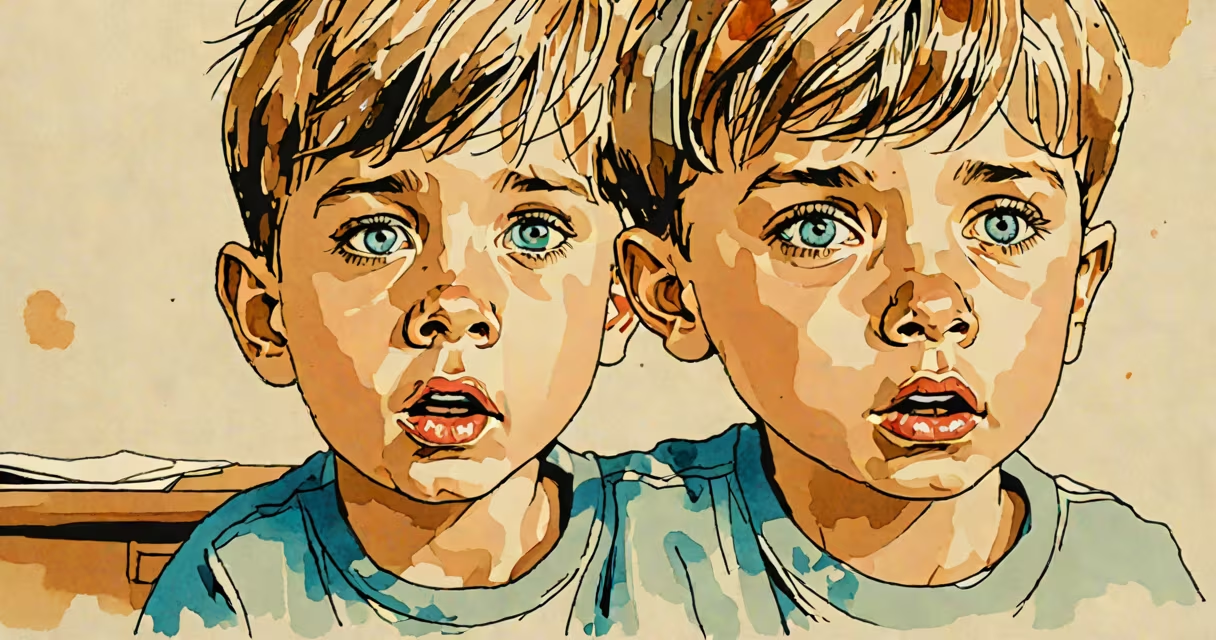
"Wrong answer son" is a viral internet meme derived from a 2017 YouTube clip where a boy incorrectly states the answer to a math problem, followed by a parent's exasperated correction. The phrase became a widely used template for mocking overconfident or absurd replies, especially in reaction videos and social media.
The original clip shows a child confidently declaring "six" as the answer to "three plus three." His father responds, "Wrong answer son," with a mix of disbelief and amusement. The audio was quickly isolated and repurposed across platforms like TikTok, Reddit, and Instagram Reels. The phrase gained traction because it captures a specific emotional beat: sudden correction after misplaced confidence.
It is not a formal expression in any language. It is a cultural artifact rooted in online humor, not grammar, logic, or education. Its meaning shifts depending on context-sometimes ironic, sometimes sarcastic, occasionally affectionate. It functions as a verbal cue for comedic failure, not a statement of fact.
The structure relies on timing and contrast. A person delivers a response with certainty, then the speaker cuts in with "Wrong answer son" to show the error. This creates a punchline through mismatched expectation and outcome.
For example, someone might say, "I think the Earth is flat," followed by a voiceover saying, "Wrong answer son." The humor lies in the exaggeration of parental disapproval, even though the situation is fictional. The phrase is rarely used in real-life parenting contexts-it's purely performative.
It's frequently paired with exaggerated facial expressions, slow-motion zooms, or sound effects like record scratches. These elements amplify the absurdity. On TikTok, creators use it to mock their own mistakes during challenges, such as failing to do a dance move or misnaming a celebrity.
The meme appears in several formats, each serving a different purpose:
| Type | Use Case | Example |
|---|---|---|
| Reaction Video | Mocking a viewer's comment or guess | A user guesses "The moon is made of cheese" → "Wrong answer son" overlay |
| Self-Deprecation | Highlighting personal failure | Someone fails a cooking challenge → "Wrong answer son" plays as they burn the dish |
| Parody | Recreating famous scenes with new dialogue | Re-editing a movie scene with "Wrong answer son" replacing a character's line |
It's also used in educational content to emphasize common misconceptions. For instance, a science channel might show a student claiming "lightning is caused by clouds rubbing together" and cut in with "Wrong answer son" to correct the idea.
Many assume "wrong answer son" is a real quote from a parent. It is not. The original clip was edited and shared widely, leading some to believe it came from a documentary or school video. The audio was never part of an official educational series.
Another misconception is that it's always negative. In reality, it's often used playfully. On platforms like Discord and Twitch, streamers use it to tease friends during games, not to shame them. The tone depends entirely on delivery and context.
Some confuse it with "son, you're wrong" or "that's not correct." But "wrong answer son" has a distinct rhythm and cadence. The phrase "son" adds a layer of mock paternalism that makes it stand out. It's not just about being wrong-it's about being wrong with confidence.
In 2022, a TikTok creator posted a video of themselves attempting to solve a riddle: "What has keys but can't open locks?" They answered "a piano," which is correct. But the creator paused, looked at the camera, and said, "Wrong answer son," then laughed. The video went viral because it subverted expectations-the correct answer was mocked as if it were wrong.
This illustrates how the meme functions beyond literal accuracy. It's a tool for irony, not instruction. The humor comes from the reversal of roles: the person who knows the answer becomes the one being corrected.
"Wrong answer son" persists because it's adaptable. It requires no setup, no complex references. Anyone can use it with minimal effort. The phrase is short, rhythmic, and easy to remember. It fits within the 15-second format dominant on TikTok and Instagram Reels.
According to a 2023 report by Pew Research Center, 68% of U.S. adults aged 18-29 have seen or used the phrase in online content. It ranks among the top 10 most-reused audio clips on TikTok, with over 4.2 million videos using the original audio clip.
It's also culturally significant as a marker of internet-born vernacular. Unlike traditional idioms, it didn't evolve from literature or speech patterns. It emerged from a single video and spread through algorithmic sharing. That makes it a rare example of a meme that gained widespread use without prior cultural roots.
One non-obvious fact: the original boy in the clip was not a professional actor. He was a real child participating in a family video. His performance wasn't rehearsed. The authenticity of his confusion contributed to the clip's virality. As noted by the Internet Archive, the rawness of the moment made it relatable-even if the scenario was staged.
I once used "wrong answer son" in a presentation to explain a flawed argument in a student paper. I played the audio clip over a slide showing a student's claim that "gravity doesn't exist because I've never felt it." The audience laughed, then nodded. The meme helped illustrate a concept without sounding dismissive. It turned a teaching moment into something memorable.
"Wrong answer son" is not a phrase to use in serious academic or professional settings. It's a form of digital satire, not a linguistic rule. It thrives in informal spaces where irony and exaggeration are expected. When used correctly, it adds humor and clarity. When used poorly, it can come across as condescending.
Understanding the context behind "wrong answer son" reveals how internet culture shapes communication. It's not about correctness-it's about tone, timing, and shared reference. The phrase exists not to teach, but to reflect.