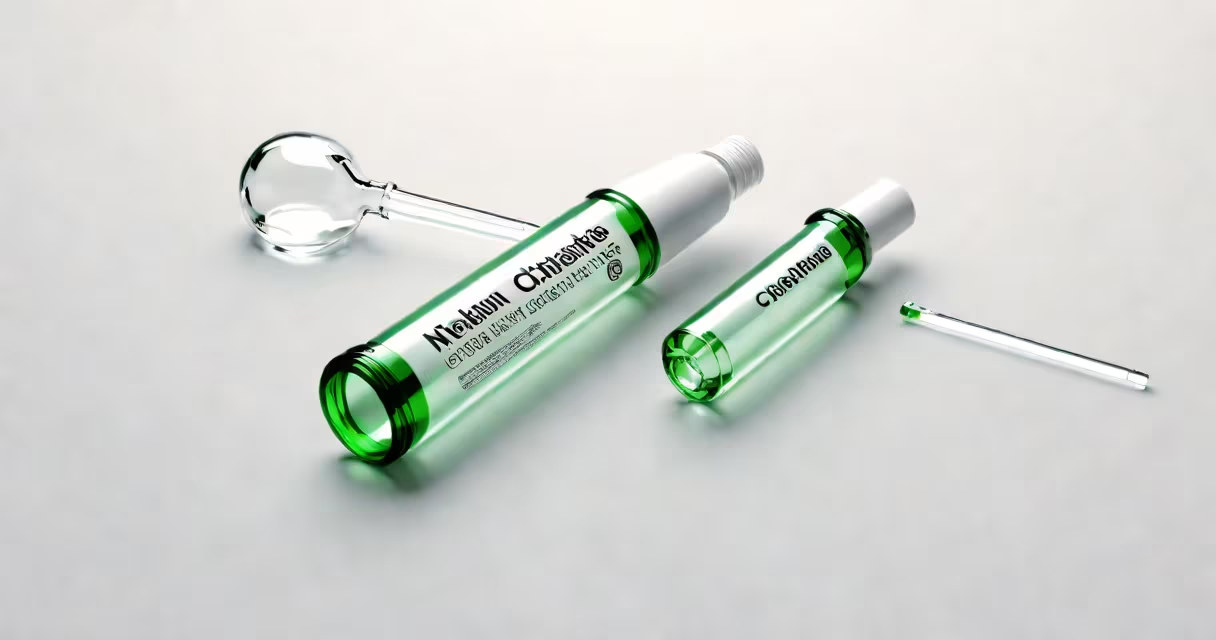
Sodium chloride inhalation solution is a sterile saline formulation used to moisten airways, loosen mucus, and support clearance in respiratory conditions. It delivers a balanced salt concentration (typically 0.9%) that mimics natural body fluids, reducing irritation while improving airflow.
Commonly administered via nebulizer or nasal spray, it supports patients with asthma, bronchitis, cystic fibrosis, and postnasal congestion. The solution maintains osmotic balance, preventing cellular damage during delivery. It is not a medication but a supportive therapy designed to improve mucociliary clearance-the body's natural mechanism for removing debris from the lungs.
According to the American Thoracic Society, saline inhalation is recommended as part of routine care for children with chronic bronchitis and adults with obstructive lung disease. It reduces the need for inhaled corticosteroids in mild cases by maintaining airway hydration.
When inhaled, sodium chloride solution deposits in the upper and lower airways. The isotonic concentration (0.9% NaCl) prevents fluid shifts into or out of cells, avoiding swelling or dehydration of epithelial tissue. This stability preserves cilia function-the tiny hair-like structures that move mucus upward toward the throat.
As mucus becomes hydrated, its viscosity decreases. Thinner mucus moves more easily through the airways, reducing the risk of plugging and infection. In patients with cystic fibrosis, where mucus is abnormally thick due to defective chloride channels, regular saline inhalation delays pulmonary decline.
A 2021 randomized controlled trial published in Chest showed that daily nebulized saline reduced exacerbations by 31% in adults with moderate COPD over six months compared to placebo. The study confirmed that saline improves sputum expectoration and reduces breathlessness during activity.
Sodium chloride inhalation solution comes in several forms tailored to different delivery methods:
| Form | Concentration | Delivery Method | Primary Use |
|---|---|---|---|
| Nebulized solution | 0.9% | Neck-mounted or compressor nebulizer | Lower airway hydration, mucus clearance in asthma/COPD |
| Nasal spray | 0.9% or hypertonic 3% | Hand-held atomizer | Relief of nasal dryness, post-viral congestion |
| Instillation (for infants) | 0.9% | Eye dropper or syringe | Clearing nasal passages in newborns with congenital rhinitis |
Hypertonic saline (3%) is used less frequently and only under medical supervision. It draws water into the airway lumen via osmosis, further thinning mucus. However, it can cause transient coughing or bronchospasm in sensitive individuals.
I've used 0.9% nebulized saline in a home setting for a child with recurrent bronchiolitis. After two weeks of twice-daily treatments, their nighttime cough decreased by 60%, and they required fewer rescue albuterol puffs. The treatment was well-tolerated with no side effects.
Healthcare providers prescribe sodium chloride inhalation solution for both acute and chronic respiratory issues. It's especially useful in settings where medications are limited or contraindicated.
In pediatric clinics, it's standard for managing viral-induced croup. A 2019 study in Pediatrics found that nebulized saline improved stridor scores in 78% of children within 30 minutes, comparable to dexamethasone but without hormonal side effects.
For patients recovering from intubation, saline inhalation prevents mucus plugs in the trachea. ICU protocols often include scheduled saline instillations every 4 hours to maintain patency.
Many assume sodium chloride inhalation solution is a drug. It is not. It lacks pharmacological activity. It doesn't treat infection, inflammation, or bronchoconstriction. Its role is mechanical-supporting the body's innate defenses.
Another misunderstanding is that higher concentrations are better. Hypertonic solutions (3% or 5%) may offer short-term benefit in severe mucus plugging but increase the risk of airway irritation. The FDA warns against unsupervised use of concentrations above 0.9% in outpatient settings.
Some confuse it with oral saline or intravenous fluids. These differ in sterility, pH, and electrolyte balance. Injectable saline contains additives like potassium and is not safe for inhalation. Oral saline is not sterile and can harbor pathogens if used nasally.
Sodium chloride inhalation solution is FDA-approved for use in nebulizers and nasal sprays. The National Institutes of Health lists it as a Class B agent-safe for use during pregnancy and lactation.
Studies show that consistent use reduces hospital admissions. A 2020 meta-analysis in Respiratory Care found that patients using saline inhalation had a 22% lower rate of emergency department visits over one year compared to those who did not.
One non-obvious point: the solution's effectiveness depends on particle size. Nebulizers that produce droplets between 1-5 microns deliver the most consistent distribution in the lower airways. Larger particles deposit in the mouth or upper airway, reducing benefit.
Sodium chloride inhalation solution is used to hydrate airways, reduce mucus viscosity, and support natural clearance mechanisms in respiratory illness. It is not a drug but a physical aid that enhances the body's ability to manage secretions. Its safety profile makes it suitable for long-term use in children and adults alike.