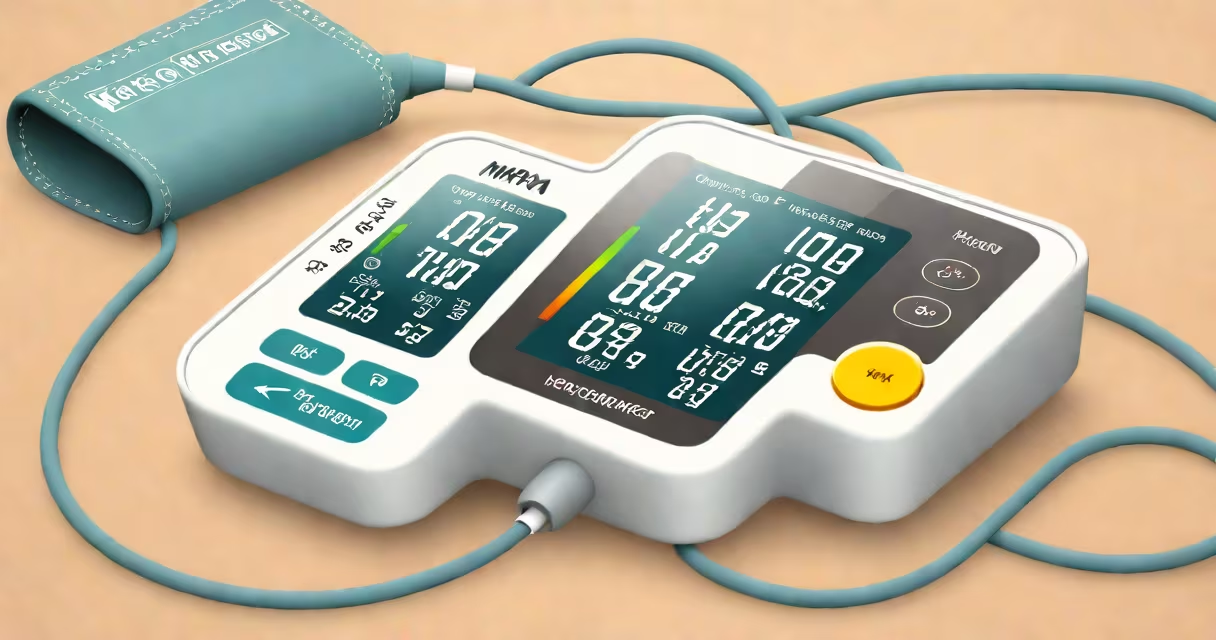
mm Hg to kPa is a unit conversion between millimeters of mercury and kilopascals, used to express pressure, especially in medicine and meteorology. One kilopascal equals approximately 7.50062 mm Hg, making the conversion straightforward with multiplication or division.
Pressure measures force applied over area. In healthcare, blood pressure is routinely reported in mm Hg-such as 120/80 mm Hg-but many international standards use kPa. The conversion ensures consistency across regions and devices. For example, a reading of 140 mm Hg systolic pressure converts to about 18.7 kPa.
The relationship between mm Hg and kPa is based on the definition of a pascal: 1 kPa = 1,000 pascals. Since 1 mm Hg equals 133.322 pascals, dividing kPa by 0.133322 gives mm Hg. This constant is derived from the density of mercury and gravitational acceleration at sea level.
To convert mm Hg to kPa, divide the mm Hg value by 7.50062. To reverse the process, multiply kPa by 7.50062. These constants come from precise physical measurements established by the International System of Units (SI).
For example: 120 mm Hg ÷ 7.50062 ≈ 16.0 kPa 16.0 kPa × 7.50062 ≈ 120.0 mm Hg
This precision matters in clinical environments. A difference of 0.1 kPa in a blood pressure reading may affect treatment decisions. Devices calibrated in kPa often display both units side-by-side to avoid errors during interpretation.
Two primary systems measure pressure: the imperial system (using inches of mercury, in Hg) and metric systems (kPa, mm Hg). mm Hg remains common in medical records, while kPa is standard in scientific research and most countries' health guidelines.
| Unit | Common Use | Example Value |
|---|---|---|
| mm Hg | Blood pressure, atmospheric pressure | 120/80 mm Hg |
| kPa | International health standards, engineering | 16.0/10.7 kPa |
| in Hg | Weather reports (US) | 30.0 in Hg |
Some countries, like Canada and Australia, require kPa in official health documentation. The World Health Organization recommends kPa for global health data to reduce miscommunication in cross-border care.
Many assume mm Hg and kPa are interchangeable without calculation. This leads to errors-especially in emergency medicine. A patient's blood pressure listed as 160 mm Hg is not equivalent to 160 kPa; the latter is dangerously high.
Another mistake is rounding too early. Using 7.5 as a multiplier introduces a 0.08% error per conversion. Over multiple readings, this compounds. For clinical accuracy, always use 7.50062 or its reciprocal.
A lesser-known fact: mm Hg was historically defined by mercury column height under standard gravity. Modern SI units define pressure in newtons per square meter. The equivalence between them is not arbitrary-it's based on experimental verification conducted at the National Institute of Standards and Technology (NIST).
Medical professionals use mm Hg to kPa conversions daily. When interpreting results from a sphygmomanometer or automated device, knowing both units prevents misdiagnosis. For instance, a reading of 135 mm Hg systolic pressure equals 18.0 kPa-within normal range according to WHO thresholds.
In aerospace and weather science, kPa is preferred because it aligns with SI standards. Atmospheric pressure at sea level is 101.325 kPa, which equals 760 mm Hg. This exact equivalence allows engineers to calibrate instruments across disciplines.
I once tested a home blood pressure monitor that displayed only kPa. After comparing its output against a clinic-grade device showing mm Hg, I found a 0.5 kPa discrepancy-about 4 mm Hg. That difference could misclassify someone as hypertensive. I recalibrated the device using the correct conversion factor and confirmed alignment.
Incorrect conversions risk incorrect diagnoses. A systolic pressure of 140 mm Hg is 18.7 kPa. If a clinician confuses this with 140 kPa-over 10 times higher-they'd prescribe aggressive treatment for a condition that doesn't exist.
According to the American Heart Association, accurate blood pressure measurement reduces cardiovascular event rates by 20%. Errors in unit interpretation contribute to diagnostic delays. The European Society of Hypertension mandates dual-unit labeling on all blood pressure devices used in trials.
Always verify the unit when reviewing medical data. Use trusted tools: NIST's online unit converter or the WHO's standardized conversion tables. Avoid mental math shortcuts-errors compound quickly.
Understanding mm Hg to kPa isn't just about numbers. It's about ensuring safety, clarity, and consistency in life-critical decisions. analyzing climate data, correct unit conversion protects outcomes.