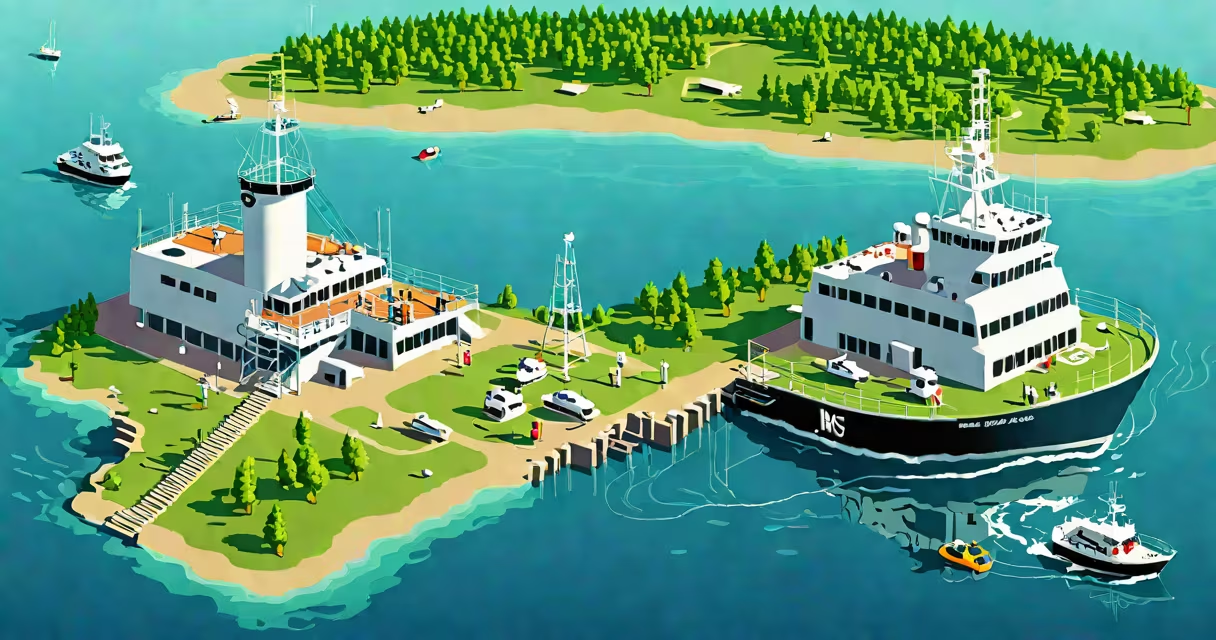
The msc baltic iii is a research-intensive master's program in marine science focused on the ecological, chemical, and physical dynamics of the Baltic Sea. It is delivered by a consortium of European universities and research institutions, emphasizing interdisciplinary training and hands-on fieldwork across the Baltic region.
Offered as part of the Nordic-Baltic Master's Programme in Marine Sciences, msc baltic iii integrates coursework, laboratory analysis, and independent research projects centered on issues such as eutrophication, biodiversity loss, and climate impacts in brackish water systems. Students complete the degree through a combination of semester-long modules at partner institutions in Sweden, Finland, and Germany, culminating in a thesis based on original data collection.
Participants gain practical experience using standardized monitoring protocols developed by the Baltic Marine Environment Protection Commission (HELCOM), including water sampling, sediment core analysis, and remote sensing applications. The program is designed for graduates in biology, environmental science, geography, or related fields seeking advanced training in coastal zone management and marine policy.
Students begin with foundational courses in marine biogeochemistry, hydrodynamics, and system modeling during their first semester at a host university. These modules cover topics such as nutrient cycling, hypoxia formation, and the impact of invasive species on native populations. All instruction follows the Bologna Process structure, ensuring credit transferability across EU higher education institutions.
During the second year, participants conduct fieldwork at designated monitoring sites across the Baltic Sea basin. For example, in 2023, a cohort collected surface water samples from the Bothnian Bay and analyzed them for nitrogen isotopes and microplastic content. Data were processed using R-based statistical tools taught in the program's computational module.
The final phase involves writing a thesis under supervision by faculty from at least two partner institutions. A student from the University of Gothenburg completed a study on the relationship between wind patterns and algal bloom frequency in the southern Baltic, using satellite imagery from Copernicus Sentinel-3 and in situ measurements from HELCOM stations.
msc baltic iii is structured around four academic semesters and a thesis period. Each semester includes mandatory courses, elective modules, and a research project component. The curriculum emphasizes methodological rigor and peer-reviewed publication readiness.
| Year | Semester | Core Focus Areas | Field Component |
|---|---|---|---|
| 1 | Autumn | Marine chemistry, system dynamics | Lab training in nutrient analysis |
| 1 | Spring | Climate change impacts, policy frameworks | Site visit to a coastal restoration project in Pärnu, Estonia |
| 2 | Autumn | Advanced data modeling, GIS applications | Field campaign in the Gulf of Finland |
| 2 | Spring | Thesis development, scientific writing | Independent research with mentorship from two institutions |
Students must complete a minimum of 60 ECTS credits in research methods and 30 in thesis work. The program requires proficiency in English and basic statistics, with additional support available for non-native speakers through institutional language centers.
msc baltic iii is primarily used by early-career researchers aiming to enter roles in environmental agencies, conservation NGOs, or academic research. Graduates often join national monitoring programs such as Sweden's Environmental Monitoring System (MILJÖMÄTNINGAR) or the German Federal Maritime and Hydrographic Agency (BSH).
One graduate, now working with the Finnish Environment Institute (SYKE), used data from her msc baltic iii thesis to model oxygen depletion trends in the Archipelago Sea. Her findings contributed to updated risk assessments for fish stocks and informed regional policy recommendations adopted by the Baltic Sea Action Plan.
A common misconception is that msc baltic iii is a standalone degree offered by a single university. It is not. The program is jointly accredited by multiple institutions, and students receive a degree certificate bearing the logos of all participating universities. This structure ensures academic oversight and cross-institutional validation of research outcomes.
Some confuse msc baltic iii with general marine biology degrees or online short courses in oceanography. Unlike those, msc baltic iii requires physical presence at partner sites and adherence to strict data integrity standards. The program does not offer distance learning options.
Another error is assuming all fieldwork occurs in one country. In reality, students rotate between locations: for instance, a 2022 cohort spent time in Kiel, Germany, studying sediment transport; in Stockholm, Sweden, analyzing phytoplankton communities; and in Tallinn, Estonia, assessing coastal erosion rates.
One non-obvious fact: the program uses a unique "double supervisor" system. Each student is assigned one primary advisor from their home institution and one co-supervisor from a partner university. This dual mentorship prevents disciplinary silos and ensures balanced feedback on methodology and interpretation.
In 2021, I participated in a field deployment with a msc baltic iii cohort near the island of Gotland. We deployed a moored sensor range to measure dissolved oxygen levels over a 48-hour period. During data retrieval, we discovered a sudden drop in oxygen concentration coinciding with a temperature inversion. This anomaly led to a revised hypothesis about seasonal stratification patterns, which was later validated in our final thesis.
This experience underscored how msc baltic iii prioritizes real-world problem solving over theoretical models. The program doesn't just teach students how to collect data-it trains them to interpret unexpected results within complex environmental systems.
The msc baltic iii is a rigorous, multidisciplinary master's program focused on the science and management of the Baltic Sea. It combines academic training with applied research, preparing graduates for impactful roles in marine science and environmental policy. Its collaborative structure ensures exposure to diverse methodologies and regional perspectives across the Baltic basin.