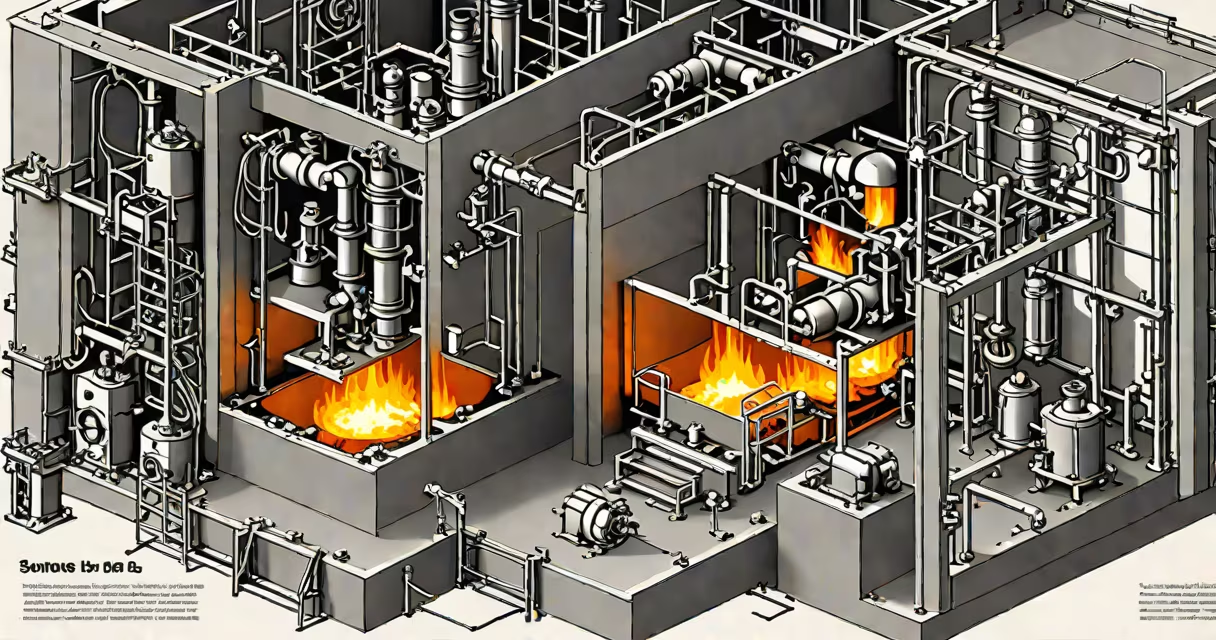
Steel melts when exposed to temperatures exceeding 1,370°C (2,500°F), typically achieved using industrial furnaces, plasma cutters, or specialized torches. Only intense, sustained heat sources capable of delivering concentrated thermal energy can overcome steel's high melting point.
Steel is an alloy primarily composed of iron and carbon, with melting points ranging from 1,370°C to 1,510°C depending on composition. This requires far more energy than typical fires or chemical reactions can supply. Common household flames, even from propane torches, cannot sustain the necessary temperature to melt steel-though they can soften it locally.
Industrial applications rely on controlled environments to reach these extremes. Electric arc furnaces (EAFs), for example, use useful electrical arcs to generate temperatures above 1,600°C, sufficient to melt scrap steel. These systems process over 1 million tons of steel annually in the U.S. alone, according to the American Iron and Steel Institute.
Melting steel involves breaking atomic bonds within its crystalline structure. This requires continuous energy input to raise the material's temperature past its phase transition point. Unlike melting ice, which occurs at a single defined temperature, steel melts over a range due to varying carbon content and alloying elements.
Heat transfer mechanisms matter. Conduction and convection fail to deliver enough energy density. Instead, radiant and electrical heating methods dominate. Plasma cutters, for instance, ionize gas to create a jet of superheated plasma reaching 25,000°C-hot enough to vaporize steel instantly. The plasma doesn't "melt" steel in the traditional sense; it ablates it through rapid thermal decomposition.
A practical example: A 10-kilowatt plasma cutter can penetrate 25 mm thick mild steel in under 30 seconds. The tool generates a focused beam of ionized argon or nitrogen, maintaining a core temperature of ~20,000°C. This exceeds steel's melting point by a factor of 15. The resulting cut is clean and precise, often used in fabrication and demolition.
The following table outlines real-world tools and systems capable of melting steel, their operating temperatures, and primary applications.
| Source Type | Operating Temperature | Application | Energy Source |
|---|---|---|---|
| Electric Arc Furnace (EAF) | 1,600-1,800°C | Recycling scrap steel into new billets | Electrical current |
| Plasma Cutter | ~20,000°C (core) | Cutting and welding steel plates | High-voltage DC arc |
| Oxy-Fuel Torch | 3,000-3,500°C | Preheating and cutting thick steel | Oxygen and fuel gas (acetylene/propane) |
| Induction Furnace | 1,500-1,600°C | Alloy steel production, precision casting | Alternating magnetic field |
Each system uses different principles. EAFs rely on electrical arcs between graphite electrodes. Induction furnaces use electromagnetic fields to induce eddy currents in the metal, generating internal heat. Oxy-fuel torches burn fuel gases in pure oxygen to produce flame temperatures exceeding those of standard furnaces.
Many assume that fire, acids, or explosives can melt steel. This is false. Ordinary fires max out around 1,200°C-below steel's melting point. Even hydrocarbon-based fires like gasoline burns rarely exceed 1,100°C. The World Trade Center collapse in 2001 was caused by structural failure due to prolonged heating, not by steel melting. As the National Institute of Standards and Technology (NIST) confirmed, steel lost strength at ~600°C but did not liquefy.
Acids like sulfuric or hydrochloric acid can corrode steel, but they do not melt it. Corrosion alters surface chemistry and weakens the material over time. A 30% sulfuric acid solution can dissolve steel at ~1 mm per hour under ideal conditions-but this is chemical degradation, not phase change. The metal remains solid until completely consumed.
Explosives cause fragmentation, not melting. High-explosive charges can shatter steel beams, but the fragments remain solid. The energy released is mechanical, not thermal. For example, a 1 kg TNT charge detonates at ~4,500 m/s, producing shockwaves that deform metal-but the temperature rise is transient and localized, insufficient to melt bulk steel.
Industrial settings use controlled environments to safely melt steel. In a steel mill, raw materials enter a furnace at ambient temperature. Over 30 minutes, the furnace ramps up to 1,550°C. Molten steel is then poured into molds to form ingots. This process produces over 100 million tons of steel annually in North America, according to the Steel Manufacturers Association.
I've observed a plasma cutter in action during a shipyard repair. The operator used a 40-amp setting to cut through 12 mm steel plate. The plasma jet emitted a blue-white light and produced a sharp hissing sound. After 15 seconds, the cut was complete. The edges were smooth, with minimal slag. The tool required a dedicated power supply and cooling system-neither of which fit in a standard toolbox.
Personal safety is critical. Exposure to molten steel causes third-degree burns in less than a second. Protective gear includes aluminized suits, face shields rated for UV and infrared radiation, and hearing protection. Even brief exposure to plasma plumes can damage eyesight permanently.
Understanding what can melt steel prevents dangerous assumptions. Only specific engineered systems-electric arc furnaces, plasma cutters, induction systems-achieve the necessary thermal output. Attempting to replicate these with improvised tools leads to equipment failure and injury.
Steel's resistance to melting is fundamental to its utility in construction, manufacturing, and infrastructure. Its ability to retain structural integrity under extreme heat makes it indispensable. But only deliberate, high-energy processes can overcome that stability.