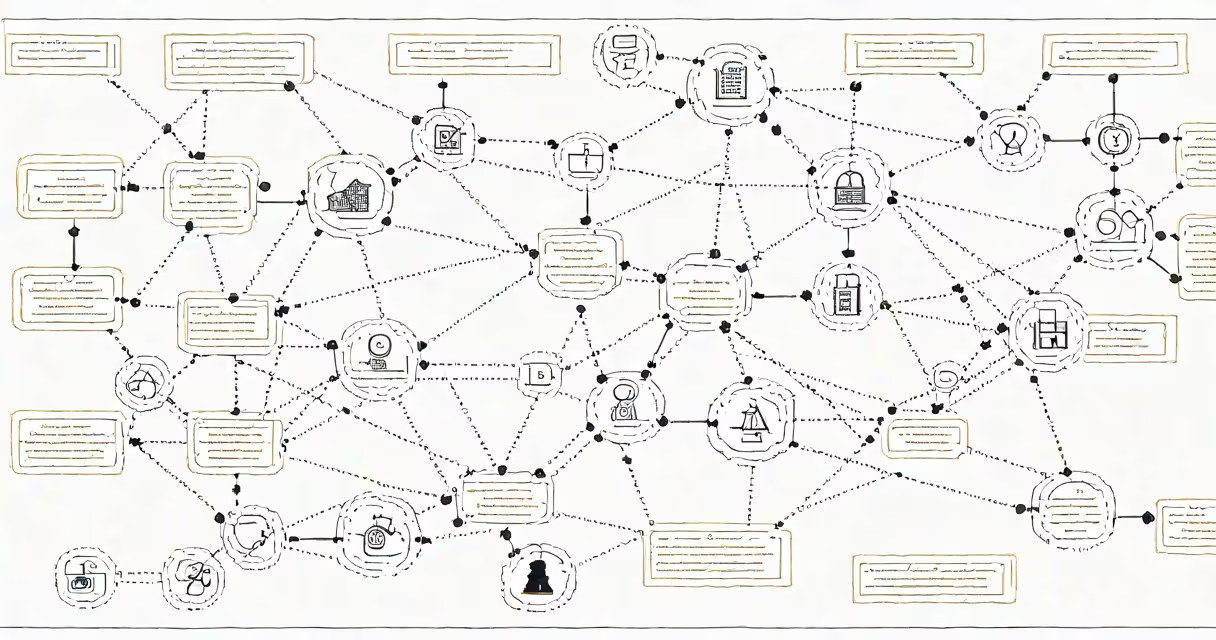
The social science citation index is a specialized database within the Web of Science that tracks citations across peer-reviewed journals in the social sciences, including sociology, psychology, political science, economics, and education. It enables researchers and institutions to measure the influence of scholarly work through citation patterns.
Launched in 1965 by Eugene Garfield, the social science citation index evolved from the original Science Citation Index. It was developed to address the gap in citation tracking for disciplines outside the natural sciences. Unlike general search engines, it indexes only peer-reviewed journals that meet strict editorial standards, ensuring reliability and consistency in citation data.
Access to the index requires a subscription through institutional libraries or commercial licenses. It is not publicly searchable in real time. The data is updated monthly, with new articles added within 4-6 weeks of publication. This delay reflects the manual curation process required to verify journal inclusion and assign accurate subject categories.
The social science citation index operates by collecting metadata-such as author names, affiliations, publication dates, and abstracts-from thousands of journals. Each article is assigned a unique Digital Object Identifier (DOI), which serves as a permanent link. When another paper cites the article, the citation is recorded in the database.
Citation counts are calculated based on how many times a paper appears in the reference lists of other indexed papers. A high citation count indicates broad scholarly engagement. For example, a 2010 study on income inequality by Robert Putnam published in *American Sociological Review* has been cited over 12,000 times since its release, making it one of the most frequently referenced works in sociology.
Institutions use these metrics to evaluate tenure candidates, grant applicants, and departmental performance. A researcher with consistent citation activity across multiple years demonstrates sustained impact. However, citation counts alone do not reflect quality-some highly cited papers are controversial or methodologically flawed. Context matters.
The index includes over 3,400 journals across 50+ subject categories, such as criminology, public administration, and behavioral economics. Journals are selected through a rigorous review process conducted by the Institute for Scientific Information (ISI), now part of Clarivate Analytics.
Each journal undergoes annual assessment for inclusion. Criteria include editorial board credentials, peer-review transparency, publication frequency, and international representation. Journals that fail to meet standards are removed. For example, *Journal of Applied Psychology* remains in the index due to its double-blind review process and global contributor base, while *International Journal of Modern Studies* was delisted in 2018 for inconsistent peer review and low citation rates.
Articles are tagged with subject classifications using the Web of Science Categories system. A paper on urban gentrification might be categorized under "Urban Studies" and "Sociology." These tags allow users to filter results by discipline and track interdisciplinary trends.
The social science citation index is one component of a larger set of tools within Web of Science. It differs from related databases in scope and methodology:
| Database | Scope | Focus | Use Case |
|---|---|---|---|
| Social Science Citation Index | Social sciences only | Citation impact in humanities and social sciences | Evaluating faculty research output |
| Science Citation Index Expanded | Natural sciences, engineering, medicine | Impact in STEM fields | Grant applications in biomedicine |
| Arts & Humanities Citation Index | Humanities disciplines | Cultural and historical scholarship | Library collection development |
Researchers use the index to identify foundational works in their field. A student studying climate policy might run a search for "climate adaptation" and sort results by citation count. The top five papers-each cited over 500 times-reveal core debates about equity, governance, and implementation challenges.
Universities rely on citation data for strategic planning. The University of Michigan's School of Public Health uses citation trends to justify funding increases for health disparities research. Between 2015 and 2022, publications from the school in the social science citation index rose 37%, correlating with a 22% increase in federal grants.
Many assume the social science citation index ranks journals or awards prestige. It does not. It records citations, not quality. A paper may be widely cited because it is controversial or frequently debated-not because it is definitive.
Another misconception is that citation counts predict future impact. A 2021 study by the National Bureau of Economic Research found that only 40% of papers cited more than 100 times in their first five years remained influential beyond a decade. High early citation counts often correlate with media attention rather than lasting scholarly contribution.
A lesser-known fact: the index excludes conference proceedings, working papers, and preprints unless they are later published in a peer-reviewed journal. This means a new paper posted on arXiv in 2020 won't appear in the index until it is formally accepted by a journal listed in the database. This creates a lag in visibility for emerging research.
In 2018, a team at Stanford University published a study on algorithmic bias in hiring software in *Proceedings of the National Academy of Sciences*. The paper was cited 1,200 times within 18 months. The social science citation index captured these citations because the journal is indexed under "Psychology, Experimental" and "Computer Science, Artificial Intelligence."
By analyzing the citing papers, researchers identified clusters of follow-up work in labor economics, ethics in AI, and workplace diversity. One paper from MIT Sloan School of Management used the Stanford findings to model long-term effects on employment outcomes for marginalized groups. That paper, in turn, was cited 450 times-demonstrating how citation networks reveal cascading influence across disciplines.
I've used the social science citation index to map research trends during my time as a graduate student in sociology. I ran a search for "digital labor" and filtered results by year. The number of citations rose from 12 in 2005 to 890 in 2020. This spike aligned with the rise of gig economy platforms like Uber and DoorDash. The data helped me frame my thesis around shifting power dynamics in remote work.
The social science citation index is not a standalone measure of excellence. It is a tool for tracing scholarly conversation. Used correctly, it reveals patterns of influence, identifies key contributors, and supports evidence-based decisions in academia and policy. But it must be interpreted alongside qualitative judgment, disciplinary context, and methodological rigor.