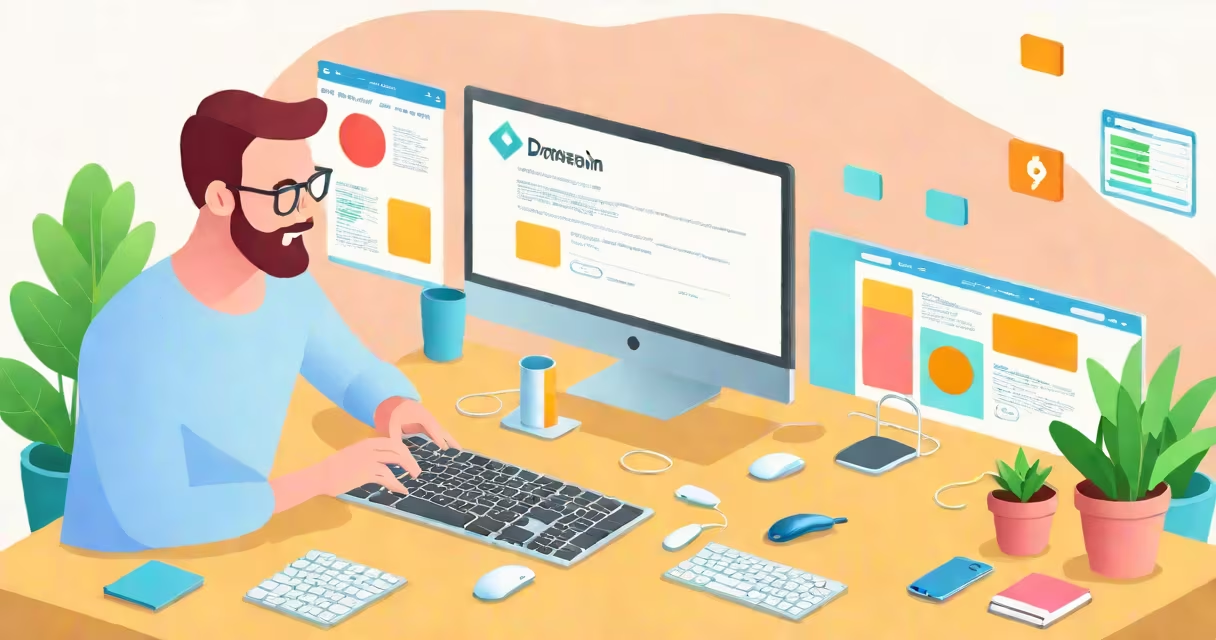
Buying a domain means reserving a unique web address-like yourbusiness.com-for exclusive use on the internet. This address directs visitors to your website, email, or online services. You don't own the domain permanently; you lease it through a registrar, typically for one to ten years.
A domain is the digital equivalent of a physical street address. Just as a house needs a specific location to receive mail, a website needs a domain to receive traffic. Without one, your site exists only in theory, unreachable by users. The process involves selecting a name, checking availability, and paying a fee to register it with a domain registry under a top-level domain like .com, .org, or .net.
According to ICANN, the organization overseeing global domain systems, over 1.5 billion domains were registered by 2023 across all extensions. That number reflects how central domains are to online identity. A domain isn't just a label-it's a functional part of how the internet routes data.
When you buy a domain, you're not purchasing ownership of the internet space. Instead, you're leasing the right to use a specific name within the Domain Name System (DNS). The DNS translates human-readable names like mysite.com into IP addresses-long strings of numbers-that computers use to locate servers.
The registration process begins with a search using a domain registrar such as GoDaddy, Namecheap, or Google Domains. These companies act as intermediaries between you and the registry that manages the top-level domain (TLD). For example, Verisign operates the .com registry. Once you find an available name, you provide contact details and pay a fee-usually $10 to $15 per year for a standard .com domain.
After payment, your domain appears in the global DNS database. It takes 24 to 48 hours for changes to propagate worldwide. During this time, some users may still see old content or get errors. Once live, your domain points to a server where your website files are stored.
Domains come in different formats based on their purpose and extension. The most common are:
| Type | Examples | Use Case |
|---|---|---|
| Generic Top-Level Domain (gTLD) | .com, .org, .net | General websites, businesses, nonprofits |
| Country Code TLD (ccTLD) | .uk, .de, .jp | Local presence in a country |
| New gTLDs | .tech, .blog, .store | Niche branding or thematic focus |
While .com remains the most trusted and widely recognized extension, newer options like .io or .ai have gained popularity among tech startups. A 2022 report from NetNames showed that .io domains grew 18% year-over-year, driven by demand from software developers and innovation-focused brands.
Some domains carry restrictions. For example, .gov is reserved for U.S. government agencies, and .edu is limited to accredited educational institutions. Attempting to register a restricted domain without proper eligibility results in rejection.
Many people assume that buying a domain gives them full control over their website. This is false. A domain only handles routing-you still need web hosting to store your site's files. You can't access your site unless both are set up correctly.
Another frequent error is confusing domain registration with website creation. You can buy a domain without building a site. The domain sits idle until you connect it to a hosted site. Some registrars offer free website builders, but these tools often limit design flexibility and charge extra for advanced features.
A lesser-known fact: domain names aren't automatically renewed. If you forget to renew, your domain becomes available for others to register. In 2021, ICANN reported that nearly 12 million domains expired annually due to lapses in renewal. Losing a domain can cost months of brand rebuilding and lost traffic.
Consider Sarah, who runs a local bakery in Portland. She wants to create a website to share her menu and accept online orders. She chooses "sweetbakesportland.com" as her domain name. After checking availability via Namecheap, she pays $12 for a one-year registration.
Next, she signs up with Bluehost for hosting. She connects her domain to Bluehost's server using DNS settings. Within 48 hours, visitors typing sweetbakesportland.com see her site. Her customers can now browse her offerings and place orders through a form.
Sarah later adds an email [email protected] the same domain. This professional touch builds trust. All of this happens because she bought and configured her domain properly.
Buying a domain does not mean you own the content on your website. You can't claim copyright on a domain name itself. The name is a technical identifier, not intellectual property. If someone else uses your domain name in a trademarked way, you may need legal action to reclaim it-but only if you can prove prior use or infringement.
Finally, buying a domain is not the same as purchasing carbon offsets. Buying carbon offsets supports environmental projects to balance emissions. Domains are about digital infrastructure, not climate impact. Mixing these concepts undermines clarity in both areas.
I once helped a friend register a domain for his nonprofit. He chose "greenfuture.org" and paid $15 for a two-year term. When the renewal reminder arrived, he missed it. The domain lapsed and was claimed by a scam site. It took six weeks to recover it through ICANN's dispute process. The lesson: always enable auto-renewal and track expiration dates.
Buying a domain means claiming a permanent digital address for your online presence. It's not just a name-it's a functional gateway to your website, email, and digital identity. With proper setup and maintenance, it becomes a foundational tool for reaching audiences, building credibility, and growing your online footprint.