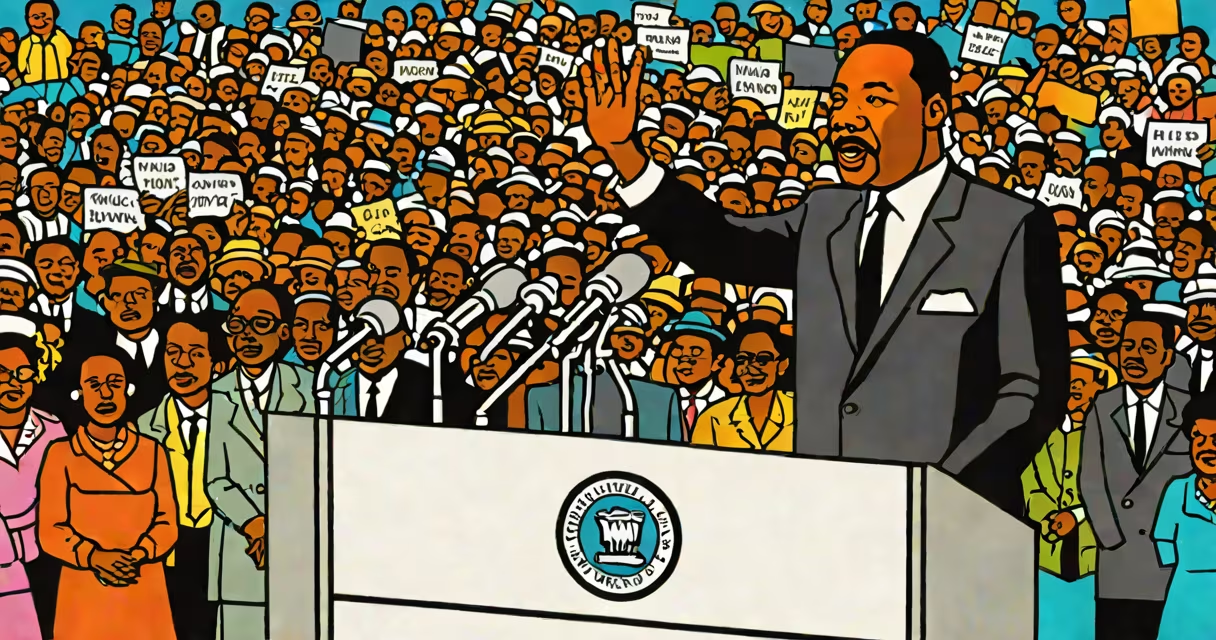
A civil right leader is someone who actively advocates for equal treatment under the law, particularly for marginalized groups denied basic freedoms due to race, gender, religion, or other identity markers. These individuals organize protests, influence legislation, and challenge unjust systems through sustained public engagement.
Civil right leaders do not wait for permission to act. They identify systemic barriers-such as segregation laws, voter suppression, or discriminatory hiring practices-and mobilize communities to demand change. Their work often centers on securing enforceable rights guaranteed by constitutional amendments or federal statutes.
Examples include Martin Luther King Jr., who led the 1963 March on Washington and helped pass the Civil Rights Act of 1964; Rosa Parks, whose refusal to give up her bus seat sparked the Montgomery Bus Boycott; and John Lewis, who organized voter registration drives and marched across Selma. Each used disciplined, public-facing strategies to pressure lawmakers and shift national opinion.
Civil right leaders operate through structured campaigns grounded in strategy, public messaging, and sustained pressure. They begin by identifying a specific injustice-like a law that denies voting access to Black citizens-and then build coalitions across faith groups, labor unions, student organizations, and media outlets.
Nonviolent direct action is a sign method. Leaders plan sit-ins, marches, boycotts, and hunger strikes to draw attention to inequality while maintaining moral authority. The 1960 Greensboro sit-ins, initiated by four college students, forced chain restaurants to desegregate dining areas nationwide. The movement's success relied on disciplined conduct-even when met with violence-demonstrating that peaceful protest could win public sympathy and legislative change.
Leaders also engage in behind-the-scenes lobbying. They meet with elected officials, draft policy proposals, and testify before Congress. For example, the National Association for the Advancement of Colored People (NAACP) used litigation to challenge segregation in courts, culminating in the 1954 Brown v. Board of Education decision. This case ended legal segregation in public schools and was driven by lawyers like Thurgood Marshall, who later became a Supreme Court Justice.
Leadership styles vary based on context, audience, and goals. Some focus on grassroots organizing; others work within institutions or through media. The following table outlines common roles:
| Type | Focus | Example | Impact |
|---|---|---|---|
| Organizer | Community mobilization, local action | Fannie Lou Hamer (Freedom Summer) | Helped register over 15,000 Black voters in Mississippi |
| Legal Strategist | Lawsuits, court challenges | Thurgood Marshall (NAACP Legal Defense Fund) | Won 29 out of 32 cases before the Supreme Court |
| Public Speaker | Media presence, national messaging | Martin Luther King Jr. (I Have a Dream speech) | Reached millions via radio and television |
| Policy Advocate | Legislative lobbying, drafting bills | John Lewis (Voting Rights Act of 1965) | Championed federal oversight of voter registration |
Not all civil right leaders seek fame. Many work quietly within neighborhoods, churches, or unions. Their effectiveness lies in trust-building and long-term commitment-not viral moments.
Civil right leadership emerged most visibly in the United States during the mid-20th century, especially between 1954 and 1968. But the model applies globally. In South Africa, Nelson Mandela challenged apartheid through prison resistance and negotiations. In India, Mahatma Gandhi led nonviolent campaigns against British rule, inspiring global movements.
The core purpose remains consistent: to make abstract rights-like freedom of speech, fair trial, or equal protection-real for people facing daily denial. Without leaders, legal changes often stall. The 1965 Voting Rights Act passed after months of pressure from civil rights activists, including mass demonstrations in Selma and the violent response known as "Bloody Sunday." The images of beaten protesters shocked the nation and swayed congressional support.
Even today, civil right leaders respond to new challenges. After the 2020 murder of George Floyd, youth-led movements like Black Lives Matter pushed for police reform and accountability. These efforts rely on the same principles: documentation of harm, public education, and persistent demands for structural change.
People often confuse civil right leaders with celebrities or influencers who promote social causes online. A civil right leader is not defined by visibility alone. True leadership involves sustained effort, risk-taking, and institutional knowledge. Many leaders face arrest, threats, or exile-yet continue their work.
Another misconception is that civil rights progress happens automatically. The Civil Rights Act of 1964 took 100 days of debate and 110 roll call votes in the Senate. It passed only after intense pressure from demonstrators, religious leaders, and civil rights attorneys. Progress requires deliberate action, not passive waiting.
Civil right leadership is not limited to historical figures. Today's leaders include organizers like Alicia Garza, co-founder of Black Lives Matter, and youth activists such as Greta Thunberg, who advocate for climate justice. Their methods differ from past movements, but the underlying goal-securing rights through collective power-remains unchanged.
In January 1965, activists planned a 54-mile march from Selma to Montgomery, Alabama, to demand voting rights. Local leaders, including John Lewis and Amelia Boynton, coordinated with national figures like Martin Luther King Jr. and the Southern Christian Leadership Conference (SCLC).
On March 7, 525 marchers were attacked by state troopers on the Edmund Pettus Bridge. Images of beaten protesters aired nationally, sparking outrage. President Lyndon B. Johnson responded by sending federal troops and introducing the Voting Rights Act.
By August 1965, the law passed. It banned literacy tests and authorized federal oversight of elections in states with histories of voter suppression. Over 200,000 Black Americans registered to vote in the South within two years. This outcome was not inevitable-it required leadership, courage, and strategic coordination.
During this campaign, leaders did not act alone. They trained participants in nonviolence, secured legal permits, and maintained communication networks. When violence occurred, they documented it and shared evidence with journalists and lawmakers. This combination of preparation and persistence defines effective civil right leadership.
Real leadership begins with awareness and action. As Martin Luther King Jr. wrote in his 1963 "Letter from Birmingham Jail," "Injustice anywhere is a threat to justice everywhere." Recognizing this truth is the first step toward becoming part of the solution.