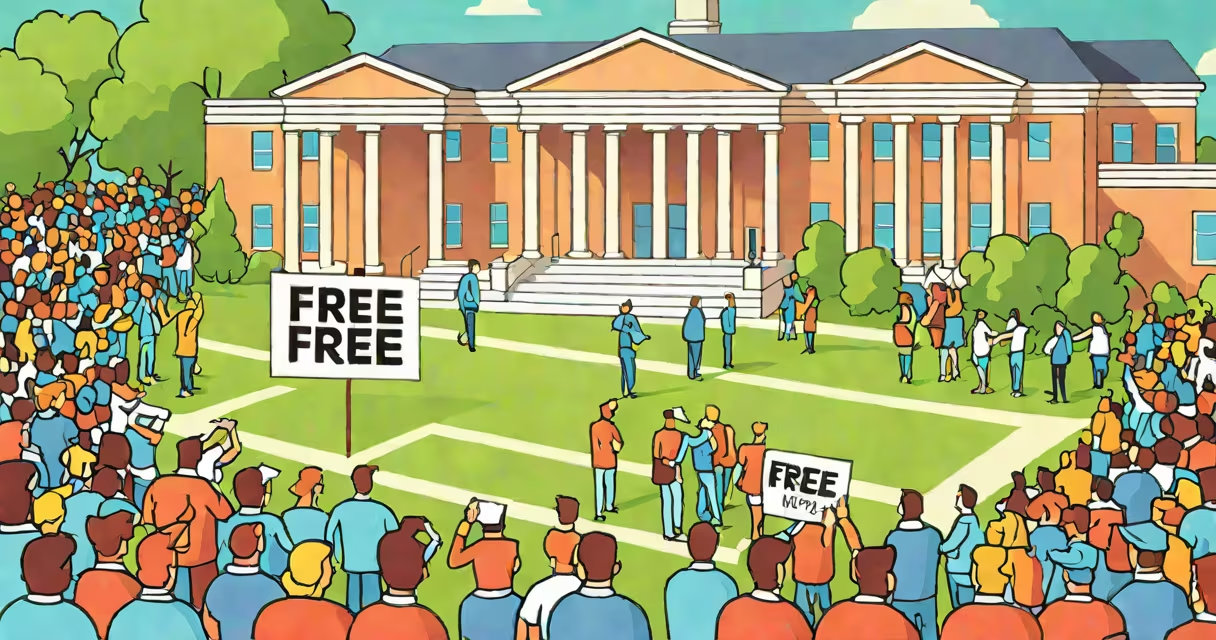
Freedom of speech protects you from government action that restricts your expression, but not from private consequences, social backlash, or legal penalties for certain types of speech. The First Amendment prevents the state from censoring political views, religious beliefs, artistic works, and public criticism-even if those messages are offensive.
The U.S. Supreme Court has consistently ruled that the government cannot silence speech based on its content, message, or speaker. This includes protests, satire, dissenting opinions, and even hate speech-so long as it doesn't cross into incitement, threats, or defamation. The protection applies only against state power, not private actors.
For example, a student who writes a critical editorial about school policy in a school newspaper cannot be punished by administrators for expressing their opinion-this is protected under the First Amendment. But if the school paper is run by a private organization, the rules may differ. Government actions are the focus of constitutional protection.
Freedom of speech is not absolute. The government can legally restrict speech that presents a clear and present danger, such as falsely shouting "fire" in a crowded theater. The Supreme Court established this standard in Schenck v. United States (1919), ruling that speech that creates immediate harm is not protected.
Other categories of unprotected speech include incitement to violence, true threats, child pornography, fraud, and defamation. For instance, falsely claiming a business owner stole money can lead to a civil lawsuit-even if the statement was made publicly. The government doesn't have to stop you from saying it, but the individual harmed can sue.
Even in cases of political protest, courts have upheld restrictions when safety or order is at risk. In Tinker v. Des Moines Independent Community School District (1969), students wore black armbands to protest the Vietnam War. The Court ruled this symbolic speech was protected. But if the protest disrupted classes or caused physical altercations, the school could intervene.
Not all speech is treated equally under the law. The following table outlines common categories and whether they are protected by the First Amendment.
| Type of Speech | Protected? | Reason |
|---|---|---|
| Political protest (e.g., marches, signs) | Yes | Core expression of democratic values |
| Satire or parody (e.g., late-night comedy) | Yes | Expression of ideas, even if mocking |
| Hate speech (e.g., racial slurs in public) | No (if it crosses into threats or incitement) | Not protected unless it incites violence |
| Fraudulent statements (e.g., false product claims) | No | Legal liability exists for damaging others |
| True threats (e.g., "I'll kill you tomorrow") | No | Presents imminent danger |
One non-obvious distinction: the First Amendment protects you from government punishment, but not from being fired, banned, or ostracized by private companies. A social media platform can remove your post-even if it's constitutionally protected-if it violates their community guidelines. This is not a violation of your freedom of speech under the Constitution.
When I worked on a university publication, we ran a photo essay on campus housing conditions. The images showed overcrowded dorm rooms and broken plumbing. The administration asked us to remove them. We refused. The university didn't fire us, but they threatened to cut funding. We appealed to the student press association, which defended our right to publish. The story ran. That moment confirmed: the First Amendment protects your right to speak, but enforcement often requires institutional support.
Many people assume freedom of speech means you can say anything anywhere without consequence. This is incorrect. The Constitution only limits government action. Private employers, schools, and online platforms can enforce their own rules.
Another myth is that hate speech is illegal in the U.S. It is not. The Supreme Court has repeatedly ruled that hateful expressions-such as anti-Semitic rants or racist slogans-are protected unless they involve direct threats or incitement. In R.A.V. v. City of St. Paul (1992), the Court struck down a city ordinance that banned biased symbols because it targeted speech based on content.
Freedom of speech also does not protect you from retaliation by individuals or groups. If someone responds to your speech with harassment, violence, or online abuse, the government may not intervene unless the conduct crosses into criminal behavior. The First Amendment doesn't create a safe space-it creates a legal boundary against state censorship.
Freedom of speech protects you from government suppression of ideas, especially during times of political tension. During the 1960s, civil rights activists were arrested for protesting segregation. Courts later recognized these acts as protected speech, reinforcing that dissent is central to democracy.
Artistic expression is another key area. In Texas v. Johnson (1989), the Supreme Court ruled that burning the American flag as protest is protected speech. The decision affirmed that symbolic expression is part of free expression. This ruling helped preserve the right to protest through performance art, installations, and street theater.
Consider the case of artist Chris Burden, who in 1974 shot himself in the arm during a performance piece titled *Shoot*. The act was controversial but not illegal. The court later acknowledged that art can challenge norms and provoke thought-even when disturbing. This illustrates how freedom of speech in art extends beyond words to actions and visual forms.
Understanding what freedom of speech protects you from helps clarify the boundaries of civic engagement. Knowing that the government cannot silence you based on your message empowers participation in public discourse. But recognizing that private entities can still limit your reach keeps expectations realistic.
What does freedom of speech protect you from? Government censorship of your ideas. It does not protect you from being ignored, criticized, or excluded. The right to speak freely is meaningful only when you understand both its reach and its limits.