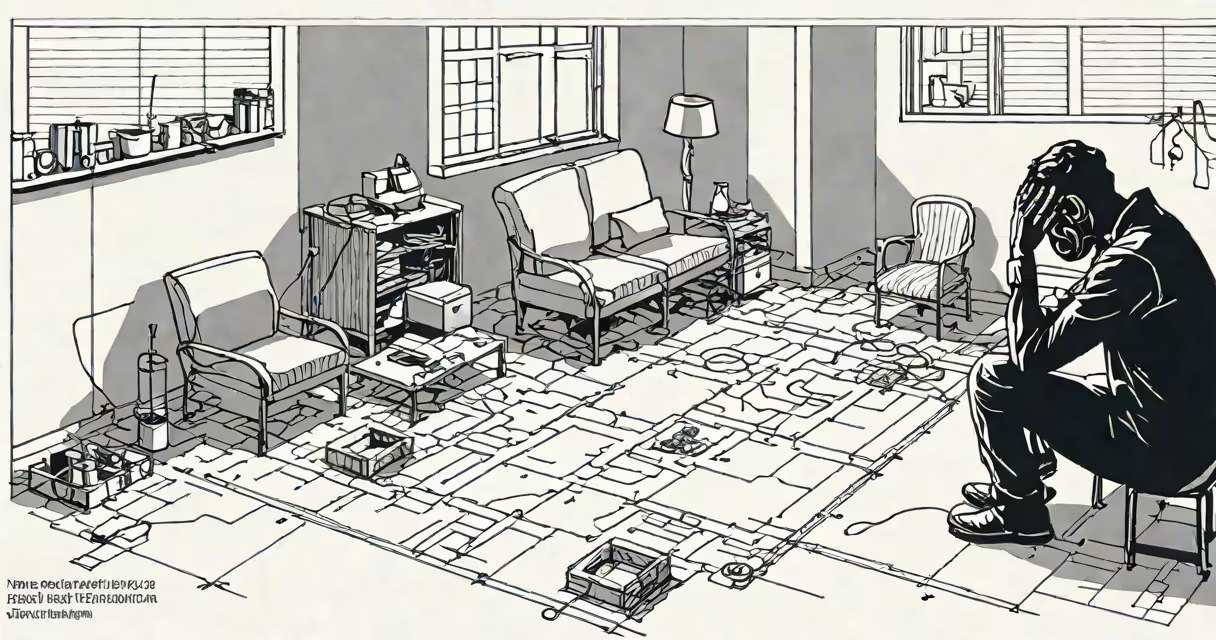
When someone goes septic, they disengage completely from social interaction, often appearing emotionally frozen or detached. This term describes a psychological shutdown triggered by intense stress, trauma, or prolonged emotional strain-not a medical infection.
The word "septic" in this context is a metaphor drawn from medical terminology, where sepsis refers to a life-threatening systemic response to infection. In psychology, "going septic" reflects a similar state of crisis-but within the mind. The person doesn't respond to stimuli, withdraws from conversation, and may appear numb or distant. This is not laziness or indifference. It's a survival mechanism activated when the nervous system reaches capacity.
Research from the National Institute of Mental Health confirms that prolonged exposure to stress can trigger a state of hypoarousal-where the brain shuts down parts of the body's response systems to avoid further overload. This aligns with the concept of "going septic" as a neurological adaptation, not a character flaw.
The human nervous system operates on two primary states: sympathetic (fight-or-flight) and parasympathetic (rest-and-digest). Chronic stress pushes the body into sustained sympathetic activation. When that state persists beyond recovery, the system flips into a defensive, low-energy mode-often called dorsal vagal shutdown. This is the physiological basis of going septic.
During this phase, blood flow shifts away from the prefrontal cortex-the area responsible for reasoning and decision-making-and toward basic survival functions. Heart rate drops. Speech becomes minimal. Eye contact fades. The person may sit motionless for hours, unresponsive to verbal cues. They're not ignoring you-they're unable to process input.
A 2021 study published in *Frontiers in Psychology* found that individuals experiencing prolonged burnout or trauma showed measurable reductions in neural activity in regions linked to emotional regulation. These participants reported feeling "numb," "empty," or "like a ghost." That's the core of what happens when someone goes septic.
Going septic typically follows a sequence: escalating stress → emotional flooding → cognitive overload → nervous system collapse. It's most common in people with high sensitivity, anxiety disorders, or histories of abuse.
For example, a nurse working 16-hour shifts during a pandemic surge may begin to react slowly to patient requests. After a week of sleep deprivation and witnessing multiple deaths, she stops making eye contact, answers only with yes/no, and sits in silence during team meetings. Her body has entered a protective shutdown. She's not being rude-she's overwhelmed.
Another example: a teenager whose parents are divorcing. After weeks of hearing arguments, seeing their home environment deteriorate, and being forced to choose sides, they stop speaking altogether. They don't cry. They don't argue. They just disappear into their room. This is septic behavior-a way the mind protects itself from unbearable emotional pressure.
Not all shutdowns look the same. The following table outlines key differences based on presentation and duration:
| Type | Duration | Behavioral Signs | Common Context |
|---|---|---|---|
| Acute Severe Shutdown | Minutes to hours | Staring blankly, mutism, freezing, shallow breathing | After a sudden trauma or panic attack |
| Chronic Withdrawal | Days to months | Minimal speech, avoidance of touch, reduced facial expression | Long-term caregiving, chronic illness, ongoing conflict |
| Delayed Reaction | Hours to days later | Sudden silence after a stressful event, delayed emotional response | Post-traumatic stress, grief, betrayal |
One non-obvious distinction: people who go septic aren't always silent. Some speak in monotone, repeat phrases, or give robotic answers. Others may move slowly, blink excessively, or appear physically stiff. These signs are often mislabeled as "moodiness" or "disinterest." They're not.
"Going septic" is frequently mistaken for depression, autism, or intentional rudeness. But it's distinct from all three.
Depression involves persistent sadness, low energy, and loss of interest. A person with depression may still engage in conversation-even if briefly. A septic person doesn't initiate or respond. Their lack of engagement is not due to sadness but sensory overload.
Autism spectrum traits involve neurodivergent patterns of communication. While some autistic individuals may withdraw under stress, the reason differs. Autistic shutdowns are often related to sensory processing challenges, not emotional overwhelm. The triggers and mechanisms are different.
And no, someone going septic isn't "being dramatic" or "overreacting." It's a real, biologically grounded response. As Dr. Bessel van der Kolk, author of *The Body Keeps the Score*, explains: "When the nervous system is flooded, the brain literally cannot compute meaning. It enters survival mode."
I once sat with a friend during a therapy session where she went septic after recounting childhood abuse. She stopped breathing for nearly ten seconds. Her eyes stayed open but didn't focus. Her hands rested limp in her lap. The therapist paused, waited, then said, "You're safe now." After five minutes, she blinked and whispered, "I forgot where I was." That moment wasn't performance-it was neurological collapse.
Recovery begins with safety. The person must feel physically and emotionally secure. Speaking softly, using simple language, and avoiding demands are critical. Touch should be avoided unless invited-many septic individuals have heightened sensitivity to physical contact.
Grounding techniques help. Asking, "What do you hear right now?" or "Name three things you see" can gently re-engage the senses. Research shows that slow, rhythmic breathing activates the ventral vagus nerve, which helps reverse shutdown states.
It's not about "fixing" the person. It's about creating conditions where their nervous system can reset. Recovery takes time-sometimes days, sometimes weeks. Pushing them to "snap out of it" worsens the state.
Understanding what it means when someone goes septic prevents mislabeling distress as defiance or apathy. It's a sign of extreme internal strain. Recognizing it allows for compassionate response rather than judgment.