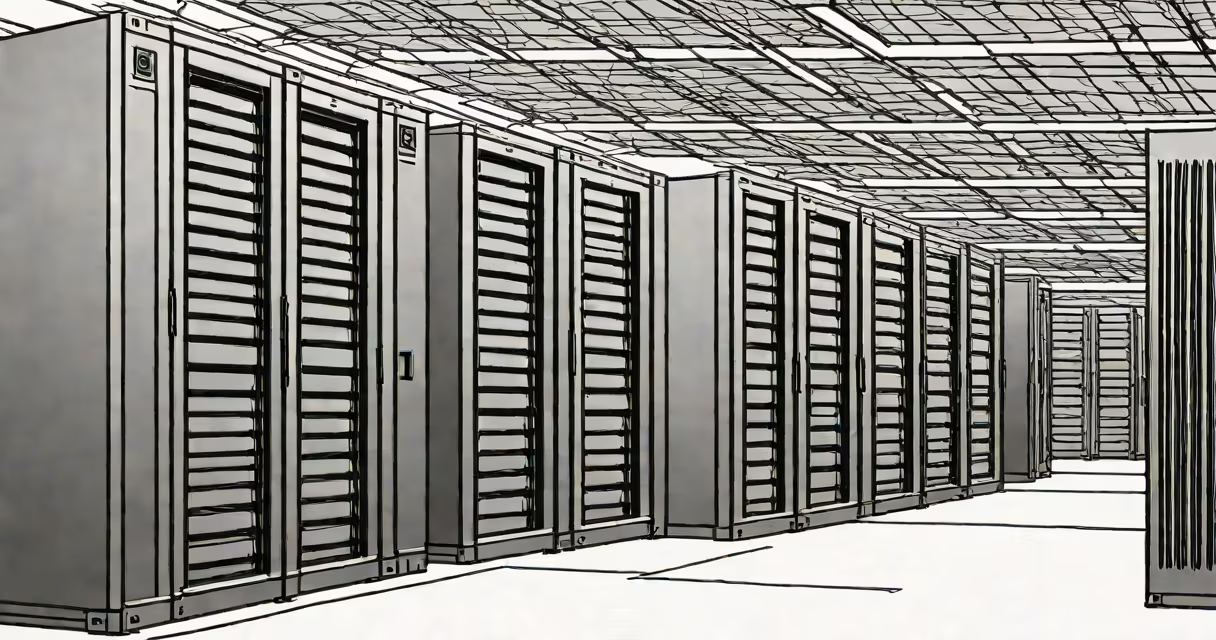
An Isilon is a scale-out network-attached storage (NAS) platform developed by Dell Technologies, engineered to manage massive volumes of unstructured data across distributed environments. It delivers high throughput, consistent performance, and smooth scalability by distributing data across nodes in a single unified namespace.
Isilon systems are purpose-built for workloads involving large files-such as video production, scientific research, media archives, and big data analytics-where traditional storage architectures struggle with performance degradation as capacity grows. The platform uses a clustered architecture that adds capacity and performance linearly by simply adding more nodes, eliminating the need for complex tiering or migration strategies.
Unlike legacy NAS systems that scale vertically (adding more storage to existing controllers), Isilon scales horizontally. This allows organizations to grow their storage infrastructure incrementally without downtime or disruption to ongoing operations. The core innovation lies in its OneFS operating system, which manages data distribution, replication, and access across all nodes in the cluster as a single logical unit.
At its foundation, Isilon operates using a distributed file system called OneFS, which runs on every node in the cluster. OneFS eliminates the bottleneck of centralized metadata servers by storing metadata across all nodes. This design helps as the cluster expands, performance doesn't degrade-it improves due to increased parallelism.
Data is automatically striped across all drives in the cluster using a technique called changing data distribution. When a file is written, OneFS calculates the optimal placement based on current load, available space, and redundancy requirements. Files are split into chunks, each replicated across multiple nodes (typically three copies), ensuring durability even if individual drives or entire nodes fail.
Access to data happens through standard protocols: NFS, SMB/CIFS, and HTTP/HTTPS. Clients connect to the cluster via any node, and OneFS routes requests intelligently based on load and proximity. This means no single point of failure and no need to redirect users when new nodes are added.
Isilon offers several hardware models tailored to different performance and capacity needs. These are typically grouped into three tiers:
| Model Series | Use Case | Drive Type | Typical Node Count | Max Capacity (per node) |
|---|---|---|---|---|
| Elite (formerly X-series) | High-performance computing, media workflows | SSD + HDD hybrid | 4-16 | up to 100 TB |
| Performance (formerly NL-series) | Large-scale file serving, backup, archiving | HDD only | 8-32 | up to 300 TB |
| Capacity (formerly S-series) | Long-term retention, compliance, data lakes | HDD only | 16-64+ | up to 1 PB |
Each model supports mixed-node configurations within a single cluster. For example, a customer can start with four Performance nodes and later add eight Capacity nodes-all managed under one interface. The system auto-balances data across all nodes, regardless of mix.
Isilon clusters can span multiple racks and even geographically dispersed locations. With features like SyncIQ, data can be replicated between clusters in real time or scheduled intervals, enabling disaster recovery and global collaboration.
Many assume Isilon is only for media and entertainment companies. While it's widely used in broadcast and post-production, it's equally effective in life sciences, financial services, and government agencies handling petabytes of research data.
Another misconception is that Isilon requires specialized IT staff. While advanced configuration options exist, the platform is designed for operational simplicity. Dell provides tools like the Isilon InsightIQ dashboard, which offers real-time monitoring, capacity forecasting, and automated alerts-reducing administrative overhead.
A key distinction often missed: Isilon is not a cloud service. It's on-premises hardware. However, it integrates with public clouds via CloudPools, allowing data to be tiered to AWS S3 or Azure Blob Storage. This enables cost savings on cold data while maintaining local access to hot data.
One non-obvious fact: Isilon's OneFS includes built-in data deduplication and compression. These features reduce storage footprint by up to 50% in typical workloads-without requiring application changes. For example, a university research team storing terabytes of genomic sequencing data saw a 42% reduction in raw storage needs after enabling deduplication.
A major film studio processes 200 hours of 4K video daily. Each frame is 20 MB, totaling ~4 TB per hour. Over a month, this generates 240 TB of raw footage.
Before Isilon, the studio used a traditional NAS with a single controller. As project volume grew, performance dropped during rendering. Editors experienced lag, and backups took days.
After deploying a 12-node Isilon Elite cluster with 100 TB per node, the studio achieved sustained 1.2 GB/s read bandwidth across all editors simultaneously. OneFS balanced the load across all nodes, preventing bottlenecks. They enabled CloudPools to archive completed projects to AWS S3, reducing on-prem costs by 37% over two years.
When a node failed during a critical render cycle, the system continued without interruption. Data was automatically rebuilt across remaining nodes within 45 minutes. The studio reported zero downtime during the entire deployment period.
What is an Isilon? It's a high-capacity, high-performance, scale-out NAS solution optimized for managing vast amounts of unstructured data. Its ability to grow smoothly, maintain consistent performance, and integrate with cloud storage makes it a preferred choice for mission-critical data environments.
Organizations relying on large file workloads-from engineering simulations to digital asset management-benefit from Isilon's unified namespace, intelligent data distribution, and resilience. It's not just storage. It's infrastructure built for scale, speed, and reliability.