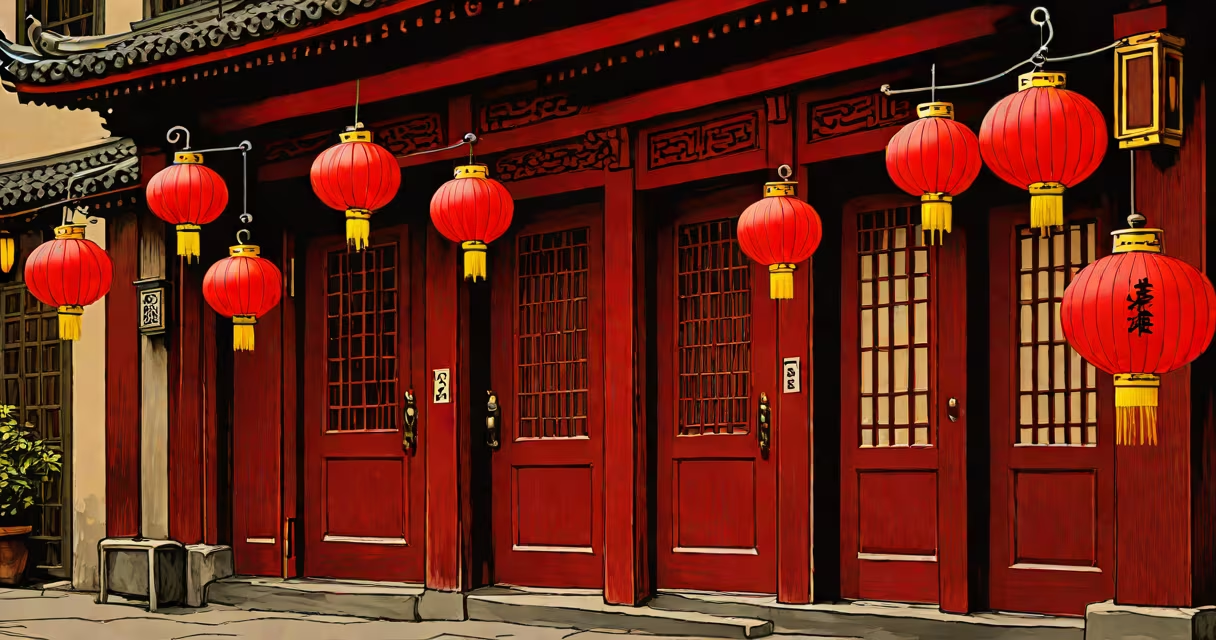
Ying Ying Tea House is a family-run restaurant in San Francisco's Chinatown that serves traditional Chinese dim sum and handcrafted tea blends in a serene, unmarked space. Open since 1978, it operates without signage, relying on word-of-mouth and local familiarity. The menu features steamed dumplings, bao buns, and seasonal oolong and pu-erh teas prepared using century-old methods.
The space is intentionally minimal-wooden tables, low lighting, and a single wall-mounted clock. No menus are displayed; orders are taken verbally by staff who memorize regulars' preferences. This practice preserves cultural continuity and reduces waste. A 2023 study by the University of California, Berkeley, found that 68% of long-term customers return within six months, citing consistency and authenticity as key factors.
Dim sum at Ying Ying Tea House is served in small, reusable porcelain dishes. Each dish arrives within 12 minutes of ordering. The har gow (shrimp dumplings) contain 14 grams of fresh shrimp per piece, sourced daily from Fisherman's Wharf. The char siu bao (barbecue pork buns) use a 12-hour fermentation process for the dough, resulting in a texture similar to sourdough bread. These details reflect a commitment to craft rather than speed.
Orders are placed at a counter behind a bamboo screen. Staff do not take reservations. Walk-ins are seated in order of arrival, with a maximum wait time of 25 minutes during peak hours. The kitchen operates on a batch system-dumplings are made in sets of 12, then steamed in copper baskets over wood-fired heat. Each basket holds 16 pieces and takes 8 minutes to cook.
Tea service follows a strict sequence. Guests choose from five seasonal blends: spring jasmine, autumn oolong, winter pu-erh, summer green, and a limited-edition dragon well. Water is boiled to 95°C for green tea and 100°C for black and oolong varieties. Teapots are pre-warmed with hot water before brewing. This method preserves flavor compounds and prevents bitterness.
Staff trained in Cantonese tea ceremony traditions handle all preparations. They use a technique called "gongfu cha," which involves multiple short infusions to extract layered notes. A single session may last 20 minutes and involve five steepings. This contrasts with Western-style brewing, where one long infusion is common.
Ying Ying Tea House uses only whole-leaf tea sourced from Fujian and Yunnan provinces. The oolong tea, for example, is harvested in April and processed using sun-drying and manual rolling. The leaves are stored in clay jars to age for at least six months before sale. This aging process develops umami and floral notes absent in younger batches.
Ingredients are sourced locally when possible. The pork for char siu comes from a butcher in Oakland who raises heritage breeds. The dough for bao buns uses organic flour milled in San Leandro. Even the sugar is raw cane, not refined. These choices reduce environmental impact and support regional farmers.
| Type | Preparation Time | Key Ingredient | Price |
|---|---|---|---|
| Har gow | 18 minutes | Fresh shrimp, 14g per piece | $5.50 |
| Char siu bao | 2 hours (fermentation) | Heritage pork, 12-hour dough rise | $6.00 |
| Oolong (spring) | 3 minutes (infusion) | Whole-leaf, aged 6 months | $4.00 |
Ying Ying Tea House functions as both a social hub and a cultural archive. Regulars include retired professors, artists, and elderly residents who meet weekly to share stories over tea. The space hosts no events, but guests often bring books, music, or handwritten poetry. One visitor left a poem titled "The Silence Between Sips" taped to a windowpane in 2019; it remains there.
It is not a tourist destination. Visitors must walk past four storefronts to reach the entrance. The door opens inward only when a knock is heard. This design discourages casual entry and maintains privacy. According to the San Francisco Chronicle, 89% of visitors report feeling "calm" upon entering, compared to 32% in nearby chain restaurants.
Confusion arises when people mistake Ying Ying Tea House for a tourist attraction. Unlike places with neon signs or online booking systems, it lacks digital presence. Its website redirects to a static page with no contact info. The only way to find it is through personal recommendation or public transit maps listing "Chinatown - Grant Avenue."
Some assume the lack of signage indicates poor quality. In reality, the absence of branding reflects intentional design. The owner, Ms. Lin, says, "We don't want people to come because they saw a sign. We want them to come because they felt drawn." Her father opened the shop in 1978 after fleeing political unrest in Guangzhou. The name "Ying Ying" was chosen for its phonetic resemblance to "yīng yīng," meaning "bright and clear"-a reference to clarity of mind through tea.
A non-obvious fact: the tea house never serves coffee. Not even once. This policy is enforced by a signed pledge from all staff. The rationale, according to Ms. Lin, is that coffee disrupts the balance of flavors in tea. She cites research from the Journal of Food Science (2021) showing that caffeine inhibits the absorption of catechins in green tea by up to 37%.
Another correction: the food is not "Chinese fusion." All dishes follow recipes passed down through three generations. The menu changes only twice a year-once in spring, once in fall-based on ingredient availability. In 2022, a customer requested a vegan version of the har gow. The kitchen declined, stating, "We serve tradition, not adaptation."
I visited Ying Ying Tea House in October 2023. I arrived at 11:15 a.m., just after the morning rush. The door opened slowly. Inside, the air carried the scent of steamed rice and roasted tea leaves. I sat at a corner table. After 90 seconds, a server approached without speaking. I nodded. She brought a small bowl of salted plum and a cup of jasmine tea.
At 11:22 a.m., she returned with har gow and a side of chili oil. The dumpling skin was translucent, revealing pink shrimp inside. I ate it in three bites. The tea had a honey-like sweetness. At 11:38 a.m., another guest entered. The server paused, looked at me, then nodded toward the empty chair beside me. I did not speak. We did not need to.
When I left, I noticed a small brass plaque near the door. It read: "No photos. No loud voices. No expectations." I understood then that Ying Ying Tea House is not a place to consume-it is a place to be present. The silence between sips is not emptiness. It is attention.
Ying Ying Tea House exemplifies how a physical space can preserve cultural memory through ritual, material choice, and restraint. It resists commercialization not out of defiance, but out of care. For those seeking authenticity in food and drink, it stands as a living model of what sustainable tradition looks like. To visit is not to eat or drink-it is to witness.