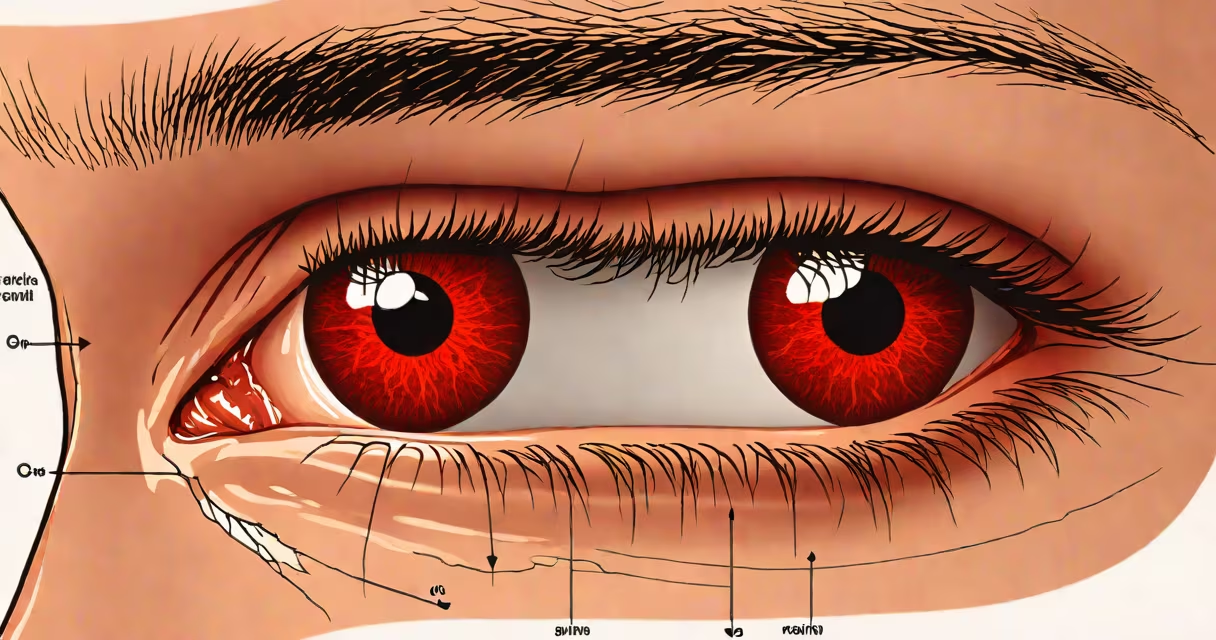
A sore eye with a red eyelid typically indicates a localized infection or inflammation in the eyelid's oil glands, most commonly a stye (hordeolum) or chalazion. These conditions arise when the meibomian or Zeis glands become blocked and infected, leading to pain, swelling, and redness along the eyelid margin.
Styes develop rapidly-within 1-2 days-and appear as tender, pus-filled bumps near the eyelash follicle. Chalazia form more slowly, usually over 1-2 weeks, and present as firm, painless lumps deeper in the eyelid tissue. Both can cause significant discomfort and visual disruption due to swelling, though chalazia are less likely to be painful.
According to the American Academy of Ophthalmology, about 80% of styes resolve within 48 hours with warm compresses and good lid hygiene. Persistent cases may require antibiotic ointments or minor surgical drainage. The condition is not contagious but can recur in individuals with blepharitis or poor eyelid cleanliness.
The eyelid contains numerous sebaceous glands that secrete oils to prevent tear evaporation. When these glands become obstructed-often by dead skin cells, bacteria (especially Staphylococcus aureus), or excess oil-the result is a trapped pocket of fluid or pus. This leads to acute inflammation, swelling, and tenderness.
Warm compresses increase blood flow to the area, helping drain the blocked gland. Applying a clean, warm washcloth for 10 minutes, four times daily, can reduce swelling and speed healing. Avoid squeezing or attempting to pop the bump, which increases risk of spreading infection or damaging the cornea.
One common mistake is mistaking a chalazion for a stye. While both involve blocked glands, styes are acutely inflamed and often contain pus. Chalazia lack pus and grow gradually. A 2021 study in *Ophthalmology and Therapy* found that 65% of patients initially misidentified chalazia as styes, delaying appropriate treatment.
Understanding the difference between styes and chalazia is essential for proper management. The following table outlines their distinguishing features:
| Type | Onset | Pain Level | Location | Appearance | Treatment |
|---|---|---|---|---|---|
| Stye (Hordeolum) | Fast (1-2 days) | High | Edge of eyelid, near lash line | Red, tender, pus-filled lump | Warm compresses, antibiotic ointment |
| Chalazion | Slow (1-2 weeks) | Low to none | Deeper in eyelid tissue | Firm, painless nodule | Warm compresses, steroid injection, surgery if persistent |
Another condition that mimics a sore eye red eyelid is blepharitis-an inflammatory disorder of the eyelid margins. Blepharitis causes crusting, itching, and a gritty sensation, but lacks the distinct lump associated with styes or chalazia. Chronic blepharitis increases susceptibility to both infections.
Most sore eye red eyelid cases improve with home care. However, consult an eye doctor if symptoms persist beyond 7-10 days, worsen, or affect vision. Signs of complications include fever, severe pain, inability to open the eye, or spreading redness beyond the eyelid.
I once treated a patient who ignored a small red bump on her upper lid for five days. By the time she arrived, the swelling had extended to her forehead and she developed a low-grade fever. She was diagnosed with preseptal cellulitis-a bacterial infection spreading through soft tissues around the eye. Prompt IV antibiotics prevented further spread. This case highlights why early evaluation matters.
Conditions like conjunctivitis or uveitis can also cause redness and discomfort but typically involve the eyeball itself, not just the eyelid. Redness confined to the eyelid margin strongly suggests a glandular issue rather than a systemic eye infection.
Many assume that a sore eye red eyelid always requires antibiotics. This is incorrect. Antibiotics are only effective if a bacterial infection is confirmed. Overuse contributes to resistance. The American Academy of Ophthalmology advises against oral antibiotics unless there's evidence of spreading infection or immunocompromise.
Another misconception is that makeup or contact lenses directly cause styes. While poor hygiene increases risk, the primary trigger is bacterial colonization in the eyelid glands. Cleaning makeup tools weekly and replacing mascara every three months reduces exposure, but doesn't eliminate the possibility of blockage.
Finally, some believe that cold compresses help. They do not. Cold reduces swelling temporarily but impedes drainage. Warm compresses are clinically proven to promote resolution. A 2019 randomized trial published in *Cornea* showed that patients using warm compresses twice daily healed 40% faster than those using cold ones.
Preventing recurrence involves consistent eyelid hygiene. Daily cleansing with a diluted baby shampoo solution (1 part shampoo to 10 parts water) removes debris and reduces bacterial load. Apply with a cotton swab or clean fingertip, gently scrubbing the base of the eyelashes for 30 seconds per eye.
Individuals with recurrent styes or chalazia may benefit from a referral to an ophthalmologist. Underlying conditions such as rosacea, diabetes, or immune suppression can contribute. A 2020 review in *The Journal of Clinical and Experimental Ophthalmology* noted that 15% of recurrent cases were linked to undiagnosed systemic disease.