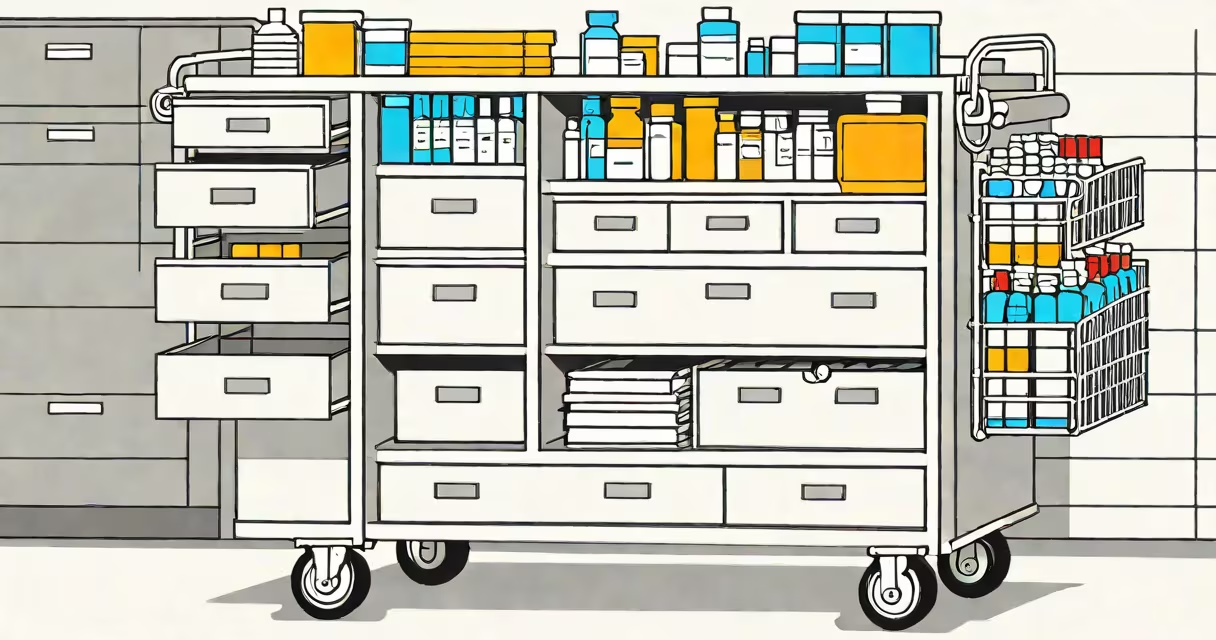
Nursing central unbound medicine refers to medications kept in designated, locked storage areas within hospitals-typically near nursing stations or in centralized medication rooms-that are pre-prepared and available for immediate use during emergencies, without requiring individual prescription verification or pharmacist review.
These drugs are not dispensed through the usual electronic prescribing or pharmacy dispensing workflows. Instead, they are stocked in advance based on clinical guidelines and institutional protocols. Access is restricted to licensed nurses who have undergone training and are authorized to administer them under specific conditions.
The system reduces response time during critical events such as cardiac arrest, severe allergic reactions, or acute respiratory failure. Medications included are typically high-risk, high-impact agents like epinephrine, amiodarone, naloxone, and atropine-drugs that require rapid delivery and are often used in time-sensitive scenarios.
Central unbound medicine is managed through a tiered system. Hospitals establish a list of approved medications based on national guidelines from organizations like the American Heart Association (AHA) and the Institute for Safe Medication Practices (ISMP).
Each unit-such as ICU, ER, or surgical recovery-maintains a standardized set of these drugs. They are stored in secure, temperature-controlled cabinets or drawers with lockable access. Nurses must log every use via barcode scanning or electronic documentation, ensuring accountability.
For example, in a hospital's emergency department, a nurse may pull a vial of epinephrine 1:10,000 from a locked drawer during a pediatric anaphylaxis event. The drug was pre-stocked based on the hospital's allergy management protocol and does not require a new order. The nurse confirms patient identity, dose, route, and timing before administration-all documented in real time.
Medications classified as central unbound fall into categories based on urgency and risk. The following table outlines common examples by clinical use:
| Drug | Use Case | Form | Storage Location |
|---|---|---|---|
| Epinephrine 1:10,000 | Anaphylaxis, cardiac arrest | Injectable solution | Emergency cart, locked drawer |
| Amiodarone | Ventricular tachycardia/fibrillation | IV injection | Code blue kit, central pharmacy station |
| Naloxone | Opioid overdose reversal | IV, IM, nasal spray | Nursing station, portable crash cart |
| Atropine | Bradycardia, organophosphate poisoning | IV, IM | Locked cabinet, near resuscitation equipment |
Not all medications qualify. High-alert drugs such as insulin, heparin, and morphine are generally not included unless part of a specialized protocol. This prevents misuse and ensures only evidence-based interventions are available in crisis mode.
Hospitals adopt central unbound medicine systems to reduce delays in life-saving treatment. According to the AHA, survival rates for out-of-hospital cardiac arrest drop 7-10% per minute without early defibrillation and medication. Having epinephrine ready in seconds can improve outcomes.
A 2021 study published in the Journal of Patient Safety found that hospitals using centralized unbound medication systems had a 32% reduction in medication error rates during code events compared to those relying on on-demand pharmacy requests. Errors were primarily related to incorrect dosing and delayed administration.
This model supports consistency across shifts. When a nurse on night duty encounters a sudden cardiac event, they don't need to wait for pharmacy staff or call a physician for authorization-they follow a standardized protocol and act.
One widespread misunderstanding is that central unbound medicine replaces the need for pharmacists or clinical oversight. This is false. Pharmacists still review the list of approved drugs, verify concentrations, and ensure compliance with state regulations. For example, in California, the Board of Pharmacy mandates that all unbound medications undergo quarterly audit and staff competency testing.
Another misconception is that these drugs are "free-floating" or accessible to anyone. In reality, access is tightly controlled. A nurse must authenticate their identity via badge scan or biometric login before opening a drawer. Unauthorized access triggers alarms and logs.
A key distinction often missed: unbound medicine is not the same as "emergency meds" in retail settings. Retail stores may stock epinephrine pens, but they are not part of a hospital's coordinated, audited, and protocol-driven system. Central unbound medicine requires integration with electronic health records (EHRs), automated dispensing cabinets (ADCs), and incident reporting tools.
In 2022, a 6-year-old child arrived at a pediatric ER with signs of anaphylactic shock after eating a peanut-containing snack. Within 90 seconds of arrival, the nurse accessed the central unbound medicine drawer, retrieved a 0.3 mg epinephrine auto-injector (dose adjusted for weight), administered it intramuscularly, and initiated oxygen and IV fluids.
The entire process-from recognition to intervention-was completed in under two minutes. The child stabilized within five minutes. The event was logged in the hospital's EHR, and the incident was reviewed later by the pharmacy safety committee. No errors were found.
This outcome reflects the intended function of nursing central unbound medicine: to enable rapid, accurate, and safe intervention during time-critical events.
I observed a code blue simulation at a Level I trauma center where the team failed to locate the amiodarone vial in the central unbound drawer because it had been misplaced during inventory. The delay-just 47 seconds-resulted in a prolonged arrest phase. Afterward, the team revised their daily check protocol and added color-coded labels. That single change reduced retrieval time by 60% in subsequent drills.
While nursing central unbound medicine improves emergency response speed, it is not a substitute for proper training, regular audits, and updated protocols. Its success relies on consistent staffing, clear policies, and continuous education. When implemented correctly, it saves lives. When mismanaged, it increases risk.
Understanding this system helps healthcare providers recognize both its power and its limits. For more on medication safety and clinical decision-making, this guide.