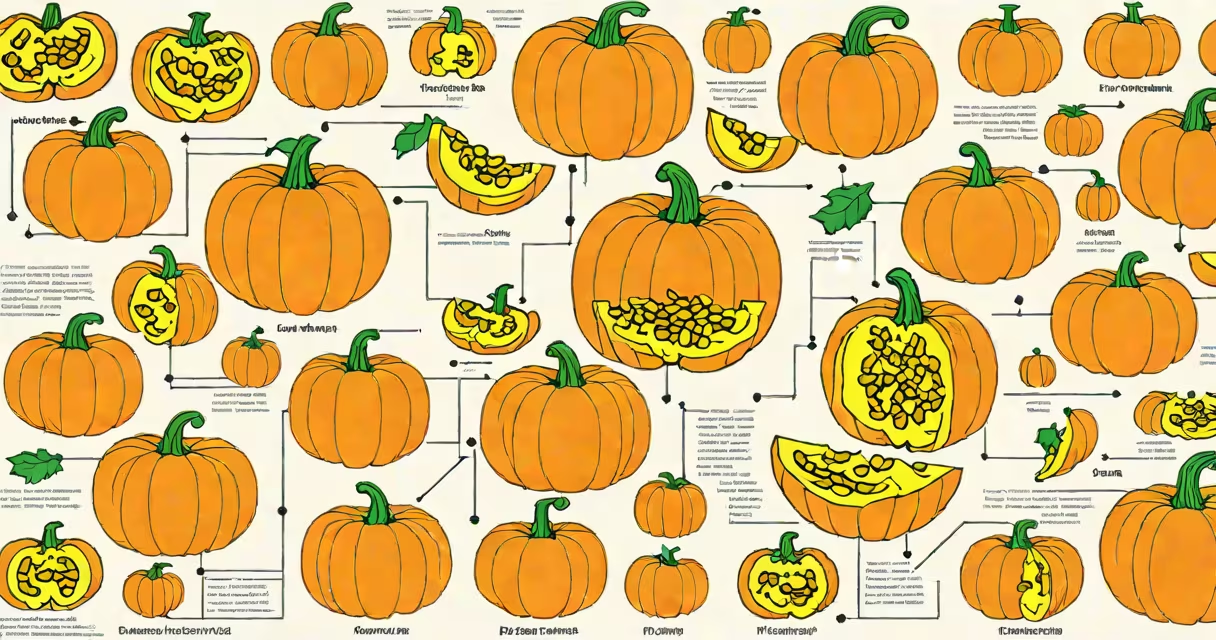
A life cycle of a pumpkin free printable is a visual, step-by-step guide showing the six stages of a pumpkin's development-from seed to mature fruit-designed for easy download and use in classrooms, homeschooling, or family learning. These resources typically include labeled diagrams, simple descriptions, and space for coloring or labeling, making them ideal for teaching plant biology during autumn.
The life cycle begins with a seed planted in soil. Over time, it germinates, sending out roots and a shoot. The vine grows rapidly, producing flowers-first male, then female. After pollination, the female flower develops into a small green pumpkin. As days pass, the fruit enlarges, changes color, and hardens. Finally, it reaches maturity and is harvested. This entire process takes about 90 to 120 days, depending on the variety.
These free printables are often used in science education, especially during fall units. They align with Next Generation Science Standards (NGSS), particularly for K-5 life science, where students learn about plant growth and reproduction. According to the National Science Teaching Association, visual aids like these improve retention by up to 40% compared to verbal instruction alone.
Each printable follows a consistent sequence: seed → sprout → vine with flowers → developing pumpkin → mature pumpkin → harvested pumpkin. Most versions use numbered steps or arrows to show progression. Some include spaces for students to write observations or draw their own version, promoting engagement and ownership of learning.
Many educators use these printables as part of a hands-on project. For example, a teacher might start by planting real pumpkin seeds in a classroom container. Students track daily growth using the printable as a reference. When the first sprout appears, they mark the corresponding stage. By the end of the season, they compare their notes to the completed diagram.
One common mistake is assuming all pumpkins grow the same way. In reality, varieties differ. A Jack-o'-lantern pumpkin may take 110 days to mature, while a smaller sugar pie variety can be ready in 95 days. A well-designed printable accounts for this variation by including notes on different types or offering multiple templates.
Printables come in several formats tailored to different learning environments and age groups:
| Type | Best For | Features |
|---|---|---|
| Simple Diagram | Kindergarten to Grade 2 | Colorful images, minimal text, blank circles for labeling |
| Interactive Worksheet | Grades 3-5 | Fill-in-the-blank, matching, short-answer questions |
| Full-Color Poster | Classroom walls, science fairs | Larger format, durable for laminating |
| Step-by-Step Lab Sheet | Homeschoolers, science clubs | Includes observation logs and date tracking |
Some printables include QR codes linking to video clips of actual pumpkin growth, adding multimedia context. Others integrate cross-curricular elements-like math (measuring girth) or language arts (writing a story from the seed's perspective).
Teachers use the life cycle of a pumpkin free printable during fall science units, often paired with real pumpkins or school garden projects. The U.S. Department of Agriculture notes that 85% of public elementary schools incorporate seasonal plant cycles into their curriculum, with pumpkins being a top choice due to cultural relevance and visual appeal.
Homeschool parents find these tools valuable for structured lesson planning. One parent shared that her daughter, after completing a printable and growing a pumpkin from seed, correctly explained pollination and fruit development during a family dinner-something she hadn't grasped from textbooks alone.
Libraries and community centers also distribute these materials during October events. The American Library Association reports a 60% increase in demand for seasonal educational printables during late summer and early fall, especially those tied to holidays like Halloween and Thanksgiving.
Many assume that pumpkins grow directly from the ground like potatoes. In truth, they develop from flowers on a trailing vine. A common error in beginner printables is showing the fruit emerging from the stem without illustrating the vine's role. Accurate diagrams show the connection between the stem, vine, and root system.
Another misconception is that all pumpkins are orange. While most are, varieties exist in white, green, blue, and even striped patterns. A high-quality printable includes a brief note on diversity-such as the 'Lumina' or 'Blue Doll' cultivars-to broaden understanding beyond stereotypes.
One non-obvious fact: pumpkins are technically fruits, not vegetables. They develop from the ovary of a flower and contain seeds. This classification aligns with botanical standards set by the Royal Horticultural Society. Including this detail in a printable adds scientific accuracy and sparks deeper inquiry.
Consider a third-grade class in rural Ohio. Their teacher downloaded a printable featuring six labeled stages. On Day 1, students planted seeds in small pots. Each day, they recorded height, leaf count, and visible changes. On Day 45, a flower appeared-students matched it to the "flowering" stage on the chart. By Day 100, a small green pumpkin had formed. The class celebrated with a "Pumpkin Progress Parade," where each student presented their plant and explained the life cycle.
At the end of the unit, the teacher assessed understanding through a quiz. 92% of students correctly identified the correct order of stages. One student wrote, "The flower turns into a pumpkin because bees brought pollen." This demonstrates how printables support both conceptual and vocabulary development.
Using a life cycle of a pumpkin free printable gives learners a clear, engaging structure for understanding plant growth. With accurate visuals, age-appropriate language, and real-world connections, these tools turn seasonal tradition into meaningful science education.