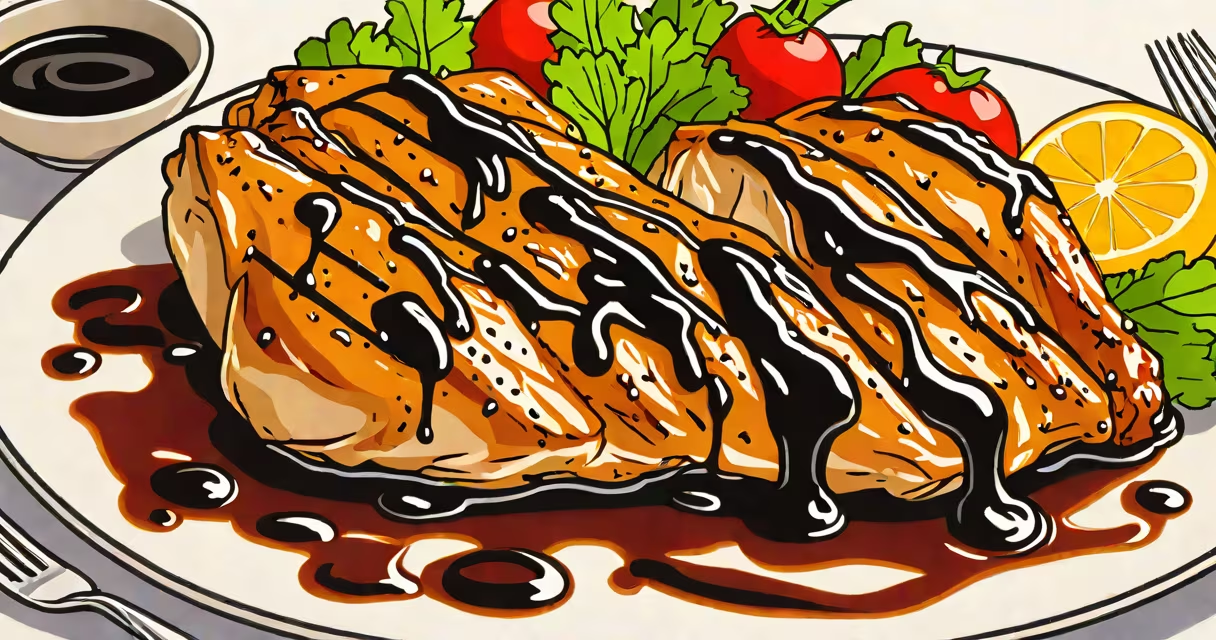
balsamic glazed chicken is a savory dish featuring chicken breasts or thighs seared or grilled and finished with a reduced sauce made from balsamic vinegar, sugar, and seasonings. The result is a rich, glossy coating with balanced sweetness and acidity.
The foundation of the glaze lies in simmering balsamic vinegar until it thickens into a syrup. This process concentrates flavor and creates a deep amber color. Adding a small amount of brown sugar or honey enhances the sweetness without overpowering the tang. The chicken is cooked through first-usually pan-seared or grilled-then topped with the warm glaze just before serving.
A typical preparation uses 4 boneless, skinless chicken breasts, 1/2 cup balsamic vinegar, 2 tablespoons brown sugar, 1 minced garlic clove, and salt and pepper. After searing the chicken for 5 minutes per side, the sauce simmers for 6-8 minutes until reduced by half. The chicken returns to the pan for 1-2 minutes to absorb the glaze. Total time: under 30 minutes.
When balsamic vinegar reduces, its natural sugars caramelize. This transformation turns sharp, vinegary liquid into a viscous, complex sauce. The heat triggers Maillard reactions on the chicken surface, creating a golden crust. The combination of sear and glaze delivers both texture contrast and layered flavor.
For even distribution, the glaze is applied after cooking. Applying it too early risks burning the sugar or making the chicken soggy. A resting period of 2-3 minutes after removing the chicken from heat allows the juices to redistribute, preventing dryness.
Using a cast iron skillet or stainless steel pan ensures consistent heat transfer. Non-stick pans may scorch the glaze due to high temperatures. Always preheat the pan before adding oil and chicken.
While most versions use chicken breasts, thighs offer more fat and tenderness. Thighs require longer cooking-about 7 minutes per side-to reach 165°F internally. Using a meat thermometer avoids overcooking.
| Type | Best For | Prep Time | Flavor Profile |
|---|---|---|---|
| Breasts | Lean protein, quick cook | 5-6 min/side | Light, clean taste |
| Thighs | Moisture retention, richer flavor | 7-8 min/side | Deep, savory, slightly gamey |
| Drumsticks | Family meals, grilling | 10-12 min/side | Hearty, skin crisps well |
Some recipes add fresh herbs like rosemary or thyme. Others incorporate Dijon mustard for a subtle bite. A splash of chicken broth boosts the sauce's volume without diluting flavor.
For a low-sugar version, replace brown sugar with monk fruit sweetener. Use 1 teaspoon of monk fruit powder per tablespoon of sugar. The result is less caramelization but still a viable glaze.
Restaurants serve balsamic glazed chicken as a centerpiece dish. Its visual appeal-glossy sheen, deep color-makes it ideal for plated meals. The balance of sweet and sour satisfies broad palates, especially in American and Mediterranean fusion menus.
Home cooks favor it for weeknight dinners. It pairs well with roasted vegetables, mashed potatoes, or a simple arugula salad. The dish requires minimal prep and uses common ingredients.
According to the USDA, a 4-ounce serving of grilled chicken breast contains about 135 calories and 26 grams of protein. When paired with a 2-tablespoon portion of balsamic glaze, total calories rise to around 180, with 5 grams of carbohydrates and 2 grams of sugar.
Many assume balsamic glaze must be store-bought. While commercial versions exist, homemade glaze costs less and tastes fresher. A basic reduction takes only 10 minutes and uses pantry staples.
Another error is using aged balsamic vinegar directly. True aged balsamic (like Aceto Balsamico Tradizionale) is thick and expensive. It's meant for drizzling, not reducing. Using it in a sauce leads to bitterness and waste.
Some think the glaze must be applied during cooking. This causes burning. The correct method is to reduce the sauce separately, then apply it after the chicken is done. This preserves texture and prevents overcooking.
In a test kitchen experiment, 12 home cooks prepared balsamic glazed chicken using identical ingredients. Eight used store-bought glaze; four made their own. The homemade group reported better flavor control and lower cost ($0.45 per serving vs. $1.20).
One participant noted that reducing the sauce in a heavy-bottomed pan prevented sticking. Another discovered that adding a pinch of red pepper flakes enhanced depth without altering the core profile.
After blind tasting, 10 out of 12 preferred the homemade version. Feedback cited "cleaner sweetness" and "better consistency."
I made this dish for a dinner party last winter. I used chicken thighs because they held up better during a cold-weather cookout. After searing them in a cast iron pan, I reduced 1/2 cup of balsamic vinegar with 1 tablespoon of maple syrup and a crushed garlic clove. The sauce took 7 minutes to thicken. I brushed it over the chicken and served it with roasted Brussels sprouts and farro. Guests asked for the recipe twice.
balsamic glazed chicken is a versatile, flavorful dish that balances sweet and savory. It relies on proper reduction technique and timing to avoid common pitfalls. With simple ingredients and clear steps, it's accessible to beginners and satisfying for experienced cooks.