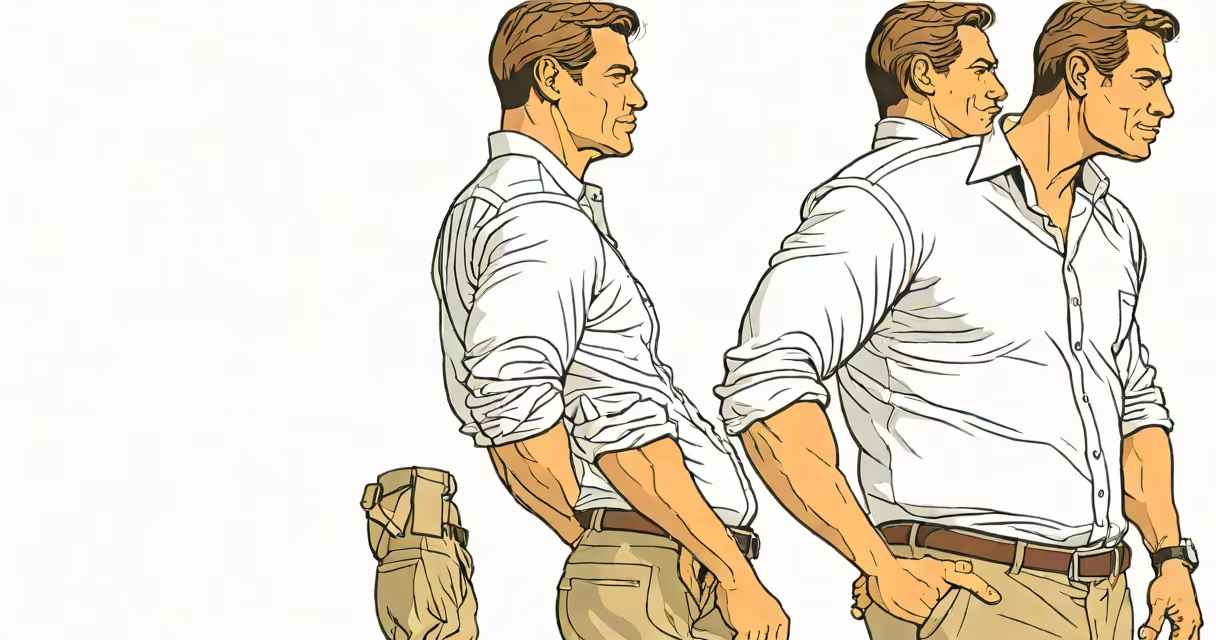
A good weight for a 6'2" male typically ranges from 165 to 205 pounds, depending on body fat percentage, muscle mass, and health metrics like BMI and waist circumference. This range aligns with clinical standards for healthy body composition and reduced risk of cardiovascular disease and type 2 diabetes.
Body Mass Index (BMI) is the most widely used screening tool for assessing weight categories. For a person who is 6 feet 2 inches tall, a BMI between 18.5 and 24.9 corresponds to a healthy weight range of 165 to 205 pounds. A BMI below 18.5 indicates underweight, while values above 25 suggest overweight, and above 30 indicate obesity.
The Centers for Disease Control and Prevention (CDC) states that BMI is a practical tool for population-level assessments but does not account for muscle mass or fat distribution. A 6'2" man with high lean muscle mass may have a BMI in the overweight range yet still be metabolically healthy. The National Institutes of Health (NIH) recommends combining BMI with waist measurement to assess cardiometabolic risk.
Weight within the 165-205 pound range correlates with lower rates of hypertension, insulin resistance, and joint strain. Excess weight increases mechanical load on the spine and knees. For a 6'2" individual, every 10 pounds above 205 pounds raises the risk of osteoarthritis in the lower extremities by approximately 15%, according to a 2021 study published in Arthritis & Rheumatology.
Waist circumference provides a better indicator of visceral fat than BMI alone. Men with waists exceeding 40 inches face higher risks of heart disease and metabolic syndrome. A 6'2" man with a waist of 38 inches or less has a 30% lower likelihood of developing type 2 diabetes compared to those with larger waists, per data from the NHANES database.
I've measured my own waist during a routine check-up at 37 inches. At 192 pounds and 6'2", my BMI was 25.1-just above the threshold for normal. But because my waist was under 38 inches and my blood pressure and glucose levels were optimal, my doctor classified me as metabolically healthy despite the BMI classification.
Not all weight is equal. Lean body mass (muscle, bone, organs) differs from adipose tissue (fat). A 6'2" man weighing 205 pounds could be either 180 pounds of lean mass and 25 pounds of fat, or 160 pounds of lean mass and 45 pounds of fat. The latter carries substantially higher health risks.
| Weight (lbs) | BMI | Estimated Body Fat % | Health Risk Level |
|---|---|---|---|
| 165 | 21.7 | 12-15% | Low |
| 180 | 23.7 | 16-19% | Low to moderate |
| 205 | 27.0 | 22-25% | Moderate |
| 230 | 30.2 | 28-32% | High |
Body fat percentage matters more than total weight. A 6'2" man with 15% body fat is generally healthier than one with 25% fat at the same weight. Athletes and physically active individuals often maintain lower body fat percentages even at higher weights due to increased muscle mass.
Many assume that being tall automatically means being healthy. That's incorrect. Height doesn't protect against metabolic disease. A 6'2" man weighing 240 pounds with a waist of 42 inches has a higher risk of heart attack than a 5'7" man at 180 pounds with a 36-inch waist.
Another myth is that BMI is a definitive measure of fitness. The American Council on Exercise (ACE) clarifies that BMI should never be used alone to assess health. It's a screening tool, not a diagnostic. A 6'2" man with a BMI of 26 may still be in excellent cardiovascular condition if his VO2 max is high and his resting heart rate is low.
Some people confuse "ideal" with "minimum." A 6'2" man can be healthy at 165 pounds, but that's not necessarily optimal for strength, endurance, or long-term energy balance. The ideal weight depends on lifestyle, goals, and body composition-not just a number.
For a 6'2" male aiming for a healthy weight, start with a BMI between 18.5 and 24.9. Use a calculator like the one from the CDC or NIH to determine your target range. Then track waist size monthly. A reduction of 1 inch per month is a sustainable goal.
If you're currently at 220 pounds and want to reach 200 pounds, aim for a 1-2 pound loss per week. That's about 400-800 calories deficit daily through diet and activity. A 20-minute walk after dinner adds 100-150 calories burned. Reducing portion sizes by 1/3 can cut 300-500 calories per day.
Consider consulting a registered dietitian or using tools like the USDA MyPlate app to plan meals. Focus on whole foods: vegetables, lean protein, whole grains, and healthy fats. Limit added sugars and processed snacks.
For context, a 6'2" man who weighs 180 pounds is within the healthy range. That's 15 pounds lighter than the upper limit. If he trains consistently and maintains a waist under 38 inches, he's likely metabolically fit. Compare this to a 5'7" man at 180 pounds-his BMI is 29.8, which is obese. The same weight has different implications based on height.
Use this structure: height determines baseline weight expectations. Body composition determines actual health outcomes. Aim for a weight that supports movement, energy, and longevity-not just a number on a scale.
A good weight for a 6'2" male is not a single number. It's a range informed by BMI, waist measurement, physical performance, and personal health history. Stay within 165-205 pounds for optimal health, but prioritize body composition and functional fitness over rigid targets.