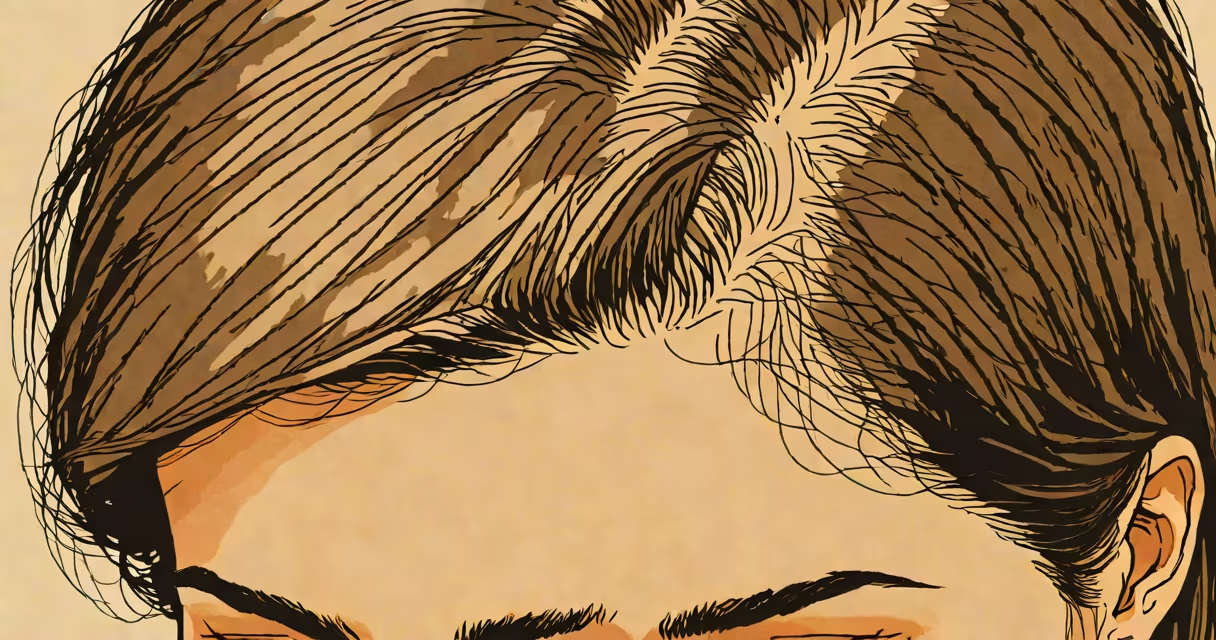
Hair thinning at the front of the head in women involves gradual reduction in hair density along the frontal hairline, often beginning as a widening part or increased scalp visibility. This condition affects up to 30% of women by age 40, primarily due to hormonal shifts, genetics, or stress-related shedding.
Frontal hair thinning differs from male-pattern baldness. Men typically lose hair in a receding "M" shape, while women experience diffuse thinning across the crown and front, with the hairline usually remaining intact until advanced stages. The process is slow-over months or years-and may go unnoticed until the change becomes visually apparent.
According to the American Academy of Dermatology Association, female pattern hair loss (FPHL) accounts for about 70% of hair thinning cases in women. It results from sensitivity of hair follicles to dihydrotestosterone (DHT), a hormone derivative formed from testosterone. Even low levels of DHT can shrink follicles over time, leading to shorter, finer hairs and eventual miniaturization.
Thinning begins at the crown and spreads toward the front, though some women report initial changes near the center of the forehead. The process is driven by a shortened anagen (growth) phase and prolonged telogen (resting) phase in the hair cycle. As follicles spend less time growing, new hairs emerge thinner and weaker.
Triggers include hormonal fluctuations during pregnancy, postpartum, menopause, or thyroid disorders. A 2021 study in *Journal of Clinical and Aesthetic Dermatology* found that 62% of women with frontal thinning had elevated levels of anti-Müllerian hormone (AMH), suggesting ovarian reserve decline may influence hair health.
Stress-induced shedding-telogen effluvium-can mimic frontal thinning. After emotional trauma, surgery, or severe illness, up to 30% of hairs enter resting phase simultaneously. This leads to sudden shedding, often noticeable 3-4 months later. Recovery takes 6-12 months, but persistent shedding may indicate underlying issues.
Not all thinning follows the same path. The Ludwig scale classifies female pattern hair loss into three degrees:
| Stage | Description | Visible Signs |
|---|---|---|
| I | Mild thinning | Widened part, slight reduction in volume |
| II | Moderate thinning | Scalp visible through hair, especially at crown and front |
| III | Severe thinning | Significant exposure of scalp, hairline may recede slightly |
Some women develop a unique form called frontal fibrosing alopecia (FFA), which causes permanent scarring and recession of the front hairline. FFA affects postmenopausal women more frequently and progresses slowly. Diagnosis requires a biopsy to confirm inflammation and scarring around follicles.
A common misconception is that thinning always starts at the crown. While this is typical, early frontal thinning can occur independently, especially in women with polycystic ovary syndrome (PCOS). Elevated androgens in PCOS may cause DHT buildup, leading to frontal and temporal thinning.
Many assume hair thinning front of head female is caused solely by poor diet or washing too often. These factors contribute minimally. Excessive shampooing doesn't cause thinning; over-washing can dry the scalp, but it doesn't affect follicle health.
Another error is equating temporary shedding with permanent loss. Telogen effluvium causes hair to fall out in clumps but rarely leads to lasting damage. Most women regrow their hair within a year after the trigger resolves. However, if shedding persists beyond six months, medical evaluation is needed.
One non-obvious fact: hair thinning front of head female is often underdiagnosed because women delay seeking care. A 2022 survey by the National Alopecia Areata Foundation found that 68% of women waited over a year before consulting a dermatologist. Early intervention improves outcomes.
Sarah, a 34-year-old teacher, noticed her part had widened over six months. She began losing more hair during showers and saw more scalp when she pulled her hair back. Her doctor diagnosed early-stage FPHL using a dermoscopy scan, which revealed miniaturized follicles and decreased hair density in the frontal region.
She started a regimen including minoxidil 5% topical solution applied twice daily and spironolactone 50 mg daily to counter androgen effects. After four months, her hair density improved by 28%, measured via digital imaging. By 12 months, her part had narrowed, and new growth was visible at the front.
Her case illustrates that early diagnosis and consistent treatment yield measurable results. Without intervention, progression to stage II or III is likely.
Topical treatments like minoxidil are FDA-approved for women. Clinical trials show 40% of users see increased hair count after 16 weeks. Results plateau after 6-12 months, requiring maintenance.
Oral medications such as spironolactone (anti-androgen) or finasteride (off-label) reduce DHT levels. Finasteride is not approved for women due to potential fetal risk, but off-label use in non-pregnant women shows effectiveness in reducing shedding.
Low-level laser therapy (LLLT) devices, like the Capillus Pro, deliver red light to stimulate follicles. A 2020 double-blind trial showed a 20% increase in hair density after 24 weeks of use. Results are modest but cumulative.
If you notice your hair thinning front of head female, consult a board-certified dermatologist. They can perform a pull test, scalp biopsy, or blood work to rule out thyroid disease, iron deficiency, or autoimmune conditions.
Understanding the difference between normal shedding and abnormal thinning prevents unnecessary anxiety. Hair thinning front of head female is treatable, especially when caught early. Monitoring changes and seeking expert guidance ensures better control over progression.
Recognizing the signs-widening part, thinner ponytail, increased shedding-leads to faster diagnosis. Addressing the root cause, whether hormonal, genetic, or stress-related, allows targeted treatment. The goal is not just to stop loss but to restore confidence and hair volume.
Early detection and consistent management are key. With proper care, many women stabilize or improve hair density even in advanced stages.