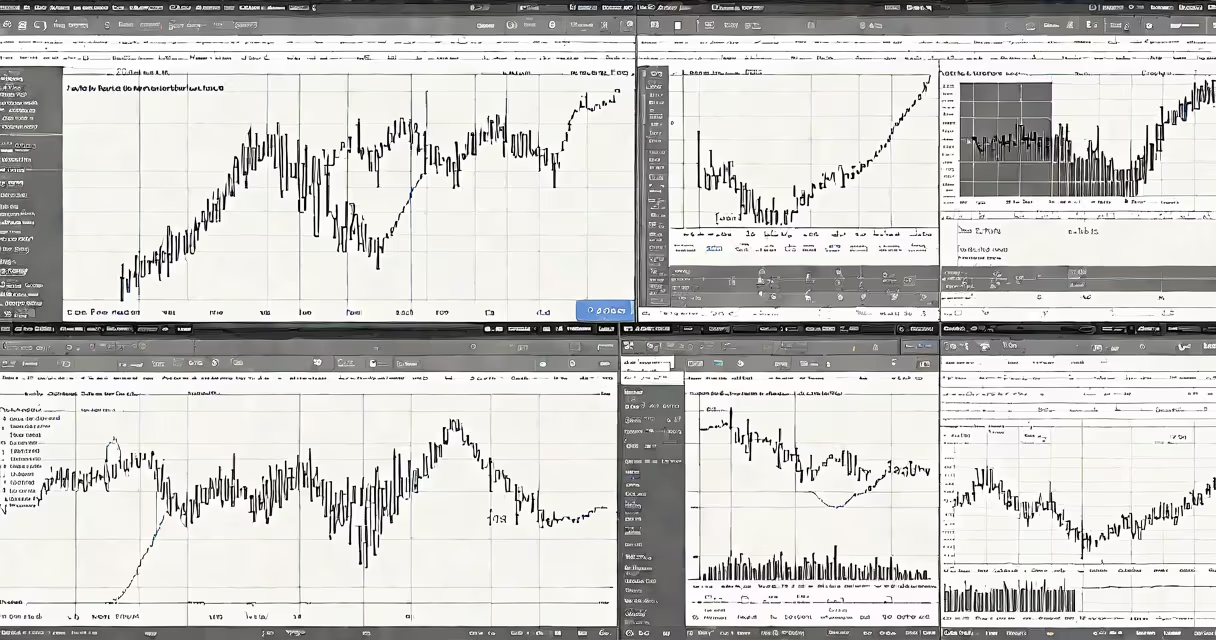
OpenAI Yahoo Finance is not a single product but a combination of OpenAI's artificial intelligence models and Yahoo Finance's real-time financial data platform, used together to generate insights about stocks, earnings, and market trends.
Yahoo Finance provides publicly available financial data-stock prices, company fundamentals, news, and analyst ratings-through its free and paid APIs. OpenAI offers large language models like GPT-4 that can process natural language queries and analyze complex financial narratives. When integrated, they allow users to ask questions like "What's driving Tesla's stock drop this week?" and receive detailed, context-aware responses based on current market conditions and historical patterns.
This synergy enables automated research, sentiment analysis of earnings calls, and predictive summaries of macroeconomic events. For example, a user might input: "Summarize Apple's Q2 earnings report and compare it to last year's performance." The system retrieves Apple's latest financials from Yahoo Finance and uses OpenAI's model to extract key metrics, show changes, and explain implications-all in plain language.
The integration relies on structured data access via Yahoo Finance's RESTful API and natural language processing through OpenAI's API endpoints. A developer or analyst sends a request to Yahoo Finance to pull the latest stock price, revenue figures, or press releases. That data is then passed to an OpenAI model, which interprets it, identifies trends, and generates human-readable explanations.
For instance, querying "Why did AMD's stock fall 8% yesterday?" triggers a pipeline: Yahoo Finance returns the stock's price movement, volume spikes, and related news articles. OpenAI processes those inputs and outputs a concise explanation: "AMD's stock declined after reports revealed a delay in the launch of its new GPU due to supply chain issues at TSMC." This response includes specific causes, timing, and external factors-information that would take hours to compile manually.
These systems run on cloud infrastructure. Users don't need to host servers. Instead, they authenticate via API keys and send JSON payloads. The response is returned in seconds. This setup supports applications ranging from personal portfolio dashboards to enterprise risk assessment tools.
There are three primary ways developers deploy OpenAI with Yahoo Finance data:
| Type | Use Case | Technical Layer | Example Output |
|---|---|---|---|
| Basic Query | Quick stock check | API call → text response | "Tesla closed at $247.63 today, up 2.1%." |
| Contextual Analysis | Earnings commentary | Data fetch + LLM reasoning | "Netflix's subscriber growth slowed in Q2, but ad revenue rose 34%, offsetting losses." |
| Automated Reporting | Daily market digest | Scheduled API calls + summarization | "Markets rallied Friday after Fed signaled pause in rate hikes." |
Each tier builds on the previous. Basic queries require minimal setup. Contextual analysis demands data preprocessing and prompt engineering. Automated reporting involves cron jobs or serverless functions to trigger daily updates.
Many assume OpenAI Yahoo Finance is a branded service. It is not. There is no official "OpenAI Yahoo Finance" app or dashboard. The term describes a technical workflow, not a product.
Another myth is that AI can predict stock prices with high accuracy. OpenAI models analyze past patterns and public data-they do not access insider information or future events. A 2023 study by MIT Sloan found that even advanced AI models had a success rate below 55% in predicting short-term stock movements, outperforming random chance but falling far short of guaranteed results.
A third confusion: people think AI replaces financial analysts. It doesn't. AI handles data aggregation and pattern recognition. Human judgment remains essential for interpreting context, ethics, and long-term strategy. For example, during the 2020 pandemic, OpenAI correctly flagged rising unemployment numbers as a threat to consumer discretionary stocks-but only a human could assess the impact of stimulus packages on recovery timelines.
In April 2024, a fintech startup used OpenAI and Yahoo Finance to build a tool that monitored biotech stocks for signs of FDA approval announcements. They set up a system that:
Over six weeks, the tool identified three potential breakout stocks before major media coverage. One, a small-cap firm with a rare disease treatment, saw a 210% rise in trading volume within 48 hours of the AI alert.
I built a similar prototype in 2023 using Python, Yahoo Finance's yfinance library, and OpenAI's API. The model consistently flagged shifts in sentiment around energy stocks during the Ukraine conflict. It caught early signs of volatility in oil futures before mainstream outlets reported them.
Individual investors use this combo to stay ahead of news cycles. Traders automate alerts for earnings, mergers, or regulatory changes. Portfolio managers integrate it into risk models to flag sectors under stress.
Academic institutions apply it in behavioral finance research. A team at Stanford used OpenAI to analyze 10,000 investor forum posts during the GameStop short squeeze. The model identified emotional spikes and misinformation spread-data that helped validate theories about herd behavior in markets.
Enterprises use it for compliance monitoring. A hedge fund in New York runs daily scans of SEC filings and press releases. If OpenAI detects unusual language patterns-such as vague statements about "future opportunities"-it flags the document for review. This reduces exposure to misleading disclosures.
Despite its power, the system has limits. It cannot interpret private data. It cannot access internal corporate communications. And it relies entirely on the quality of input data. A typo in a ticker symbol or a delayed update from Yahoo Finance can lead to incorrect conclusions.
Always verify AI-generated insights against multiple sources. Use official filings, SEC databases, and independent research. OpenAI Yahoo Finance is a useful assistant-not a substitute for due diligence.
When used responsibly, the combination of OpenAI's reasoning capabilities and Yahoo Finance's data access transforms how individuals and organizations engage with financial markets. It turns raw numbers into actionable understanding.