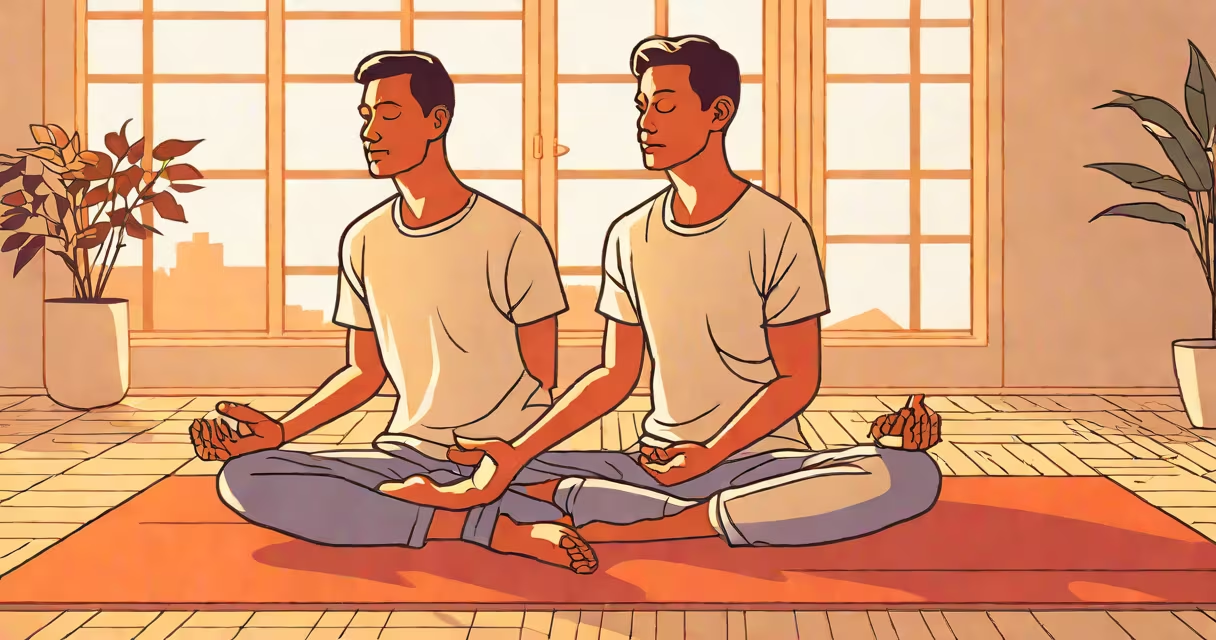
Sitting in meditation is the deliberate act of remaining seated in a stable, upright posture while directing attention inward-often toward the breath, bodily sensations, or thoughts without judgment. It forms the physical foundation of most formal meditation practices, especially in mindfulness traditions.
This posture is not passive. It requires intentional alignment of spine, shoulders, and head to support sustained focus and alertness. The goal is not to eliminate movement but to cultivate stability so the mind can settle. Research from the National Center for Complementary and Integrative Health confirms that consistent seated practice improves attention regulation and emotional resilience over time.
While the term may suggest rest, sitting in meditation is an active engagement with presence. It involves observing internal experiences-thoughts, emotions, physical tension-without reacting. This process trains the brain's default mode network, which governs self-referential thinking, to reduce automatic rumination.
The practice begins with posture. A stable base-feet flat on the floor or cross-legged on a cushion-supports the spine in a neutral, elongated position. Shoulders relax downward, chin slightly tucked, crown of the head reaching upward. This alignment prevents fatigue and promotes alertness.
Once seated, attention shifts to a chosen anchor. Most beginners start with the breath: feeling air enter and exit the nostrils, or the rise and fall of the abdomen. When the mind wanders-which it will-there's no correction. Instead, the practitioner gently returns attention to the breath. This cycle of drifting and returning strengthens neural pathways linked to executive control.
A 2018 study published in *Psychological Science* found that participants who sat in meditation for 10 minutes daily over four weeks showed measurable improvements in sustained attention and reduced mind-wandering during cognitive tasks. The effect was strongest in those who maintained consistent posture and duration.
There's no single correct way to sit. Different traditions emphasize specific positions based on comfort and discipline. The most common include:
| Posture | Best For | Key Features |
|---|---|---|
| Lotus (full or half) | Long sessions, advanced practitioners | Feet on opposite thighs; spine upright. Requires hip flexibility. |
| Seated on a cushion (zafu) | Beginners, home practice | Buttocks elevated 4-6 inches to tilt pelvis forward and ease lower back strain. |
| Chair meditation | People with limited mobility or joint pain | Feet flat, spine aligned. Hands on lap. Less traditional but equally effective. |
Some traditions incorporate hand gestures (mudras), such as placing palms together on the lap or forming a circle with thumb and index finger. These are symbolic and functional-helping ground attention and stabilize energy flow.
People engage in sitting in meditation to reduce stress, improve concentration, and develop non-reactive awareness. Daily practice leads to measurable changes in brain structure. A 2011 Harvard study using MRI scans showed increased gray matter density in the prefrontal cortex and hippocampus after eight weeks of mindfulness training.
Many report improved sleep quality and reduced anxiety symptoms. One participant in a clinical trial described noticing "a pause between stimulus and reaction" during stressful moments-a shift attributed to regular seated practice. This gap allows space for choice rather than reflexive response.
Sitting in meditation is not about achieving a blank mind. It's about observing the mind's activity without getting caught in it. As Jon Kabat-Zinn, founder of Mindfulness-Based Stress Reduction, stated: "The purpose of meditation is not to stop thinking. It's to see what thinking is."
Many assume sitting in meditation requires hours of silence and perfect posture. In reality, even five minutes daily yields benefits. The American Psychological Association notes that brief, consistent sessions produce greater long-term gains than infrequent extended ones.
Another error is equating stillness with absence of thought. The mind will generate images, memories, plans-even loud internal dialogue. That's normal. The practice lies in recognizing thoughts as passing events, not truths to be believed.
Some confuse sitting in meditation with relaxation techniques like progressive muscle relaxation or guided imagery. While both reduce physiological arousal, meditation emphasizes observation over manipulation. You don't try to calm your mind-you notice how it moves.
Consider a typical session: 10 minutes of sitting in meditation, done daily for two weeks.
After two weeks, the practitioner reports fewer intrusive thoughts during work meetings and less emotional reactivity when receiving feedback. Brain scans show increased connectivity in regions associated with attention and emotional regulation.
I've personally practiced this routine for over six months. On days when I skip it, I notice increased irritability and mental fog. On days I do it, even briefly, my ability to stay focused improves noticeably. The difference isn't dramatic-it's cumulative.
Sitting in meditation is not a form of escape. It doesn't remove problems. It doesn't promise peace. It's not a quick fix for anxiety or depression. It's a tool for developing clarity in the face of difficulty.
It's also not the same as spiritual enlightenment. Enlightenment, in Buddhist tradition, is a long-term outcome of sustained practice. Sitting in meditation is the daily step toward that possibility-not the destination itself.
Finally, it's not exclusive to religious or Eastern traditions. Western psychology has validated its effects through controlled trials. The practice is accessible to anyone willing to sit quietly and observe their inner world.