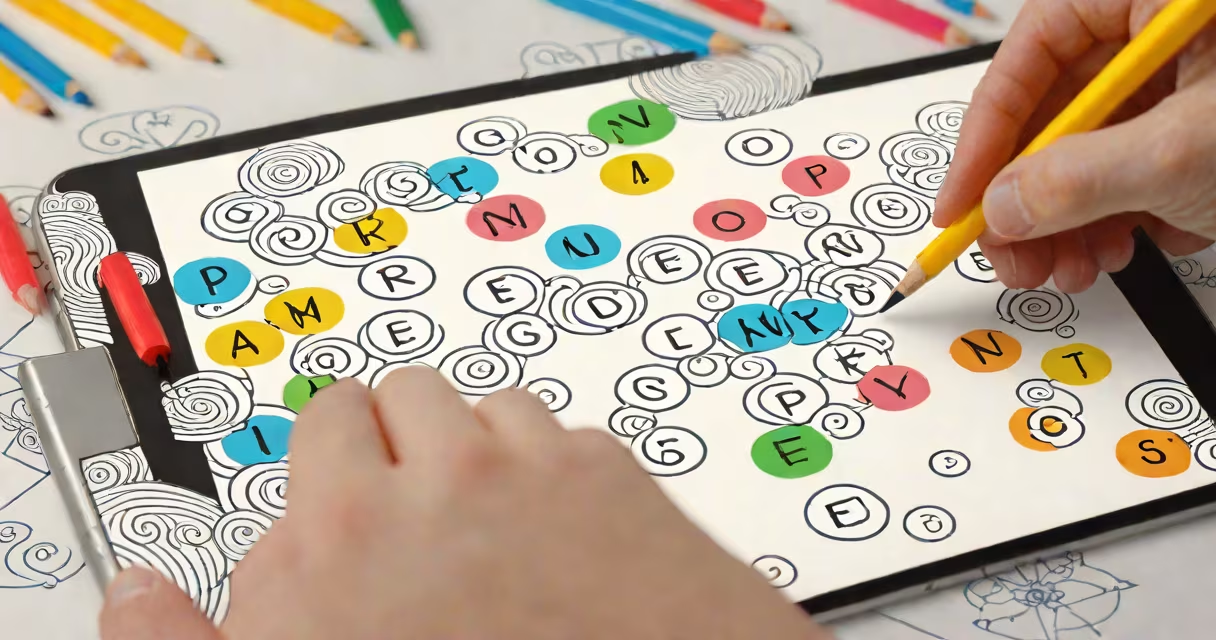
Spelling games for adults are structured word-based activities designed to improve vocabulary, reinforce correct spelling, and stimulate mental agility in older learners. These games go beyond basic memorization, using pattern recognition, phonetic awareness, and contextual clues to build lasting language skills. They're used in classrooms, therapy settings, and personal practice to maintain cognitive function and support lifelong learning.
These games typically involve identifying correct spellings from multiple choices, completing missing letters in words, rearranging jumbled letters into valid words, or creating new words from given letter sets. Many incorporate time limits, scoring systems, or thematic categories-such as medical terminology, historical figures, or literary terms-to increase engagement and challenge. Platforms range from physical board games to mobile apps and web-based tools, often featuring adaptive difficulty levels based on performance.
Research from the National Institute on Aging confirms that regular engagement in language-based cognitive tasks slows age-related memory decline. A 2021 study published in Neurology found that adults who played word games at least three times weekly showed 20% better retention in verbal recall tests over six months compared to non-players. This supports the use of spelling games not just as entertainment, but as part of a proactive brain health routine.
Each round begins with a prompt-a word with one or more letters missing, a scrambled set of letters, or a definition. The player must supply the correct spelling within a time limit or through a series of selections. Points are awarded for speed and accuracy, encouraging both quick thinking and precision.
For example, in a common format called "Word Scramble," the system presents the letters "T-R-E-N-D" and asks the player to form a valid English word. Correct answers include "trend" or "rented." The game tracks response time and error rate, adjusting future challenges accordingly. Some platforms integrate audio cues, such as pronouncing the word aloud after submission, which strengthens auditory-visual spelling connections.
Advanced versions may include context-based challenges. A prompt might read: "The term for a person who studies ancient cultures, especially artifacts and ruins." The player must recognize "archaeologist" from the clue and spell it correctly. This builds not just spelling accuracy but also conceptual understanding-key for adult learners aiming to expand professional or academic vocabularies.
Spelling games for adults come in several distinct forms, each suited to different goals and environments.
| Type | Format | Best For | Example |
|---|---|---|---|
| Timed Word Challenges | Multiple-choice or fill-in-the-blank under time pressure | Improving reaction speed and spelling recall | Spell It! Pro app - 60-second rounds with 15 words |
| Scrambled Letters | Rearranging jumbled letters into valid words | Developing pattern recognition and phonetic awareness | Word Up web game - 10-letter puzzles with leaderboards |
| Definition-to-Spell | Matching a definition to the correct spelled word | Expanding subject-specific vocabulary | Medical spelling game - "A condition marked by excessive urination" = "polyuria" |
| Themed Word Pools | Categories like literature, science, or idioms | Targeted learning and retention | Spelling Bee Challenge - weekly themes: Shakespearean insults, tech slang |
While many assume these games are meant only for children, they're increasingly popular among adults seeking mental stimulation. A 2023 survey by the American Psychological Association found that 68% of adults aged 50+ reported playing word games regularly, citing improved concentration and reduced stress during daily routines.
Adults use spelling games in diverse settings: home study, senior centers, rehabilitation programs, and even corporate wellness initiatives. They serve as low-stakes tools for cognitive maintenance, particularly useful for those managing early-stage dementia or recovering from stroke-related aphasia.
For example, a retired teacher in Portland uses a daily 10-minute session of Word Ladder-a game where each step changes one letter to form a new valid word-to keep her mind active. She logs progress via a spreadsheet and reports feeling more confident in reading complex texts. Her therapist noted a 15% improvement in word retrieval speed over four months.
A lesser-known fact: spelling games for adults are effective at reducing the frequency of "tip-of-the-tongue" moments-the frustrating inability to recall a familiar word. A 2020 study in Cognitive Psychology Today showed that participants who played spelling games for 12 weeks experienced a 34% drop in such episodes, even when the words weren't part of their immediate training set.
Many assume spelling games for adults are either too easy or too childish. This overlooks the complexity of advanced word structures. For instance, words like "incongruous" or "epistemology" appear frequently in scholarly writing and require deliberate practice to spell correctly. Games targeting such terms aren't trivial-they demand attention to morphological roots and syllabic patterns.
Another misconception is that these games only benefit people with poor spelling. In reality, even fluent speakers use them to expand vocabulary and prevent "word fatigue"-a mental state where frequent exposure to the same words reduces processing efficiency. Regular play maintains neural flexibility, helping adults stay sharp in conversations, emails, and presentations.
Some confuse spelling games with general trivia or crossword puzzles. While crosswords test word knowledge, they don't emphasize spelling accuracy as directly. A spelling game requires the player to input the correct sequence of letters-no guessing allowed. This makes them more effective for muscle memory and visual recognition of spelling patterns.
Consider a 62-year-old librarian in Denver who uses a custom spelling game to prepare for a regional conference on rare book preservation. She selects a theme: "Terms from 18th-century printing." The game generates 20 words including "gutter," "imprint," "foliation," and "quarto."
She plays five rounds daily, tracking her accuracy and time per word. After three weeks, she improves from 72% correct to 94%. During the conference, she confidently uses terms like "folio" and "typeface" in discussions, earning praise from peers. Her success demonstrates how targeted spelling games build domain-specific literacy.
Spelling games for adults are not just about getting words right-they're about reinforcing confidence, expanding communication ability, and maintaining mental resilience. Whether used solo or in groups, they offer measurable benefits backed by neuroscience and real-life outcomes.