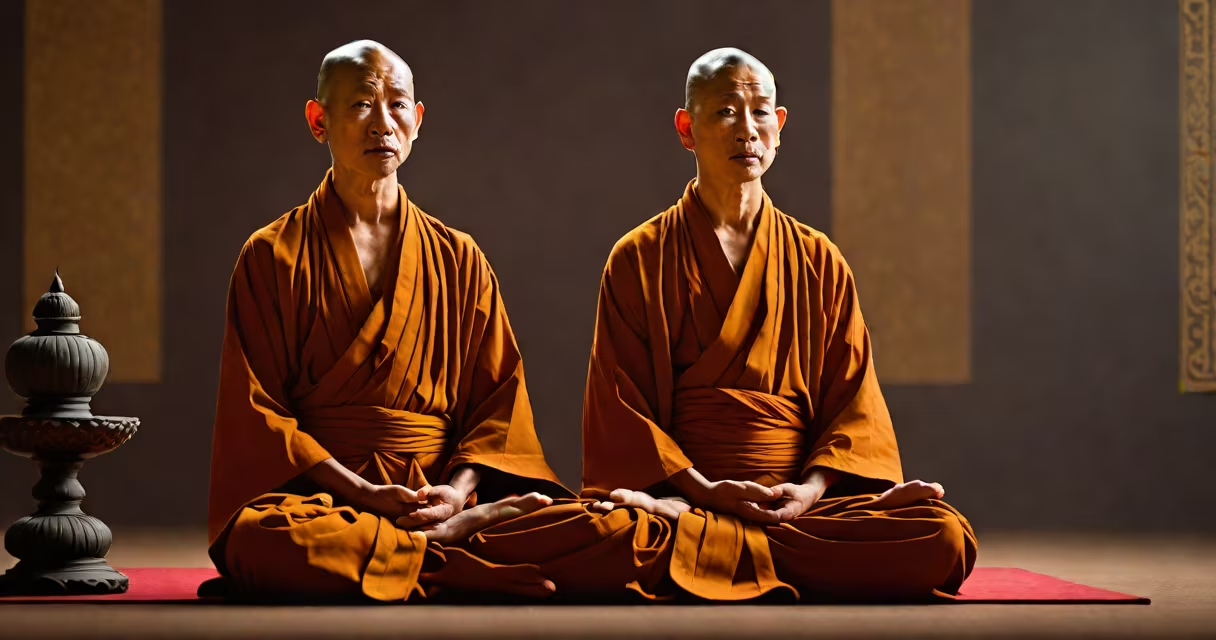
Theravada and Zen are two major schools of Buddhism with distinct approaches to meditation, scripture, and daily practice. Theravada emphasizes strict adherence to early texts and monastic discipline, while Zen prioritizes direct insight through seated meditation and paradoxical teachings.
Theravada, meaning "the way of the elders," traces its roots to the Pali Canon, the earliest recorded teachings of the Buddha. It developed primarily in Sri Lanka, Myanmar, Thailand, Laos, and Cambodia. Zen, originating in China as Chan Buddhism, spread to Japan, Korea, and Vietnam, emphasizing silent meditation (zazen) and personal awakening through introspection rather than textual study.
The difference lies not in doctrine but in method. Theravada teaches that enlightenment comes through systematic study of the Dhammapada and Vinaya, guided by monastic teachers. Zen teaches that insight arises spontaneously during meditation, often triggered by koans-paradoxical riddles such as "What is the sound of one hand clapping?"-designed to break logical thinking.
Theravada centers on the Four Noble Truths and the Eightfold Path as laid out in the Pali Suttas. Practitioners focus on mindfulness of breath (anapanasati), body scanning, and ethical conduct. Monks follow the Vinaya, a set of 227 rules governing behavior, diet, and interaction with laypeople. The goal is nibbana-liberation from suffering and rebirth.
Zen operates under the principle of "direct pointing to the mind." Practitioners sit in zazen-formal seated meditation-for hours daily, often in silence. They avoid intellectualizing enlightenment. Instead, they engage in kōan study, where a student wrestles with a paradox until mental fixation dissolves. This process aims to reveal the true nature of consciousness beyond conceptual thought.
A key distinction: Theravada relies on external authority-scripture, lineage, and teacher guidance. Zen values internal realization-"seeing into your own nature" without intermediaries. In a Theravada monastery, monks chant sutras at dawn. In a Zen temple, the morning bell signals the start of zazen, and silence follows.
Both traditions emphasize meditation, but their forms differ.
| Aspect | Theravada | Zen |
|---|---|---|
| Primary Texts | Pali Canon (Sutta Pitaka, Vinaya Pitaka) | Platform Sutra, Mumonkan, Shobogenzo |
| Meditation Focus | Anapanasati (mindfulness of breathing), metta (loving-kindness) | Zazen (seated meditation), kōan inquiry |
| Teacher Role | Guide, interpreter of scriptures | Direct experiential mentor; often silent |
| Language of Practice | Pali, Thai, Sinhala, Burmese | Classical Chinese, Japanese, Korean |
Theravada monasteries in Thailand often feature long halls where monks recite the Tipiṭaka aloud during evening sessions. Zen temples in Kyoto have small rooms with tatami mats where practitioners sit for 90-minute zazen sessions, sometimes for days during sesshin retreats.
One non-obvious difference: Theravada treats the Buddha as a historical figure who attained enlightenment through disciplined effort. Zen portrays him as a symbol of inherent awakening-"the Buddha within." This shifts the focus from achieving enlightenment to recognizing it as already present.
Theravada remains dominant in Southeast Asia. Over 60 million people practice it, according to the World Buddhist Directory (2022). Countries like Myanmar and Sri Lanka maintain state-supported monastic systems. The tradition thrives in rural villages where laypeople offer alms to monks daily.
Zen has a global footprint. Over 1,000 Zen centers exist in North America and Europe, many founded by Japanese and Korean immigrants. The San Francisco Zen Center, established in 1959, hosts annual sesshins drawing participants from 30 countries. Its teachings are adapted into secular mindfulness programs like Mindfulness-Based Stress Reduction (MBSR).
Despite shared goals, their applications diverge. Theravada is used in formal religious education and community rituals. Zen is applied in therapy, corporate wellness, and creative fields due to its emphasis on presence and non-attachment.
I once attended a week-long retreat at a Theravada monastery in northern Thailand. Each morning began with a 45-minute chanting session led by a senior monk. The silence was absolute. Later, I sat in a Zen center in Kyoto, where the only sound was the wooden mallet striking the hyōshigi-two short wooden clappers-marking the beginning of zazen. The contrast was stark: one tradition rooted in vocal repetition, the other in profound stillness.
Many assume Zen is "simpler" or "more accessible" than Theravada. That's incorrect. Zen demands rigorous discipline. A student may spend years sitting in silence before receiving a koan. The practice is not about relaxation-it's about confronting the mind's resistance to stillness.
Another misconception: Zen rejects scripture. Not true. Zen masters cite the Diamond Sutra and the Platform Sutra extensively. But they interpret them metaphorically, not literally. As D.T. Suzuki wrote in *Essays in Zen Buddhism* (1949), "The Zen master does not teach from books-he teaches from the heart."
Theravada is sometimes seen as "dry" or overly ritualistic. Yet the Pali Canon contains vivid narratives of the Buddha's life, including his encounters with doubt and fear. The Mahāparinibbāna Sutta describes his final days with emotional depth. These stories are central to daily practice.
Finally, both traditions reject the idea of a permanent soul. They agree on anatta-no-self. But Theravada explains it through analysis of mental aggregates (khandhas). Zen reveals it through direct experience. One uses logic, the other uses silence.
Theravada vs Zen represents two distinct paths to awakening. Theravada relies on structured study, monastic life, and scriptural fidelity. Zen emphasizes immediate insight, silent meditation, and breaking conceptual habits. Neither is superior-each suits different temperaments and cultural contexts. Understanding their differences helps clarify what enlightenment truly means across traditions.
For those drawn to quiet reflection, structured Zen music offers a gentle entry point into the rhythm of zazen, helping align breath and attention without requiring formal training.