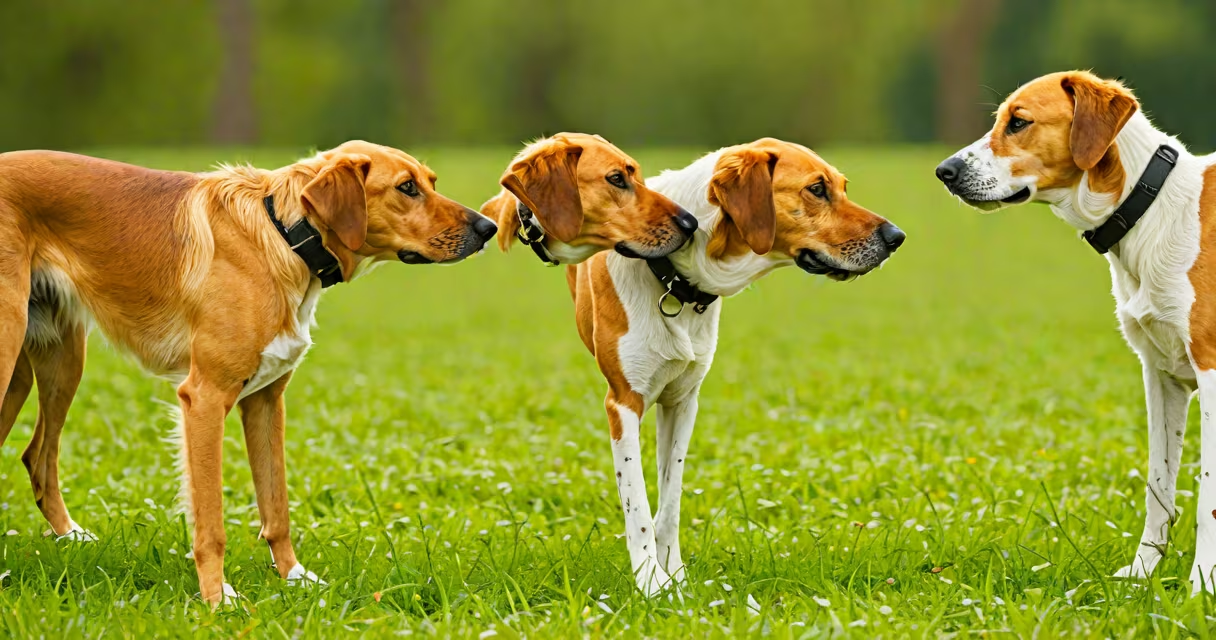
Dogs smell each other's private parts primarily to collect detailed biological and social information through scent. This behavior is instinctive, common across all breeds, and essential for understanding pack dynamics and individual health.
Dogs rely heavily on their sense of smell-about 300 million olfactory receptors compared to humans' 6 million. The anal glands near a dog's anus release a unique chemical signature, much like a personal ID card. When one dog sniffs another's rear, it reads this scent profile to identify who the dog is, whether it's friendly or threatening, and even its emotional state and reproductive status.
This process is not about curiosity or rudeness. It's a primary method of social communication. A dog may spend 10 to 30 seconds sniffing a new dog's rear, especially during initial meetings. The longer the sniff, the more information the dog is gathering. This behavior is observed in wild canids like wolves and foxes, showing it predates domestication.
Dogs use scent to build mental maps of their environment and social circle. The anal glands secrete a thick, oily fluid with complex compounds that vary between individuals. These chemicals carry data on age, sex, diet, stress levels, and immune system function.
A study published in Animal Behaviour found that dogs can distinguish between familiar and unfamiliar individuals based solely on anal gland secretions. They also show stronger interest in scents from dogs they've met before, suggesting memory and recognition play a role.
When two dogs meet, the one doing the sniffing often lowers its head and may tilt its nose toward the rear. The dog being sniffed usually remains still or slightly moves away. This ritual reduces conflict-it signals intent and allows both animals to assess safety before approaching.
The following table outlines the key data a dog can extract from another's rear-end scent:
| Information Type | What It Reveals | Example |
|---|---|---|
| Identity | Who the dog is, including familiarity | Recognizing a neighbor's dog after weeks apart |
| Reproductive Status | Whether the dog is in heat or fertile | A male dog detecting a female in estrus |
| Health Condition | Signs of illness, infection, or hormonal imbalance | Noticing a foul odor indicating dental or intestinal issues |
| Emotional State | Stress, fear, or calmness via pheromones | Sniffing a dog that recently experienced a loud noise |
One non-obvious fact: dogs can detect changes in a dog's hormone levels within minutes of exposure. A 2021 study from the University of Lincoln showed that dogs could identify cortisol spikes-linked to stress-in a sample taken from a dog's fur, even without direct contact.
Many people assume that dogs are "being rude" or "gross" when they sniff private areas. This is incorrect. The behavior is not sexual, nor is it aggressive. It's neutral and informational-like reading a label on a product.
Another myth is that only certain breeds do this. All dogs, regardless of size or breed, engage in rear-end sniffing. Even small dogs like Chihuahuas or toy poodles perform this behavior with the same intensity as larger breeds.
Some owners worry their dog is "too interested" in others' bottoms. But excessive sniffing isn't a sign of poor training-it's normal. If a dog stops sniffing entirely, that may indicate anxiety or sensory issues. The absence of sniffing is more concerning than its presence.
At a local dog park, two dogs-one a 3-year-old mixed-breed named Max, the other a 5-year-old Beagle named Luna-approach each other. Max walks slowly, then stops directly behind Luna. He lowers his head and sniffs her tail base and anus for 18 seconds. Luna stands still, ears forward.
Max then lifts his head, wags his tail, and takes a few steps forward. Luna turns slightly and approaches him. They begin playing. The entire interaction took under a minute. Max gathered enough data to decide Luna was safe, healthy, and likely friendly.
This scenario reflects typical dog-to-dog communication. The sniffing wasn't random-it was a structured exchange of information. Without it, dogs would struggle to go through social environments safely.
Dog rear-sniffing is not equivalent to human behavior. It doesn't involve attraction, arousal, or judgment. It's not about dominance or submission. It's purely biological and functional.
It's also not the same as marking. Marking involves depositing urine on objects to leave a message. Sniffing is about receiving information, not sending it. One dog marks; another reads.
When a dog licks another's rear, that's different too. Licking can be a sign of affection or submission, but it's not part of the scent analysis process. Sniffing is the core act of gathering data.
I once watched a rescue dog named Jasper, previously neglected and fearful, hesitate before approaching a group of dogs at a shelter. After several failed attempts, he finally approached one dog and spent nearly 45 seconds sniffing its rear. The other dog relaxed, sat down, and allowed Jasper to stay nearby. That moment marked the beginning of Jasper's integration into the pack. It wasn't about dominance-it was about trust built through scent.
While rear-sniffing is normal, unusual patterns may indicate underlying issues. If a dog suddenly avoids sniffing other dogs, shows aggression during sniffing, or becomes overly fixated on one dog's rear, consult a veterinarian or animal behaviorist.
Excessive licking or biting around the rear area, especially if accompanied by scooting or redness, suggests medical problems like impacted anal glands. These require treatment, not behavioral correction.
Owners should never interrupt a dog's sniffing during introductions. Doing so disrupts communication and increases stress. Let dogs complete the exchange naturally.