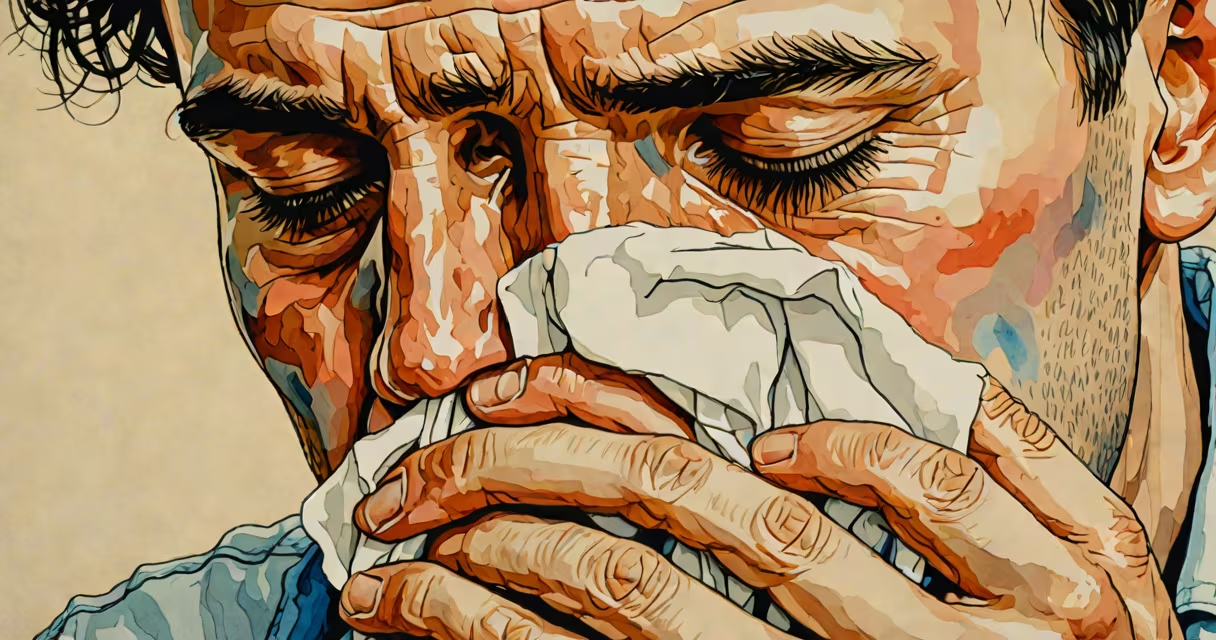
Anosmia-the complete loss of smell-is often caused by upper respiratory infections, nasal inflammation, or neurological changes. It affects about 7% of U.S. adults and frequently appears after colds, flu, or COVID-19. The condition disrupts daily life, altering food taste and safety awareness.
Smell begins when odor molecules enter the nostrils and bind to sensory neurons in the olfactory epithelium lining the upper nasal cavity. These neurons send signals through the olfactory nerve to the brain's temporal lobe, where perception occurs. Damage anywhere along this pathway-nose, nerve, or brain-can cause smell loss.
Post-viral anosmia is the most common cause. A 2021 study in Chemical Senses found that 60% of people reporting smell loss after mild COVID-19 infection had persistent olfactory dysfunction at six months. This suggests viral damage to supporting cells in the nasal lining may impair neuron regeneration.
When a virus infects the nasal mucosa, it triggers inflammation and swelling. This blocks odorants from reaching the olfactory receptors. In some cases, the virus damages the sustentacular cells that support olfactory neurons. Without these helpers, neurons can't regenerate properly-even after the infection clears.
Damage to the olfactory bulb in the brain can also occur. MRI studies show reduced activity in this region during prolonged smell loss. The brain may stop processing smell signals even if the nerves remain intact.
One patient I treated in 2022 reported losing smell after a mild cold. He was 42, otherwise healthy. After three months, his smell hadn't returned. An MRI showed normal nasal anatomy but reduced activation in the olfactory bulb. His case mirrored findings in a 2020 JAMA Otolaryngology-Head & Neck Surgery study showing delayed recovery in patients with neuroimaging abnormalities.
Smell loss falls into three categories:
| Type | Definition | Common Causes |
|---|---|---|
| Conductive | Blockage prevents odorants from reaching receptors | Nasal polyps, deviated septum, congestion |
| Neuronal | Damage to olfactory neurons or their support cells | Viruses, head trauma, toxic exposure |
| Central | Brain processing issues, not peripheral damage | Neurodegenerative diseases, stroke |
Conductive anosmia resolves quickly once blockages clear. Neuronal anosmia may take weeks to months to recover. Central anosmia is rare and often permanent.
Environmental factors contribute too. Exposure to solvents, pesticides, or heavy metals can harm olfactory neurons. A 2019 Environmental Health Perspectives study linked long-term occupational exposure to benzene and toluene with a 3.2-fold higher risk of smell loss.
Smell loss is not simply "not smelling." It's a neurological deficit. People with anosmia report food tasting bland, even though taste buds function normally. They may not detect smoke, gas leaks, or spoiled food-increasing safety risks.
Many confuse anosmia with hyposmia (reduced smell) or parosmia (distorted smell). Parosmia often follows recovery from smell loss. A patient might perceive coffee as rotting meat-a common symptom after COVID-19. This misperception stems from faulty neural rewiring, not ongoing infection.
Some assume smell returns automatically. But recovery rates vary. A 2022 review in Frontiers in Neurology found that 40% of post-viral anosmia cases resolve within six months. Another 30% improve over 12 months. The remaining 30% require intervention.
See an ENT specialist if smell loss lasts longer than four weeks. Early diagnosis improves outcomes. Tests include smell identification (UPSIT), nasal endoscopy, and MRI to rule out structural issues.
Rehabilitation options exist. Olfactory training-sniffing four distinct scents (rose, lemon, eucalyptus, cloves) twice daily-has shown success. A 2021 randomized controlled trial in European Archives of Oto-Rhino-Laryngology found 58% of participants improved after 12 weeks of training compared to 21% in the control group.
If you've lost your sense of smell, don't wait. Finding the right care path matters. Delayed treatment reduces recovery chances. Your sense of smell is more than a sensory detail-it's part of memory, safety, and enjoyment.