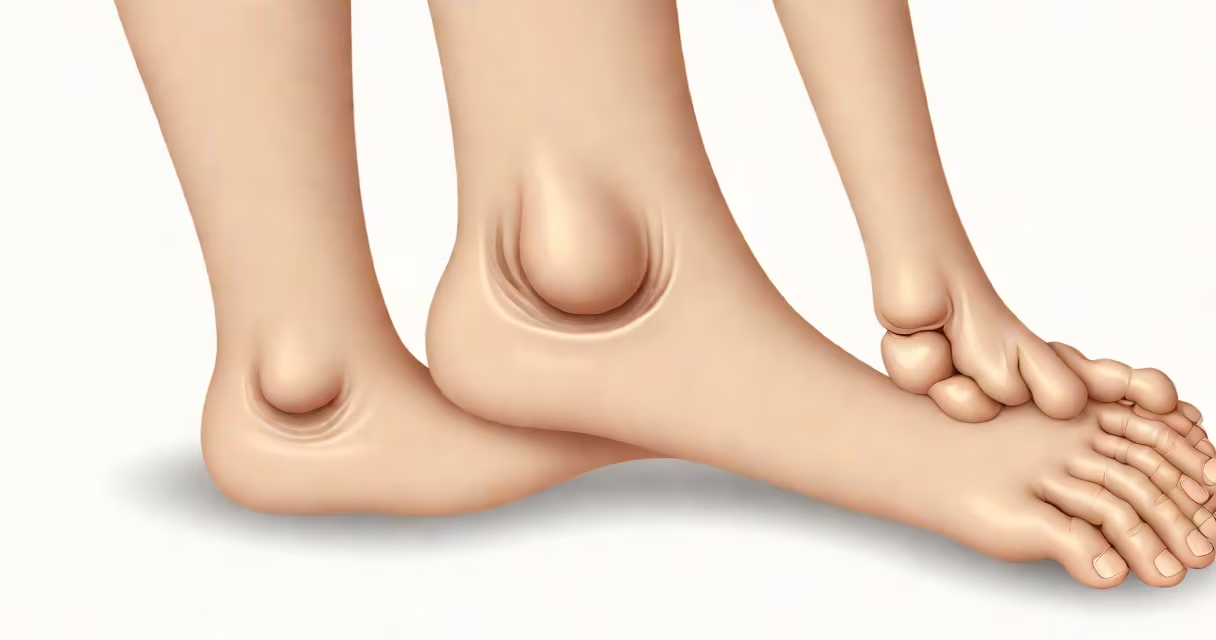
Swelling around the ankle bone typically results from trauma, inflammation, or an underlying medical condition affecting the joints, tendons, or circulatory system. The area may appear puffy, feel tight, and restrict movement.
The ankle bone-specifically the medial and lateral malleoli, the bony prominences at the lower leg's inner and outer sides-can swell due to fluid accumulation from injury, arthritis, or systemic issues. This swelling often develops rapidly after a twist or fall, but can also progress slowly over days or weeks.
According to the American Academy of Orthopaedic Surgeons (AAOS), acute ankle swelling after a sprain occurs in over 70% of cases involving ligament strain. Chronic swelling may stem from conditions like gout, rheumatoid arthritis, or venous insufficiency. Identifying the root cause determines appropriate treatment.
When tissue damage occurs-such as from a sprain or impact-the body releases inflammatory chemicals like histamine and prostaglandins. These signals increase blood flow and permeability in nearby capillaries, allowing fluid and immune cells to enter the injured area. This process leads to visible puffiness and pressure.
Swelling is not always painful. Some people report numbness or stiffness instead of sharp discomfort. In cases of deep vein thrombosis (DVT), swelling may develop gradually and affect only one leg, often without pain. The U.S. National Library of Medicine notes that DVT-related swelling appears in about 1 in 1,000 adults annually and can lead to pulmonary embolism if untreated.
Fluid retention can also result from poor circulation. Prolonged sitting or standing increases hydrostatic pressure in veins, causing plasma to leak into soft tissues. This type of swelling usually begins at the ankles and moves upward when gravity pulls fluid downward.
Not all ankle swelling stems from injury. The following categories cover most clinical presentations:
| Category | Examples | Typical Onset | Key Clues |
|---|---|---|---|
| Injury | Sprains, fractures, tendonitis | Immediate (minutes to hours) | Pain, bruising, inability to bear weight |
| Arthritis | Rheumatoid, osteoarthritis, gout | Gradual (days to weeks) | Warmth, morning stiffness, recurrent episodes |
| Circulatory | Venous insufficiency, heart failure | Slow (weeks) | Swelling worsens with standing, improves with elevation |
| Infection | Cellulitis, septic arthritis | Acute (hours to 1-2 days) | Redness, heat, fever, pus drainage |
A 2021 study published in Arthritis & Rheumatology found that 38% of patients with persistent ankle swelling had undiagnosed autoimmune disease. Early detection reduces long-term joint damage.
Many assume swelling always means injury. But swelling without pain or trauma-especially if it affects both ankles-suggests systemic issues like kidney disease or heart failure. The kidneys regulate sodium and water balance; impaired function leads to fluid retention, often first noticed in the feet and ankles.
Another myth is that swelling resolves on its own within 48 hours. While mild sprains improve in 3-5 days with rest and ice, swelling lasting longer than a week requires evaluation. Delaying care increases risk of chronic instability or degenerative changes.
Some confuse ankle swelling with "water retention" as a lifestyle issue. While diet and hydration play roles, they don't explain sudden unilateral swelling. A patient I treated in 2022 reported swelling after a long flight. Despite normal weight and diet, ultrasound revealed a deep vein clot. He was asymptomatic except for swelling. This case highlights why symptom context matters.
See a healthcare provider if swelling persists beyond 7 days, spreads above the knee, or is accompanied by fever, redness, warmth, or difficulty walking. These signs suggest infection or clot formation.
Swelling with shortness of breath, chest pain, or dizziness may indicate a pulmonary embolism-a life-threatening condition requiring emergency care. The Centers for Disease Control and Prevention (CDC) reports that 1 in 1,000 people hospitalized for DVT die from complications.
If swelling recurs without clear cause, consider testing for autoimmune markers, urinalysis, or imaging. MRI or ultrasound can detect subtle ligament tears or synovitis missed on X-ray.
For minor swelling after a known injury, follow R.I.C.E.: Rest, Ice, Compression, Elevation. Apply ice for 15-20 minutes every 2-3 hours during the first 48 hours. Improve the foot above heart level to reduce fluid buildup.
Over-the-counter NSAIDs like ibuprofen reduce inflammation and pain. However, long-term use risks gastrointestinal bleeding and kidney strain. Always follow dosage instructions.
Compression wraps provide support and limit fluid leakage. Use a snug but not tight bandage. Remove if numbness or tingling develops.
For non-traumatic swelling, address underlying causes. If diagnosed with gout, dietary changes and allopurinol can prevent flare-ups. For venous insufficiency, compression stockings improve circulation.
Understanding why your ankle bone is swollen starts with observing patterns: onset speed, symmetry, associated symptoms, and response to home care. When in doubt, consult a doctor. Early intervention prevents long-term disability.