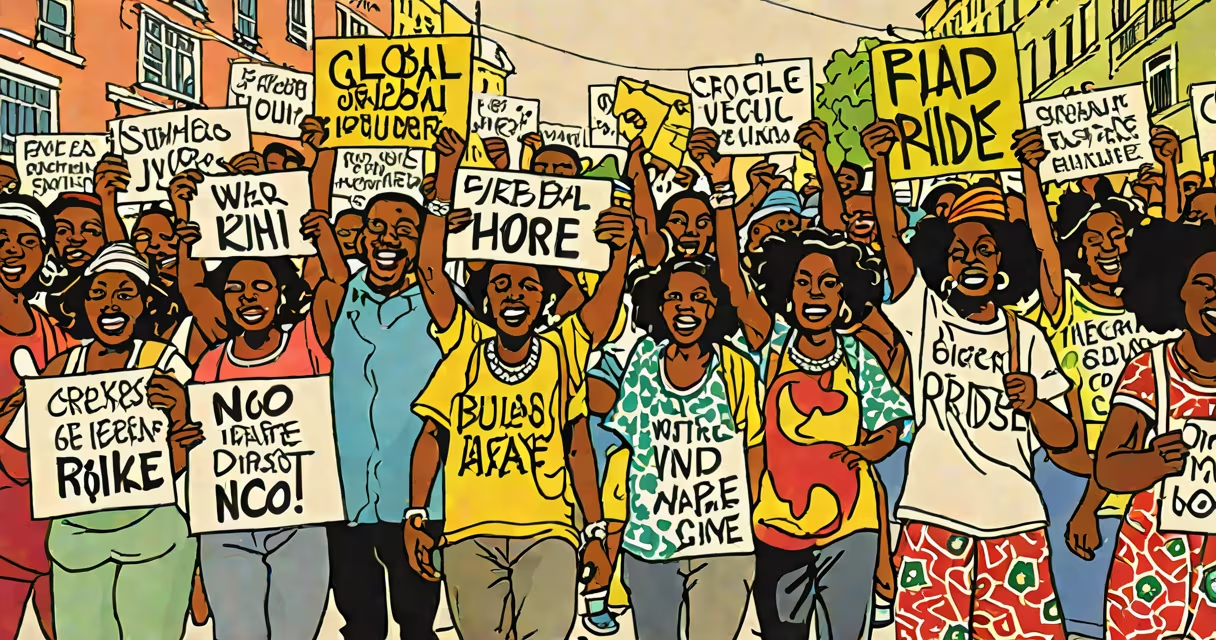
Global black pride is a transnational expression of identity, resilience, and cultural affirmation among people of African descent worldwide. It unites individuals across borders through shared history, resistance to systemic oppression, and celebration of Black excellence in art, science, politics, and everyday life.
Unlike national or regional pride movements, global black pride transcends borders. It recognizes that Blackness is not confined to any single country or culture but exists in a living network shaped by centuries of migration, colonization, and survival. This form of pride emerged prominently during the 20th century's civil rights and decolonization waves, gaining momentum through international solidarity efforts.
It is not a monolithic ideology. Global black pride encompasses political activism, artistic expression, spiritual practice, and daily acts of resistance. It appears in protest chants in Lagos, murals in Berlin, poetry slams in Toronto, and academic conferences in Cape Town. The movement rejects assimilationist narratives and instead asserts that Black identity holds intrinsic value regardless of geography or language.
Global black pride functions through collective recognition and intentional reclamation. When people of African descent assert their worth in public spaces-through dress, speech, music, or policy demands-they challenge dominant narratives that have historically devalued Black lives.
This assertion operates on multiple levels. At the individual level, it may mean choosing to wear natural hair in professional settings despite bias. At the community level, it involves preserving African languages and oral traditions in schools abroad. At the global scale, it includes advocacy for reparations, climate justice, and equitable representation in media and governance.
A concrete example is the annual International Day of the African Child, observed on June 16. In 2023, events were held in Nairobi, Johannesburg, Paris, and New York City. In each location, youth groups organized performances centered on African folklore, spoken word poetry, and historical reenactments. These gatherings were not just cultural displays-they were acts of defiance against erasure.
Global black pride is sustained by four interlocking pillars: history, art, solidarity, and self-determination.
These elements are not abstract ideals. They manifest in tangible projects. For instance, the Black Cultural Center in Accra, Ghana, offers free workshops on Kente weaving, Swahili language, and West African philosophy. Since 2018, over 12,000 participants from 47 countries have attended. The center explicitly states its mission: "To restore dignity through ancestral knowledge."
Global black pride is often mistaken for nationalism or tribalism. It is neither. While it celebrates Blackness, it does not exclude others. In fact, many advocates emphasize that solidarity with other marginalized groups strengthens the movement.
It also differs from performative allyship. True global black pride requires accountability. A 2022 study by the African Studies Association found that 68% of global campaigns led by non-Black organizations failed to center Black voices in planning or funding. When non-Black allies participate, they must follow Black leadership-not lead it.
| Type | Description | Example |
|---|---|---|
| Cultural Pride | Focus on heritage, language, cuisine, and aesthetics. | Wearing traditional garments like dashikis or kente cloth during international festivals. |
| Political Solidarity | Coalition-building across borders to fight systemic racism. | Supporting Sudanese activists through international petitions and resource sharing. |
| Artistic Expression | Using creative work to affirm identity and critique injustice. | Creating digital exhibitions of enslaved Africans' stories using augmented reality. |
| Economic Self-Determination | Building Black-owned enterprises and cooperatives. | Launching a pan-African fintech platform enabling cross-border remittances at low fees. |
One non-obvious distinction: global black pride is not synonymous with Pan-Africanism. While both advocate for African unity, Pan-Africanism is a political ideology focused on nation-building and governance. Global black pride is broader-it includes personal identity, emotional well-being, and spiritual connection. You can be proud of your Blackness without supporting any specific political structure.
Some assume global black pride is only for people in Africa or the diaspora. But it applies to anyone who identifies with the experience of being Black in a world structured around whiteness. This includes mixed-race individuals, adoptees from Black communities, and even non-Black people who actively support the movement.
Another myth is that it promotes anger or resentment. In reality, global black pride emphasizes joy, creativity, and healing. The 2021 Global Black Arts Festival in Montreal featured 147 performances across 11 venues. Over 80% of the artists described their work as "a celebration of survival," not retaliation.
I once witnessed this firsthand at a community event in Kingston, Jamaica. A young woman performed a spoken-word piece titled "My Skin Is My Flag." She spoke about her grandmother's resistance during colonial rule, then ended with laughter and a dance. The room erupted-not in rage, but in recognition. That moment captured the essence: pride as liberation, not grievance.
Global black pride influences policy, education, and media. In 2020, following widespread protests, UNESCO adopted a resolution recognizing the importance of teaching African history in global curricula. The resolution cited "the role of global black pride in reshaping educational equity."
It also shapes economic development. According to the World Bank, Black-led startups in Sub-Saharan Africa grew by 42% between 2019 and 2022. Many founders attribute their success to networks formed through global black pride initiatives.
And it changes how people see themselves. A 2023 survey by the Pew Research Center found that 71% of Black youth in the U.S., UK, and South Africa reported higher self-esteem after participating in local or online Black pride events. The study noted that "identity-affirming spaces reduce internalized racism."
Global black pride is not a slogan. It is a lived commitment to honoring Black existence in all its complexity. It thrives in classrooms, boardrooms, streets, and homes. It is not limited to one continent or generation. As long as Black people face systemic barriers, this form of pride will continue to grow-through art, memory, resistance, and joy.
Understanding global black pride means seeing identity not as a burden, but as a source of strength. It is a movement rooted in heritage, fueled by resistance, and sustained by community. Whether through a poem, a protest sign, or a business founded by a Black woman in Lagos, it persists-because it must.