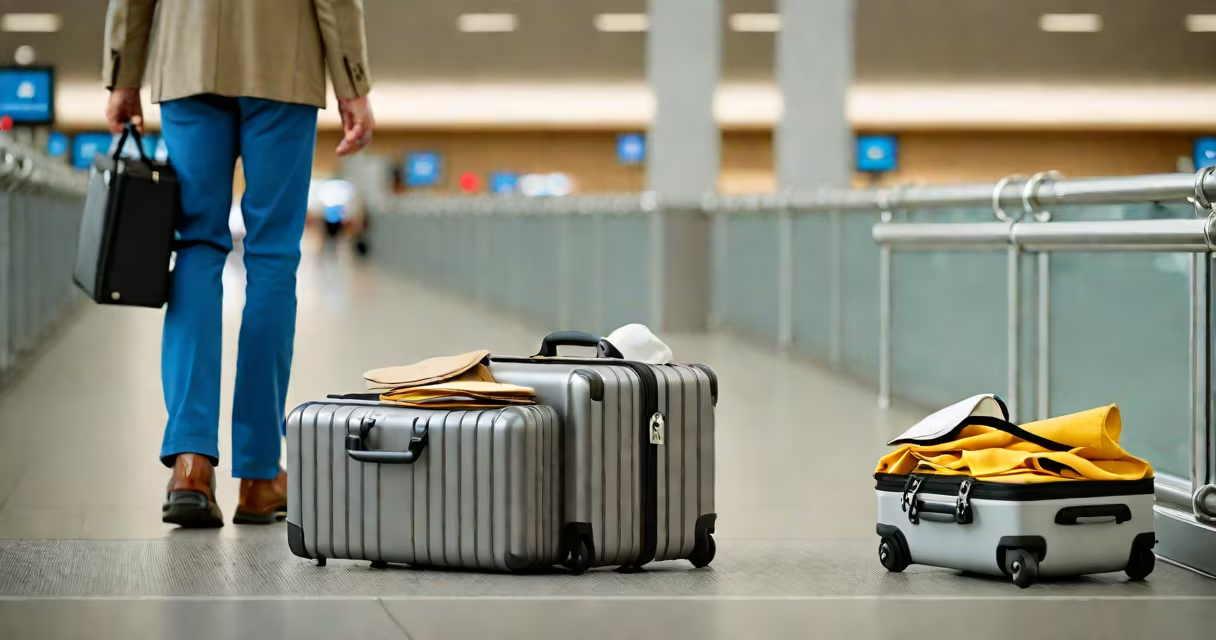
What to take on an international flight includes essential documents like your passport and visa, prescribed medications in original containers, electronics for entertainment, and personal hygiene items within TSA/ICAO size limits. Carry-ons must comply with airline and country-specific regulations.
International flights require careful planning. Unlike domestic trips, you cross borders, face multiple security checks, and may encounter time zone changes. The goal is to pack only what's necessary for comfort, compliance, and safety. You'll need to balance legal requirements with practicality.
Carry-on luggage must fit under the seat or in the overhead bin. Most airlines allow one personal item and one carry-on. Size limits vary-typically 22 x 14 x 9 inches-but always confirm with your carrier. Checked bags are subject to weight and size rules, plus customs declarations upon arrival.
Your passport is non-negotiable. It must be valid for at least six months beyond your entry date. Many countries also require a visa. Check the U.S. Department of State's travel advisory page for destination-specific entry rules.
Bring printed copies of your itinerary, hotel reservation, and return flight ticket. Some countries deny entry without proof of onward travel. Keep digital backups on your phone or cloud storage, but don't rely solely on them.
Prescription medications must stay in their original packaging with labels. The World Health Organization notes that travelers often mismanage medication during long-haul flights due to time zone shifts. Pack a 7-day supply in your carry-on. Avoid liquid meds in excess of 100 mL unless declared.
Bring a power bank (100 watt-hours max), headphones, and a tablet or e-reader loaded with books, shows, or music. Airlines like Delta and Lufthansa provide in-flight entertainment, but not all offer it. Always test devices before departure.
Use noise-canceling headphones to reduce cabin pressure discomfort. A neck pillow and eye mask improve sleep quality. One study by the Journal of Sleep Research found that passengers using these items reported 30% better rest during flights over 6 hours.
Don't forget a small blanket or shawl. Airplane cabins are cold. Bring a lightweight, compressible travel blanket. Avoid bulky coats-airlines have limited overhead space.
Alcohol over 140 proof is banned. Liquids must be under 100 mL per container and fit in a single clear quart-sized bag. This rule applies globally under ICAO guidelines. Even water bought post-security cannot be carried through checkpoints.
Prohibited items include sharp objects (knives, scissors), firearms, and flammable materials. Even nail clippers are restricted in checked baggage. Review the Transportation Security Administration's list of prohibited items before packing.
| Item Type | Allowed in Carry-On? | Notes |
|---|---|---|
| Medications | Yes | Original container, labeled, with prescription |
| Liquids (over 100 mL) | No | Must be in checked baggage or purchased post-security |
| Alcohol (over 70% ABV) | No | Even in sealed bottles |
| Power banks (over 100 Wh) | No | Maximum 100 Wh; 160 Wh requires approval |
Many travelers assume they can bring a full-size toothpaste tube in their carry-on. That's false. All liquids, gels, and pastes must be 3.4 oz (100 mL) or less per container. Even if the tube says "travel size," it must meet the limit.
Another error: packing valuables in checked luggage. Theft rates at major hubs like Heathrow and JFK average 1.2 incidents per 1,000 bags annually, according to the International Air Transport Association. Keep jewelry, cash, and electronics in your carry-on.
I once flew from Tokyo to Paris with a 12-hour layover in Istanbul. I packed a compact folding umbrella, a reusable water bottle (empty), and a set of earplugs. When my flight was delayed, I used the umbrella to shield myself from rain while waiting. The earplugs helped me sleep through turbulence. These small items made a real difference.
Before boarding, verify: