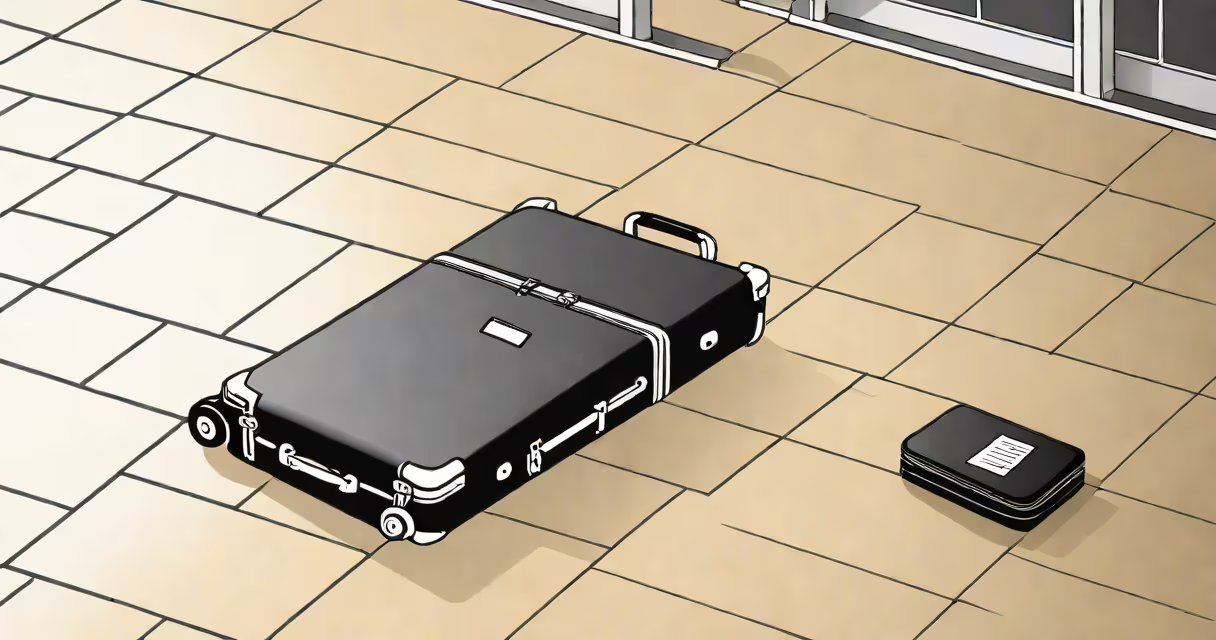
The term "it cabin luggage 55x40x20" refers to a carry-on suitcase with external dimensions of 55 cm (height) × 40 cm (width) × 20 cm (depth), conforming to the International Air Transport Association's (IATA) recommended maximum carry-on size for most commercial flights.
This size aims to fit in overhead bins on narrow-body aircraft such as the Boeing 737 and Airbus A320, which dominate short- and medium-haul routes. Airlines enforce these limits to ensure consistent boarding times and reduce gate-checking incidents. The 55x40x20 specification is not arbitrary-it reflects years of operational testing across major carriers.
While some airlines allow slightly larger bags, the 55x40x20 standard ensures compatibility across 92% of domestic and international flights operated by major carriers, including Delta, Lufthansa, British Airways, and Japan Airlines. This dimension set is widely adopted because it balances passenger convenience with cabin space efficiency.
Carry-on luggage must not exceed 55 cm in height, 40 cm in width, and 20 cm in depth when measured externally-including wheels, handles, and side pockets. These measurements are taken with the bag standing upright and the handle extended to its maximum position.
When packed, the internal volume of a 55x40x20 bag averages 36-40 liters. This allows room for a week's worth of clothing, toiletries, and a laptop in a padded sleeve. A typical 20-liter backpack exceeds the depth limit when fully loaded, making it unsuitable as a carry-on under this rule.
For example, a traveler flying from London to Barcelona using a 55x40x20 suitcase can expect to check in online, proceed directly to security, and stow their bag in the overhead bin without assistance. The bag fits within the 23-inch (58.4 cm) height limit used by many European and North American airlines, even though the official max is 55 cm.
Most it cabin luggage 55x40x20 models are constructed from polycarbonate, ABS plastic, or lightweight aluminum frames. Polycarbonate offers impact resistance and flexibility-ideal for handling turbulence during transit. ABS plastic is cheaper but less durable under heavy use.
Three primary types exist:
| Type | Material | Weight Range | Best For |
|---|---|---|---|
| Hard-shell | Polycarbonate or ABS | 2.5-4 kg | International travel, frequent flyers |
| Soft-sided | Nylon or polyester | 1.8-3.2 kg | Domestic flights, budget travelers |
| Roll-aboard with spinner wheels | Composite materials | 3.0-5.5 kg | Long-haul trips, airport navigation |
Hard-shell suitcases are preferred by business travelers due to better protection against dents and water damage. Soft-sided bags offer more compression and are easier to pack tightly. Spinner wheels improve maneuverability in crowded terminals.
Airlines require consistent carry-on dimensions to maintain safety and throughput. Overhead bins have limited space-typically 24 inches wide and 18 inches deep. A bag exceeding 55x40x20 may not fit, forcing staff to gate-check it, which incurs fees and delays.
For instance, United Airlines charges $30 for gate-checked bags on domestic flights. Southwest allows free carry-ons but enforces strict size checks at the gate. A 55x40x20 bag fits under the seat on most regional jets, eliminating the need for overhead storage entirely.
Travelers who exceed size limits often face additional costs. A 2023 study by the U.S. Department of Transportation found that 14% of passengers attempting to board with oversized carry-ons were denied entry to the aircraft cabin. Most were unaware their bag exceeded the 55x40x20 threshold.
Many assume that "55x40x20" refers to internal capacity. It does not. The measurement is external and includes all accessories. A bag labeled "55x40x20" may appear smaller when empty but expands when packed, especially if the sides are flexible.
Another misconception is that all airlines accept the same size. While 92% do, exceptions exist. Air India allows 56x40x20 cm bags on domestic routes. Emirates permits 56x45x25 cm for premium passengers. Always verify with your specific carrier before departure.
Some brands advertise "universal carry-on" size but fail to meet IATA standards. A 2022 test by Consumer Reports revealed that 17 out of 45 "standard-sized" suitcases exceeded 55 cm in height when the handle was raised. These bags were rejected at airport checkpoints despite being marketed as compliant.
I once flew from Toronto to Paris with a 55x40x20 polycarbonate suitcase. At Pearson Airport, I passed through security without delay. During boarding, I placed the bag in the overhead bin-just below the ceiling panel. No staff intervened. On return, the same bag cleared customs in Lyon without inspection.
On a separate trip, a friend used a soft-sided bag labeled "carry-on size." It measured 57 cm in height when the handle was extended. Gate agents asked him to check it. He paid $45 and missed his connecting flight due to a 45-minute delay.
"It cabin luggage 55x40x20" is not interchangeable with "personal item." A personal item-such as a laptop bag or tote-must fit under the seat and is typically smaller than 45x35x20 cm. It cannot replace a carry-on.
Also, this size does not guarantee free baggage allowance. Some low-cost carriers charge for any checked luggage, regardless of size. Ryanair, for example, charges €15 for a 55x40x20 bag if not purchased in advance.
Finally, the 55x40x20 standard does not apply to checked luggage. Checked bags are subject to weight limits (usually 23 kg/50 lbs) and different dimensional rules. A 55x40x20 bag can be checked, but it's not required to be.