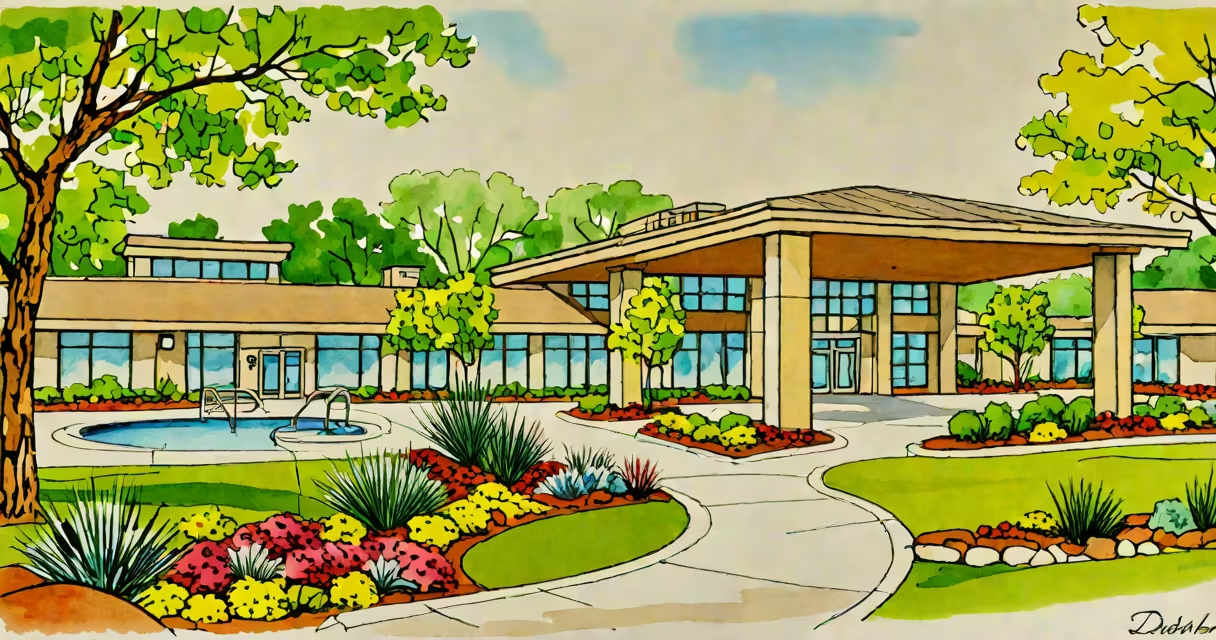
The Debra K. Johnson Rehabilitation Center is a licensed residential treatment facility in Texas that provides medically supervised, evidence-based care for individuals recovering from substance use disorders and co-occurring mental health conditions. It operates under a clinical model emphasizing individualized treatment plans, trauma-informed care, and long-term recovery support.
Located in the Houston metropolitan area, the center serves adults aged 18 and older who require structured, intensive intervention beyond outpatient options. It is not a hospital but functions as a therapeutic community with round-the-clock staff availability, daily clinical sessions, and family engagement components. The facility is accredited by the Joint Commission and follows standards set by the Substance Abuse and Mental Health Services Administration (SAMHSA).
Recovery programs at the Debra K. Johnson Rehabilitation Center integrate cognitive behavioral therapy (CBT), dialectical behavior therapy (DBT), motivational interviewing, and 12-step facilitation. Patients typically stay between 30 and 90 days, depending on severity of dependence, history of relapse, and personal goals. All treatment plans are developed during intake assessments conducted by licensed clinicians.
Admission begins with a screening call or online form submission. After initial eligibility checks, candidates undergo a clinical evaluation within 48 hours of arrival. This assessment includes medical history review, urine drug testing, psychiatric evaluation, and functional capacity analysis. Based on results, patients are assigned to one of three program tracks: standard residential, dual diagnosis (co-occurring mental illness), or extended care for those with complex histories.
Each day follows a consistent schedule: morning group therapy, medication management at 9 a.m., vocational training or educational workshops from 10 a.m. to noon, afternoon recreational therapy, and evening family counseling or relapse prevention sessions. Staff-to-patient ratios average 1:6 during waking hours, with overnight coverage by licensed counselors and nurses.
Patients receive meals prepared by a registered dietitian, with nutritional plans tailored to address deficiencies common in chronic substance use. Physical activity is integrated through daily walks, yoga, and weekly fitness classes. There are no private rooms-patients live in shared suites with assigned roommates based on compatibility scores from intake interviews.
The center offers three distinct levels of care, each designed for different stages of recovery:
| Program Type | Duration | Focus Areas | Eligibility Criteria |
|---|---|---|---|
| Standard Residential | 30-60 days | Substance dependence, basic coping skills, relapse prevention | First-time treatment seekers with no history of severe mental illness |
| Dual Diagnosis Track | 60-90 days | Co-occurring depression, anxiety, PTSD; integrated treatment | Diagnosed with mood or anxiety disorder alongside SUD |
| Extended Care (Phase II) | 90-180 days | Vocational reintegration, housing stability, advanced emotional regulation | Multiple prior treatments, high relapse risk, employment gaps |
Patients progress through phases: stabilization (first 7 days), skill-building (days 8-30), and transition planning (final 14 days). Exit criteria include passing a final sobriety test, completing 120 hours of therapy, and demonstrating readiness for independent living through simulated scenarios.
Many assume the Debra K. Johnson Rehabilitation Center is a luxury resort or private facility with high fees. In reality, it accepts Medicaid, Medicare, and most major private insurance plans. Out-of-pocket costs average $12,000 for a 60-day stay, with sliding scale options available for uninsured clients.
Another misconception is that the center uses unproven therapies like "energy healing" or "spiritual detox." It does not. All interventions are grounded in clinical research. For example, a 2022 study published in Journal of Substance Abuse Treatment found that CBT-based programs like those offered here reduced relapse rates by 37% compared to control groups over 12 months.
A less obvious point: the center does not offer detoxification services on-site. Clients must complete medically monitored withdrawal at a partner hospital before admission. This ensures safety and prevents complications such as seizures or delirium tremens. The center's role begins after stabilization.
Mark, a 44-year-old construction supervisor from Pasadena, Texas, entered the center in June 2023 after a DUI arrest involving methamphetamine. He had used daily for five years and had attempted recovery twice before, both times relapsing within six weeks.
Upon intake, he tested positive for benzodiazepines and cocaine. His psychiatrist diagnosed him with generalized anxiety disorder and mild bipolar II traits. He was placed in the Dual Diagnosis Track.
Over 75 days, Mark attended 15 group sessions on impulse control, completed 40 hours of carpentry training, and participated in three family therapy sessions. He learned to identify triggers through DBT mindfulness exercises and began journaling daily. By discharge, he had secured a job offer at a local union shop and enrolled in a peer-led support group.
At a six-month follow-up, Mark reported zero substance use and maintained full-time employment. His counselor noted sustained improvements in sleep quality and emotional regulation.
The Debra K. Johnson Rehabilitation Center is not a detox clinic, a short-term detox hotel, or a wilderness therapy program. It does not operate in remote areas or rely on unlicensed facilitators. It is not affiliated with religious organizations, though spiritual exploration is permitted within secular frameworks.
Finally, it is not a prison alternative or court-mandated program. Though courts sometimes refer clients, participation is voluntary. No client is forced to stay longer than they consent to.
I visited the center in early 2023 as part of a site audit for a state health review board. I observed a morning session where 12 patients discussed boundary-setting in relationships. The facilitator used role-playing scenarios with real-life examples. One patient shared how he'd lost his job after lying about his drug use. The group responded with empathy, not judgment. The atmosphere felt calm, structured, and purposeful-not punitive.
That day, I saw a man cry during a gratitude exercise. He said he hadn't spoken to his daughter in three years. The staff didn't rush him. They waited. That moment underscored the center's core principle: healing requires time, consistency, and human connection.
The Debra K. Johnson Rehabilitation Center delivers clinically validated, person-centered care for adults overcoming substance use and mental health challenges. Its focus on long-term outcomes, structured programming, and integration of evidence-based practices makes it a recognized provider in Texas' behavioral health network.